|
 Recently I had the pleasure of seeing the first instalment of The Tower Theatre's Spring Forward performances, which began with Virtual Reality, a production of two plays that originally made their debut on Virtual Tower via Zoom during the pandemic. Both plays were written by members of the Tower Theatre Company. Recently I had the pleasure of seeing the first instalment of The Tower Theatre's Spring Forward performances, which began with Virtual Reality, a production of two plays that originally made their debut on Virtual Tower via Zoom during the pandemic. Both plays were written by members of the Tower Theatre Company.
The first was titled Each Fallen Robin by Emily Carmichael, while the second production was adapted by Angelika Michitsch, from a free verse poem anthology depicting the epitaphs of residents in a fictional town of Spoon River; this production was named Passing the Spoon. Two excellent plays which are very contrasting in terms of their plot and theme. Each Fallen Robin had a more colloquial and light-hearted feel, compared to Passing the Spoon which featured an interpretative look at different traumas faced by women. However, you can take a certain sentiment away from both plays, being that they each depict the notion of people, virtual strangers even, finding comfort in one another through sharing similar experiences.
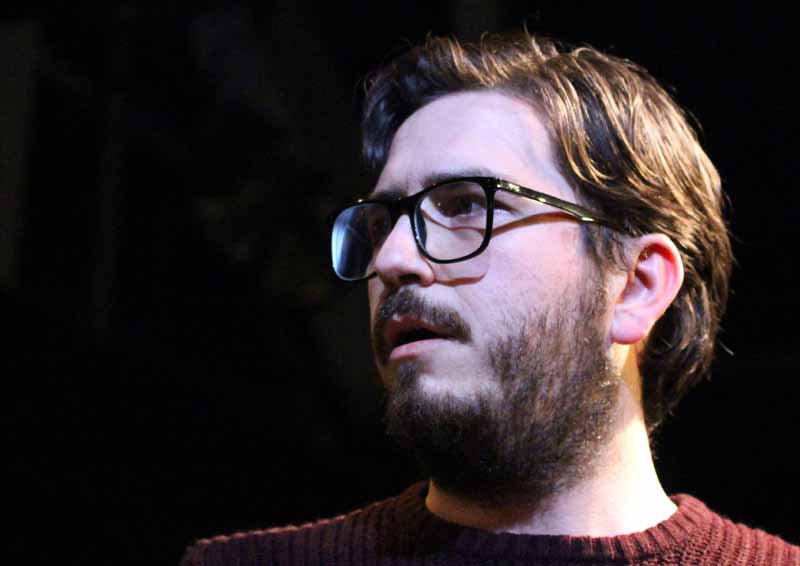
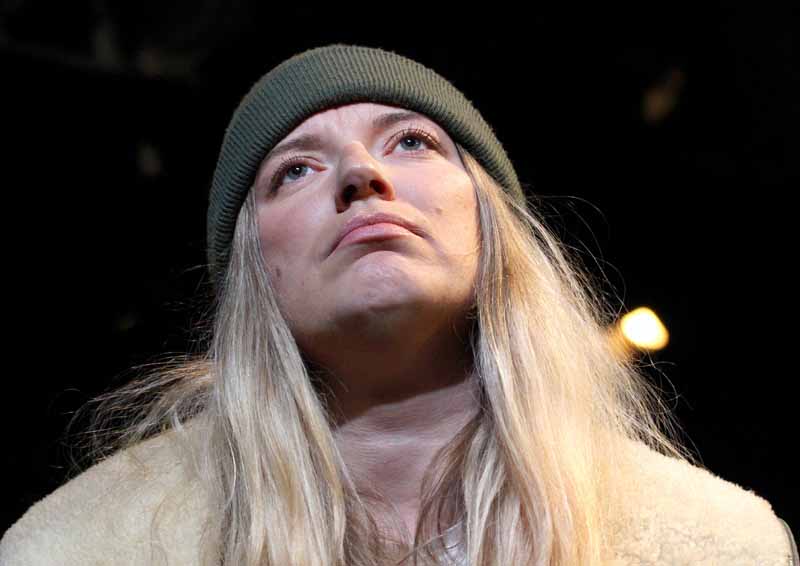 Each Fallen Robin is a relatable and compact play that tells the story of a brief encounter, between Will (Ryan Williams) and Fran (Twyla Doone) two colleagues who are not very well acquainted and are stuck at work during a heavy snowfall. We get a few laughs as Doone does a terrific job of playing a naturally blunt character, whose demeanour is made slightly worse by her inebriated state. In turn, Williams's reactions give a great impression of his character bordering on being amused and intrigued by his colleague's antics, which helped display the two actor's natural chemistry.As they have a conversation about their lives, getting older, their relationships and fitting in a pretty decent karaoke performance while sharing a joint, the actors manage to convey the characters' mutual dissatisfaction with their lives. Each Fallen Robin is a relatable and compact play that tells the story of a brief encounter, between Will (Ryan Williams) and Fran (Twyla Doone) two colleagues who are not very well acquainted and are stuck at work during a heavy snowfall. We get a few laughs as Doone does a terrific job of playing a naturally blunt character, whose demeanour is made slightly worse by her inebriated state. In turn, Williams's reactions give a great impression of his character bordering on being amused and intrigued by his colleague's antics, which helped display the two actor's natural chemistry.As they have a conversation about their lives, getting older, their relationships and fitting in a pretty decent karaoke performance while sharing a joint, the actors manage to convey the characters' mutual dissatisfaction with their lives.
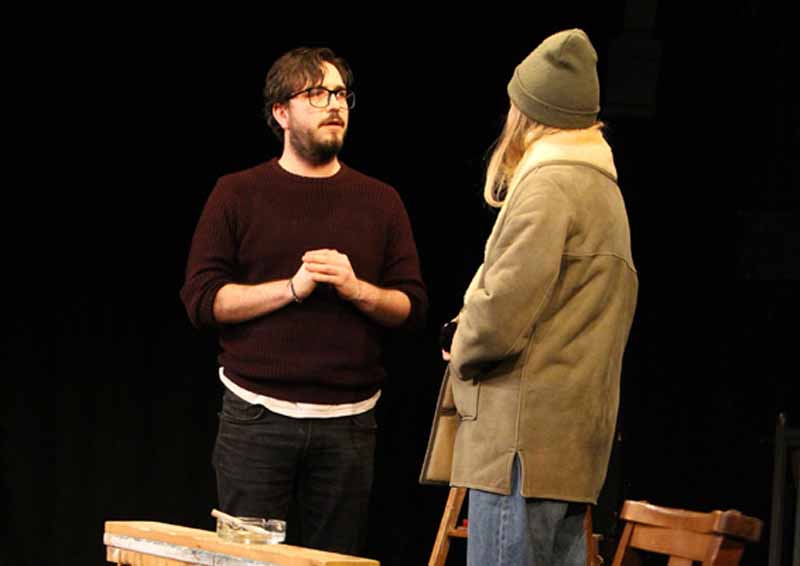 We learn a lot about Fran as she talks about her relationship with a nice man who does not seem to satisfy her, to the point where she seemed happy to have a reason not to make it home, and how she doesn't consider herself to be a nice person. Not to mention that when she admits to having once been in love with a married man, she manages to give the impression of being bitterly nostalgic for that time in her life. We learn a lot about Fran as she talks about her relationship with a nice man who does not seem to satisfy her, to the point where she seemed happy to have a reason not to make it home, and how she doesn't consider herself to be a nice person. Not to mention that when she admits to having once been in love with a married man, she manages to give the impression of being bitterly nostalgic for that time in her life.
Interestingly we do not get as much backstory from Will's character, all we know is that he loves karaoke, has recently turned thirty and has a girlfriend called Amy. Otherwise, we know nothing about his life or really much about his feelings about his own relationship. However, from the way he watches Fran as she talks about her life, as well as the little pauses in his actions when she mentions something significant, it suggests that he has similar qualms in regard to his own situation.
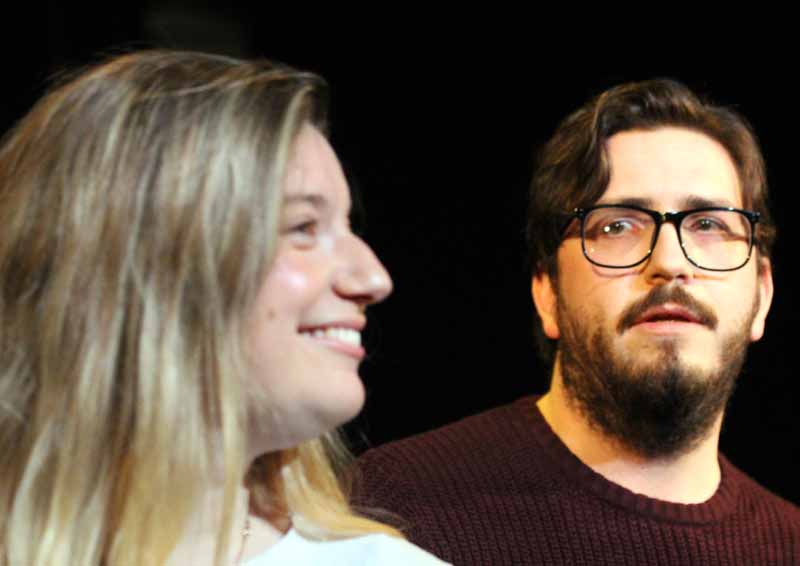 One thing I found interesting about this play was the use of symbolism, with both the snow and the robin that the two characters observe from the window. Fran comments that the blanket of snow on the streets is purely white, therefore if you think about a blanket of white snow covering a dirty city street; this can be seen as a metaphor for their conversation. One thing I found interesting about this play was the use of symbolism, with both the snow and the robin that the two characters observe from the window. Fran comments that the blanket of snow on the streets is purely white, therefore if you think about a blanket of white snow covering a dirty city street; this can be seen as a metaphor for their conversation.
Both are unhappy individuals, feeling the pinch of their age, and whenever their conversation ventures into a more serious territory, they always bring it back with something less serious and more amusing. The lighthearted jokes between them seem to be covering up a layer of the conversation they do not want to acknowledge, as it would bring to the surface their boredom with their lives. Likewise, when Fran comments to Will that the robin only lives thirteen months, this can either be interpreted as her saying, well we should be happy because at least we get to live longer, or possibly that life is fleeting so they should not have to settle for the monotony of adulthood.
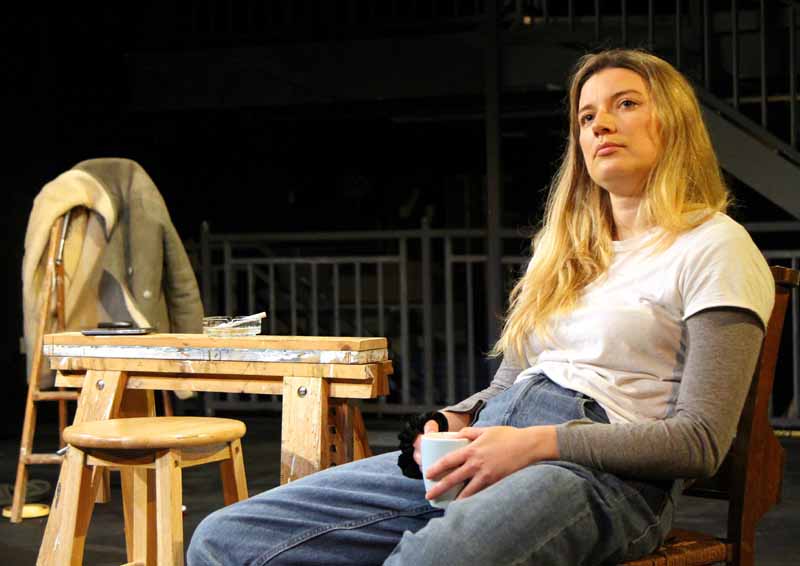 Again, what makes the play great is the way the actors play off one another, their body language coming across as both completely comfortable and somewhat hesitant in each other's company. In a forty-minute production you feel the two characters develop a connection after starting out as casual acquaintances, which gives Fran's line about her sharing more with Will than she has her best friends a lot more meaning; the audience realise that they have become invested in this acquaintanceship. Again, what makes the play great is the way the actors play off one another, their body language coming across as both completely comfortable and somewhat hesitant in each other's company. In a forty-minute production you feel the two characters develop a connection after starting out as casual acquaintances, which gives Fran's line about her sharing more with Will than she has her best friends a lot more meaning; the audience realise that they have become invested in this acquaintanceship.
When the two characters parted, I felt relieved that there was not a cliché of something romantic or physical happening between the two protagonists. Instead, we get a brief pause as the two consider, but ultimately decide to keep what they shared, something that can be confined to their workspace.A truly relatable story about getting older and wanting to escape reality for a moment, and why it is easier to share these moments with people not directly involved in your life.
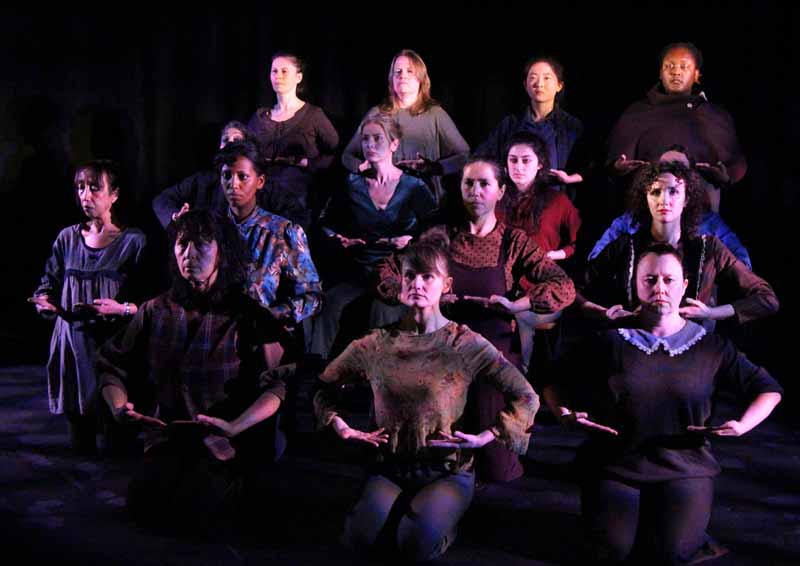
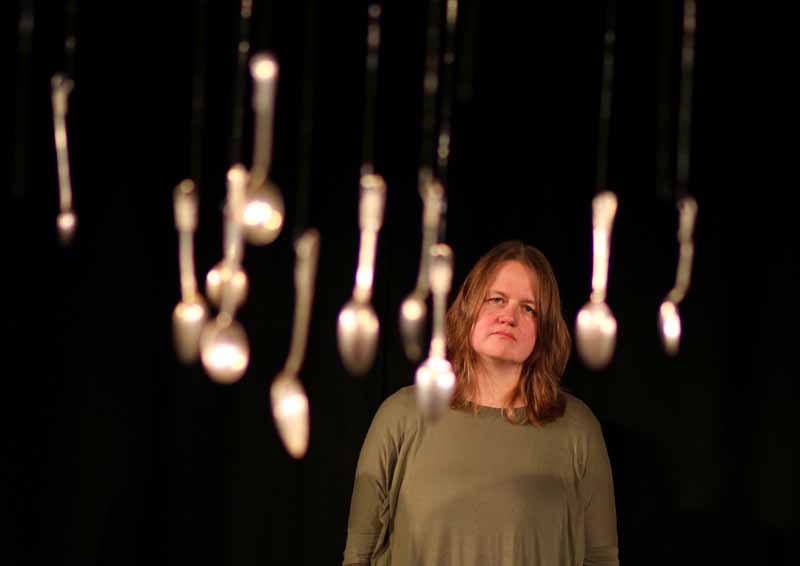 From this humorous yet bittersweet play, Angelika Michlitsch's production of Passing the Spoon was a lot more hard hitting, but no less enjoyable to watch. Immediately I was fascinated as the auditorium darkened, a quiet tune played and the stage was filled with sixteen female actors. I will admit, having not seen many interpretive plays before, I did not know what I would think; now I can say that it sparked my interest in this particular genre. From this humorous yet bittersweet play, Angelika Michlitsch's production of Passing the Spoon was a lot more hard hitting, but no less enjoyable to watch. Immediately I was fascinated as the auditorium darkened, a quiet tune played and the stage was filled with sixteen female actors. I will admit, having not seen many interpretive plays before, I did not know what I would think; now I can say that it sparked my interest in this particular genre.
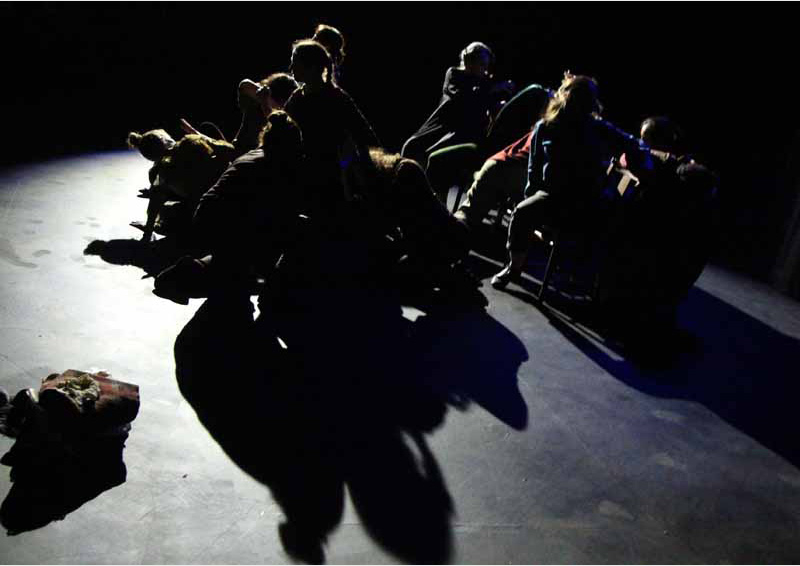
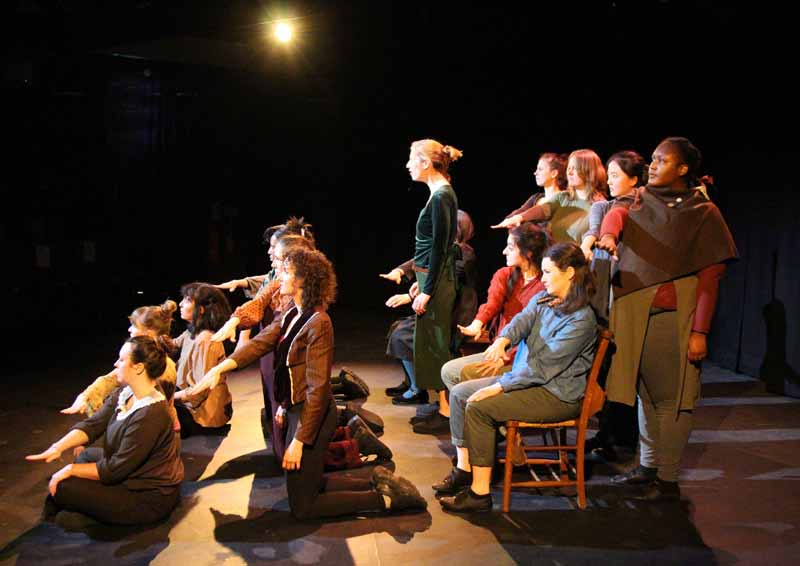
Looking back, I think what I enjoyed the most was the how the actors made use of the space. In the beginning they each have their own individual position, some sitting, some standing and others crouching out of sight. One by one each actor would tell a part of the trauma that they faced, in their own world, seemingly unaware that they were surrounded by other women who suffered from similar pain. This beginning was fantastic in highlighting a tragic social issue, which is still relevant today, because each of these women have suffered in some way, mainly in the form of abuse and they are surrounded by people who feel their pain. Yet they do not know this, instead they feel they are alone, isolated and suffering without anyone to provide comfort.
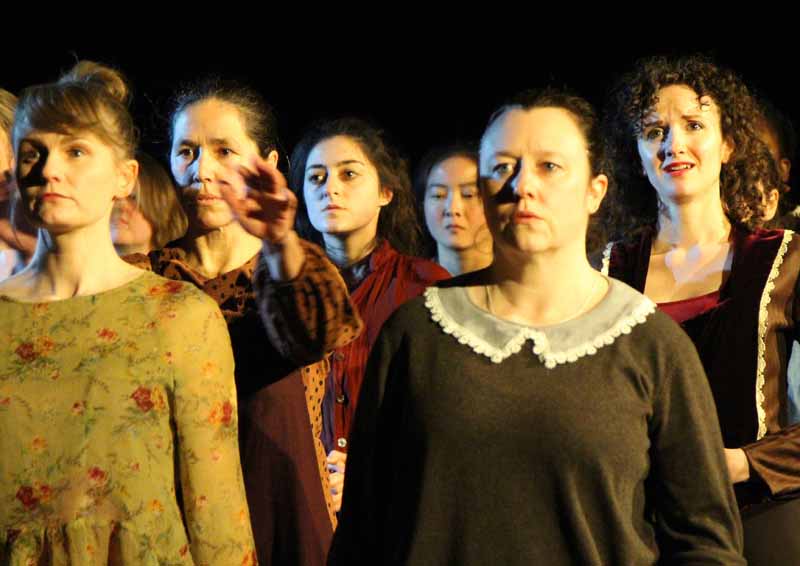 What I also found brilliant about the beginning, was that between each character's monologues the stage would be shrouded in darkness, and there would be a moment of a complete silence before one actor began speaking. This created a sense of unease, as the audience waited in anticipation for what was going to happen next. I think it was that unpredictability, of knowing in a vague sense what was going to happen and having no idea what was going to be revealed is what initially drew me into the play. What I also found brilliant about the beginning, was that between each character's monologues the stage would be shrouded in darkness, and there would be a moment of a complete silence before one actor began speaking. This created a sense of unease, as the audience waited in anticipation for what was going to happen next. I think it was that unpredictability, of knowing in a vague sense what was going to happen and having no idea what was going to be revealed is what initially drew me into the play.
I also believe the way the opening scene was choreographed was a clever nod to the source material, Edgar Lee Masters' Spoon River Anthology. The image of them shrouded in darkness; then a light shining on them as they speak, upon reflection, represented these women speaking from their graves. In fact, some of them stood up in their space, making me wonder if that was supposed to convey the idea how much time has passed for some of them; because they have been buried for so long they are then, in that moment, determined to literally rise from their graves to share their story.
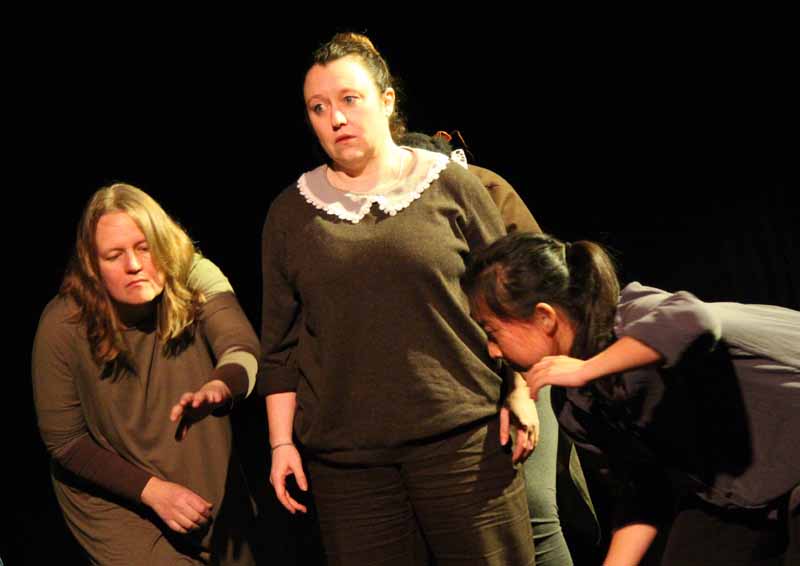
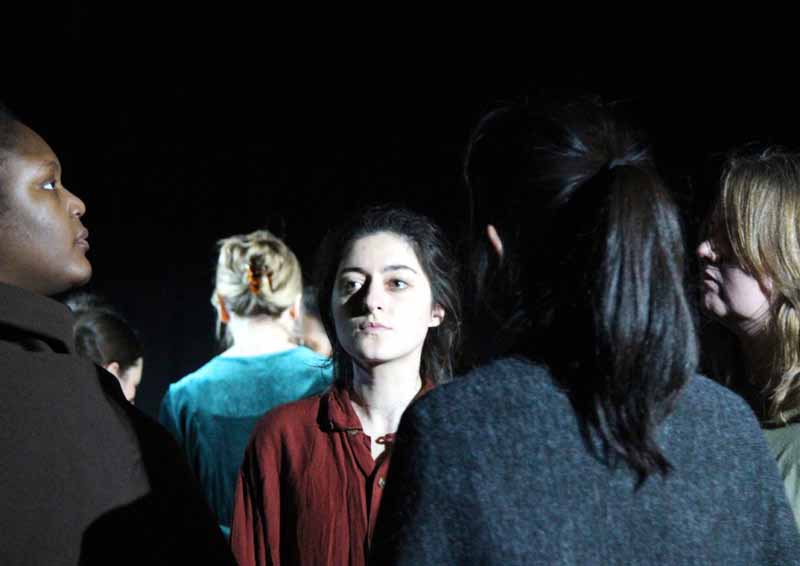 From here the use of space and movement only developed, as the characters' delved deeper into their trauma they came closer together on stage, symbolising a growing emotional closeness between each individual. Building on this, while one actor spoke the other characters would react by either making a noise, making a movement or pulling a facial expression. Each action perfectly helped to accentuate the severity of each other's pain, while also demonstrating these women actually feeling the pain flowing through their bodies. It perfectly represented how agonising these experiences can be, as well as how much it can physically hurt to share these experiences, even with those who understand your trauma. The actors did a wonderful job in this production, as I can't imagine it would be easy with such a large cast, with such a small space to make their actions feel so natural, but the timing of each movement and their acting was amazing. I genuinely was never taken out of the moment, even when fifteen other background characters would suddenly change their behaviour, to coincide with the actor giving the monologue. From here the use of space and movement only developed, as the characters' delved deeper into their trauma they came closer together on stage, symbolising a growing emotional closeness between each individual. Building on this, while one actor spoke the other characters would react by either making a noise, making a movement or pulling a facial expression. Each action perfectly helped to accentuate the severity of each other's pain, while also demonstrating these women actually feeling the pain flowing through their bodies. It perfectly represented how agonising these experiences can be, as well as how much it can physically hurt to share these experiences, even with those who understand your trauma. The actors did a wonderful job in this production, as I can't imagine it would be easy with such a large cast, with such a small space to make their actions feel so natural, but the timing of each movement and their acting was amazing. I genuinely was never taken out of the moment, even when fifteen other background characters would suddenly change their behaviour, to coincide with the actor giving the monologue.
 The ending was also a brilliant way to cap-off their journey, as a wheel with sixteen spoons was lowered in the middle of the set, bathed in a bright light. Each character took a spoon and walked off stage, giving one final thought to their past. I saw this as the characters finding some peace after discovering that they all share similar experiences. Never quite letting go, but rather being able to embrace it while finding a small grain of comfort in one another. I found it to be a very touching resolution, because it demonstrated the real tragedy of these individuals never finding comfort in life, only when it is it was too late, did they understand that they were not alone. Serving as a reminder to audiences that while some pain never fully heals, if you embrace your trauma and find people who understand your pain, there is hope in moving forward. Another bitter-sweet, yet slightly more tragic and thought provoking ending to a great production. The ending was also a brilliant way to cap-off their journey, as a wheel with sixteen spoons was lowered in the middle of the set, bathed in a bright light. Each character took a spoon and walked off stage, giving one final thought to their past. I saw this as the characters finding some peace after discovering that they all share similar experiences. Never quite letting go, but rather being able to embrace it while finding a small grain of comfort in one another. I found it to be a very touching resolution, because it demonstrated the real tragedy of these individuals never finding comfort in life, only when it is it was too late, did they understand that they were not alone. Serving as a reminder to audiences that while some pain never fully heals, if you embrace your trauma and find people who understand your pain, there is hope in moving forward. Another bitter-sweet, yet slightly more tragic and thought provoking ending to a great production.
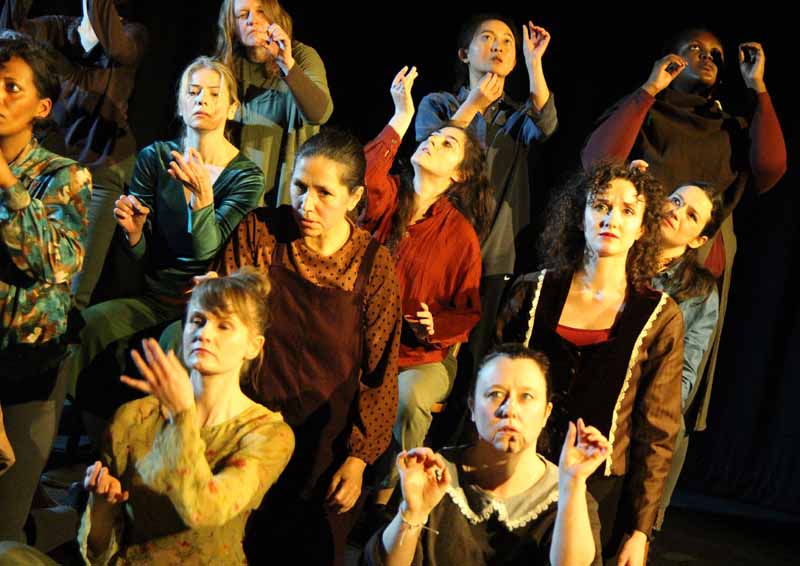 Two wonderful shows, one in a modern setting with relatable humour, the other an interpretative play highlighting a social issue that can still be reflected in our own society. However, each play held a similar sentiment of our ability to find unexpected connections, through personal struggles. The solace that can be found in encounters with strangers, being something many have experienced in a difficult period of their life. Two wonderful shows, one in a modern setting with relatable humour, the other an interpretative play highlighting a social issue that can still be reflected in our own society. However, each play held a similar sentiment of our ability to find unexpected connections, through personal struggles. The solace that can be found in encounters with strangers, being something many have experienced in a difficult period of their life.
I am glad I got to see both shows live at the Tower Theatre, because the acting and directing in each production was phenomenal. Getting to watch the shows back to back, provoked such different emotional responses and left me feeling like I had a well-balanced evening of entertainment. It was truly one of the best nights I have had, so far, at the Tower Theatre.
Photography by Robert Piwko
|