|
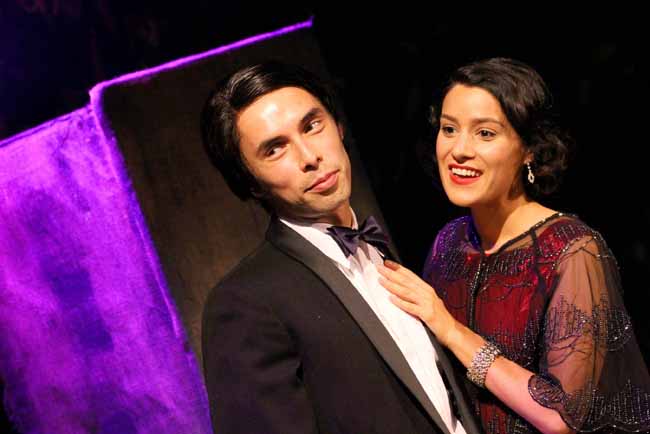
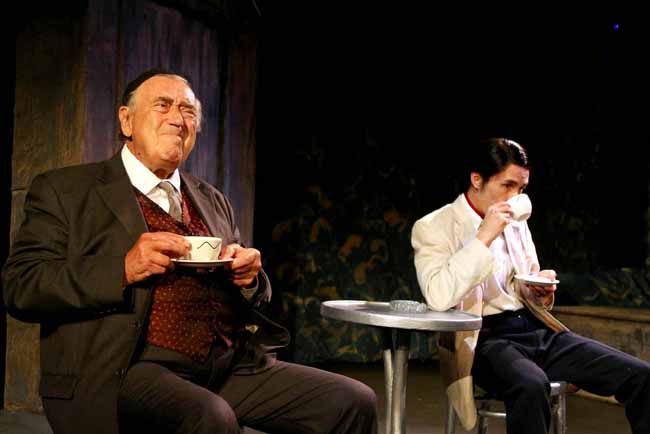
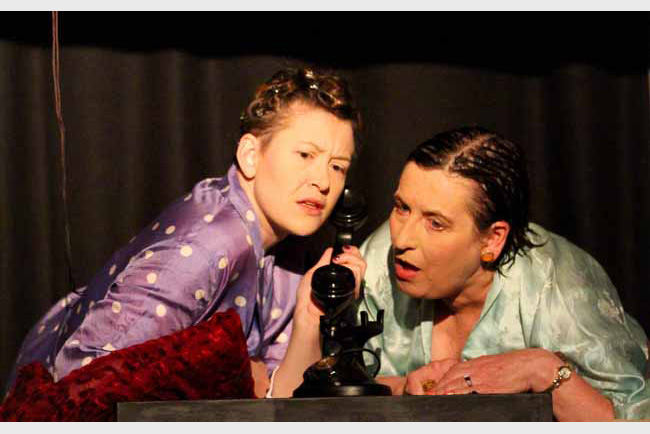
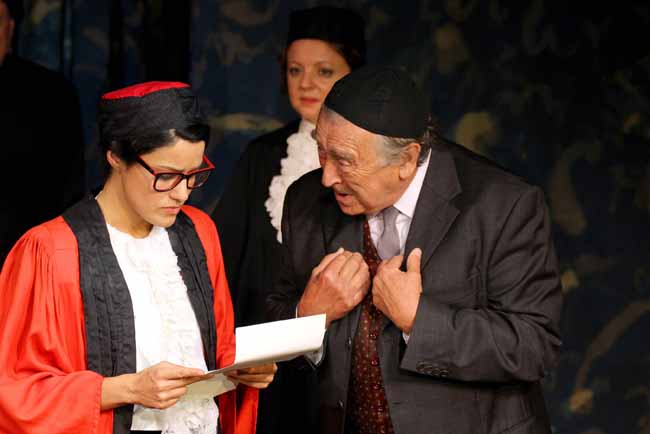 The Merchant of Venice is one of Shakespeare's most notable, but also controversial plays. In it the titular merchant, Antonio (Nick Hall) borrows money from Jewish lender Shylock (Ian Recordon) in order to enable his friend Bassanio (Dale Robertson) to pursue the heiress Portia (Nisha Emich). However, when Antonio's business ventures fail, Shylock insists on calling in the "pound of flesh" that the merchant has pledged as a security, leaving his life in the hands of a judge sent to decide the case. Meanwhile Venetian nobleman Lorenzo (Tom Saunders) woos Shylock's daughter Jessica (Cymbre Barnes), with the help of Shylock's servant Launcelot (Rahul Singh). The Merchant of Venice is one of Shakespeare's most notable, but also controversial plays. In it the titular merchant, Antonio (Nick Hall) borrows money from Jewish lender Shylock (Ian Recordon) in order to enable his friend Bassanio (Dale Robertson) to pursue the heiress Portia (Nisha Emich). However, when Antonio's business ventures fail, Shylock insists on calling in the "pound of flesh" that the merchant has pledged as a security, leaving his life in the hands of a judge sent to decide the case. Meanwhile Venetian nobleman Lorenzo (Tom Saunders) woos Shylock's daughter Jessica (Cymbre Barnes), with the help of Shylock's servant Launcelot (Rahul Singh).
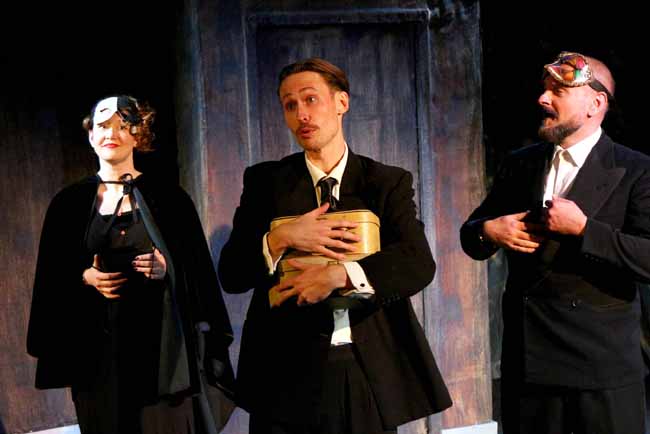 Any person directing the play must make two big decisions, the nature of the relationship between Antonio and Bassanio, and how villainous to make Shylock. From the start, which is set in a sauna, David Taylor's production clearly implies that Bassanio is not only aware of Antonio's amorous feelings, but also happy to indulge them. Still, unlike Polly Findlay's 2015 RSC production, which placed a lot of symbolic weight on Bassanio ‘giving away' Portia's ring, the ‘ring trick' is played for laughs, and at the end Antonio, now surplus to requirements, shuffles offstage, while the three couples stare entranced into each other eyes. Any person directing the play must make two big decisions, the nature of the relationship between Antonio and Bassanio, and how villainous to make Shylock. From the start, which is set in a sauna, David Taylor's production clearly implies that Bassanio is not only aware of Antonio's amorous feelings, but also happy to indulge them. Still, unlike Polly Findlay's 2015 RSC production, which placed a lot of symbolic weight on Bassanio ‘giving away' Portia's ring, the ‘ring trick' is played for laughs, and at the end Antonio, now surplus to requirements, shuffles offstage, while the three couples stare entranced into each other eyes.
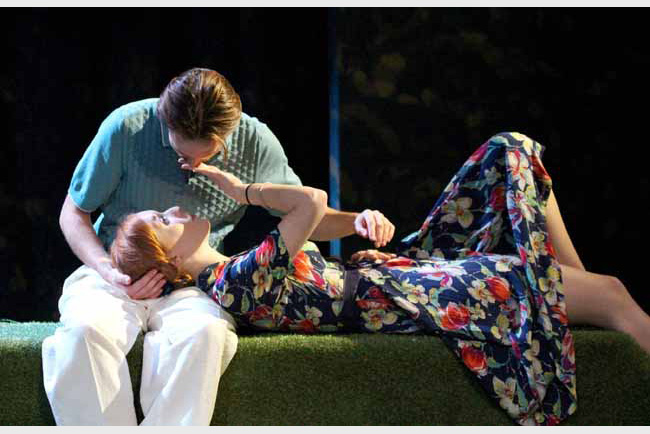 In terms of Shylock, Ian Recordon portrays the moneylender as eager for revenge, sharpening his knife with relish during the climax. There is also clearly no love lost between him and his daughter Jessica either, as her feelings for Lorenzo means that she seems completely indifferent to either her father's fate or Launcelot's antisemitc ‘banter'. However, the production also makes it clear that Shylock's hard-heartedness is the result of the brutality and thuggish nature of the society around him, as the blackshirted Venetians, especially Gratiano (Matt Tylianakis), miss no opportunity to fling abuse in his face. The image in the final seconds of Shylock at a train station reminds the audience of where such sentiments eventually led.
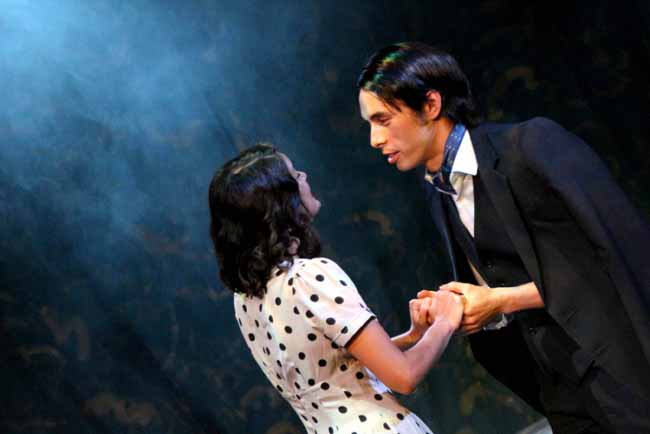 There are a few minor quibbles, such as the decision to cut too much of Bassiano's speech from the casket scene. However, Peter Foster's set, along with Lynda Twidale and Kathleen Morrison's costumes, really enhance the production, go a long way to evoking the feeling of inter-war Italy, the setting for this production. There are also some elegant touches, especially the swimming pool where we first see Portia and Narissa. Tamara Douglas-Morris's score also helps with the mood of various scenes, from the mini-masque surrounding the ‘cask ceremony', to the love scenes between Jessica and Lorenzo. Overall, this is a strong first post-lockdown production with several compelling performances, most notably by Ian Recordon and Nisha Emich. There are a few minor quibbles, such as the decision to cut too much of Bassiano's speech from the casket scene. However, Peter Foster's set, along with Lynda Twidale and Kathleen Morrison's costumes, really enhance the production, go a long way to evoking the feeling of inter-war Italy, the setting for this production. There are also some elegant touches, especially the swimming pool where we first see Portia and Narissa. Tamara Douglas-Morris's score also helps with the mood of various scenes, from the mini-masque surrounding the ‘cask ceremony', to the love scenes between Jessica and Lorenzo. Overall, this is a strong first post-lockdown production with several compelling performances, most notably by Ian Recordon and Nisha Emich.
Photography by Robert Piwko
|