|
 Recently, I was lucky enough to see one of the two last showings of Winsome Pinnock's Leave Taking (original production in 1987) at the Tower Theatre, an honest look at the conflict that can develop between families who consist of first and second generation immigrants, as they clash over their different ideals of living in England; as well as dealing with their own struggles that come with finding a sense of belonging, having a foot in two different cultures and being unable to feel like you really belong to either. Through amazing acting and some brilliant directional choices, I was able to really feel this sense of internal conflict, frustration, disappointment, and the inevitable anger that comes from all of them having to feel some degree of these emotions on a daily basis. Recently, I was lucky enough to see one of the two last showings of Winsome Pinnock's Leave Taking (original production in 1987) at the Tower Theatre, an honest look at the conflict that can develop between families who consist of first and second generation immigrants, as they clash over their different ideals of living in England; as well as dealing with their own struggles that come with finding a sense of belonging, having a foot in two different cultures and being unable to feel like you really belong to either. Through amazing acting and some brilliant directional choices, I was able to really feel this sense of internal conflict, frustration, disappointment, and the inevitable anger that comes from all of them having to feel some degree of these emotions on a daily basis.
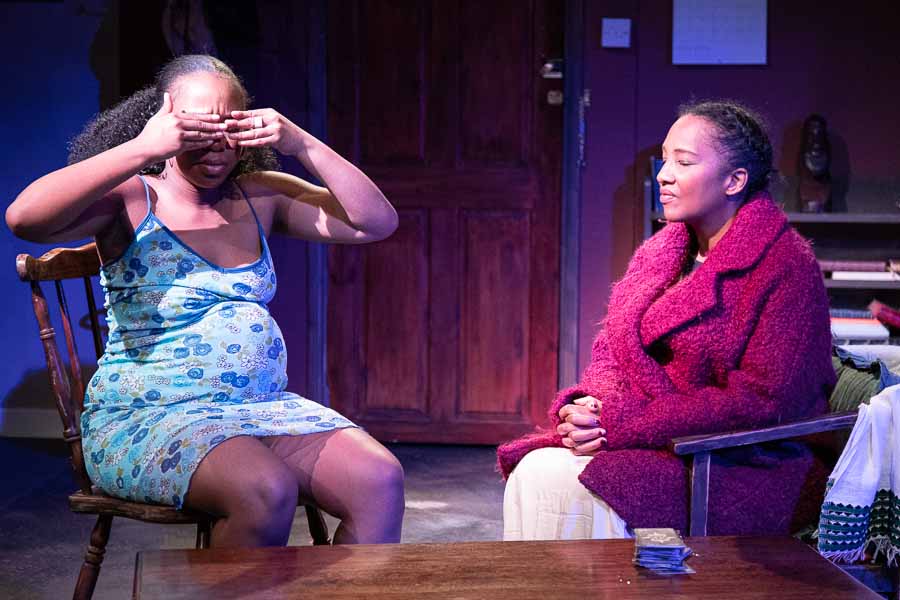
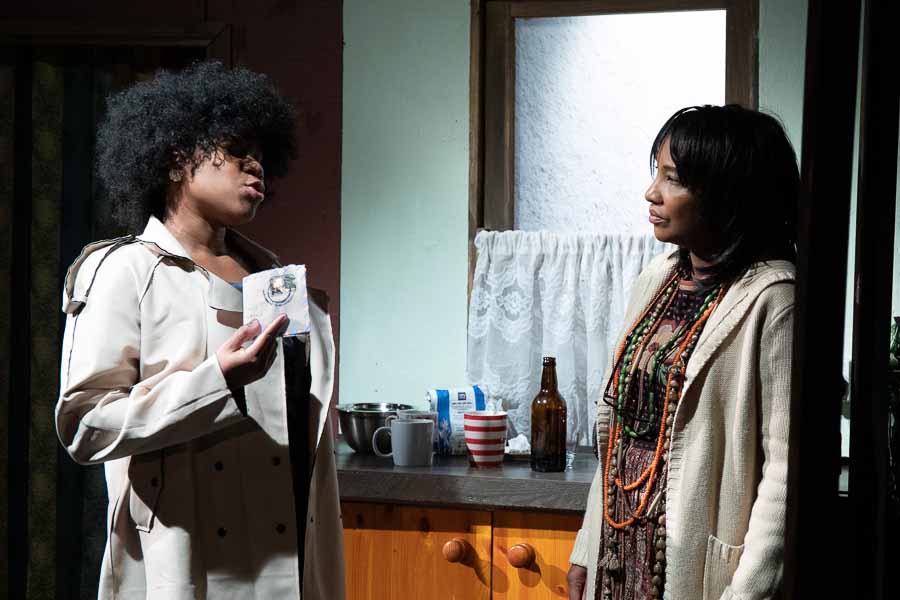
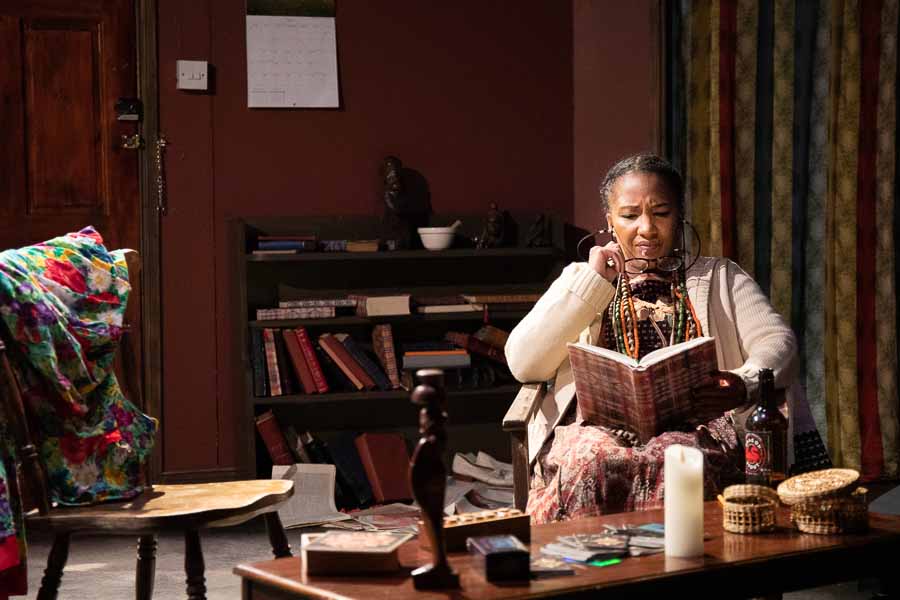
 The play begins with matriarch Enid Matthews (Lina Rhymes) taking her two teenage daughters, Del and Viv (Chanté Frazer and Cerise Angela) to an obeah named Mai (Faith Miamba) to get a reading done for them. It's actually a not-so-subtle ploy, on Enid's part to find out if Del is pregnant. In this opening scene we learn a bit about the characters. First that there is clear tension between Del and her mother, while younger sister Viv tries to fill the role of peacemaker in her capacity as the good daughter. We see Enid as very frustrated and at her wits end with Del, which led me to wonder how strained their relationship was by this point. Had Enid tried to be reasonable at first? Had Del refused to tell her repeatedly, so Enid resorted coming to Mai as a last resort? Or perhaps their dynamic was already at this point, with Enid immediately accusing her wayward daughter of being pregnant, a large shouting match where Del may be denying just to antagonize her mother. Given Del already being sussed to her mother's plan, with absolutely no hint of surprise but rather amused outrage, my theory would be that it's the latter. We also get the first mention of Enid's family back in Jamaica, when she talks about her sister Cynthia asking her to send her money, because their mother is sick and Enid's belief that it is a scam to send money. The play begins with matriarch Enid Matthews (Lina Rhymes) taking her two teenage daughters, Del and Viv (Chanté Frazer and Cerise Angela) to an obeah named Mai (Faith Miamba) to get a reading done for them. It's actually a not-so-subtle ploy, on Enid's part to find out if Del is pregnant. In this opening scene we learn a bit about the characters. First that there is clear tension between Del and her mother, while younger sister Viv tries to fill the role of peacemaker in her capacity as the good daughter. We see Enid as very frustrated and at her wits end with Del, which led me to wonder how strained their relationship was by this point. Had Enid tried to be reasonable at first? Had Del refused to tell her repeatedly, so Enid resorted coming to Mai as a last resort? Or perhaps their dynamic was already at this point, with Enid immediately accusing her wayward daughter of being pregnant, a large shouting match where Del may be denying just to antagonize her mother. Given Del already being sussed to her mother's plan, with absolutely no hint of surprise but rather amused outrage, my theory would be that it's the latter. We also get the first mention of Enid's family back in Jamaica, when she talks about her sister Cynthia asking her to send her money, because their mother is sick and Enid's belief that it is a scam to send money.
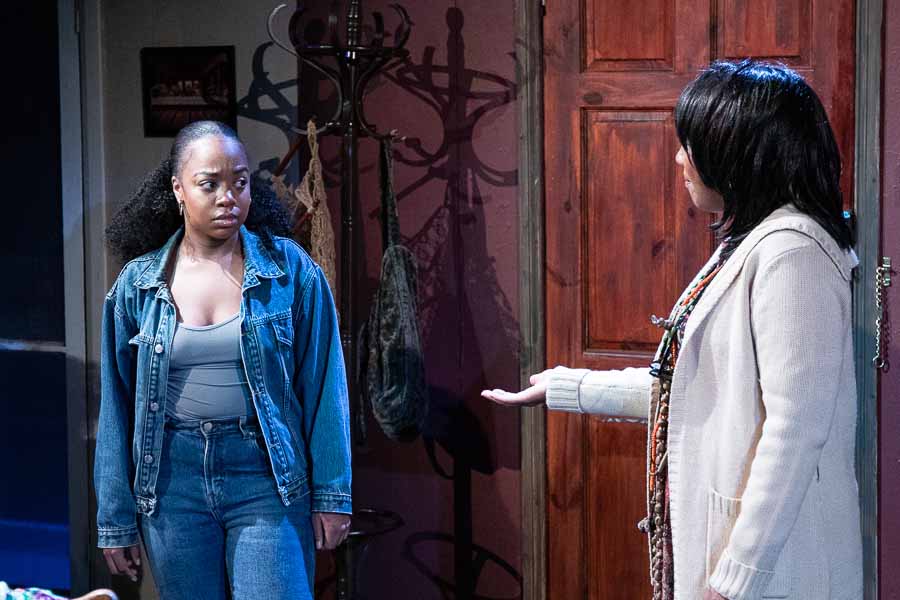 That first scene alone depicts the contrast between a character like Mai, who lives in a western society, yet is very much still in touch with her culture, and Enid, whose desire for a better life for her family has left her feeling an obligation to assimilate into western culture. Del and Viv are two second generation British - Jamaican teenagers who don't know much about their roots. The more cynical Del clearly thinks Mai is just crazy and is somewhat mocking towards the fact that she is an obeah. Vani is more, innocently curious about the situation, particularly fascinated that Mai keeps chickens in their garden. All the while you have her mother, who despite having made a conscious effort to "appear more British" isn't derisive of Mai's work. This demonstrates the stark contrast of what cultures mother and daughters have been exposed to in their lives. That first scene alone depicts the contrast between a character like Mai, who lives in a western society, yet is very much still in touch with her culture, and Enid, whose desire for a better life for her family has left her feeling an obligation to assimilate into western culture. Del and Viv are two second generation British - Jamaican teenagers who don't know much about their roots. The more cynical Del clearly thinks Mai is just crazy and is somewhat mocking towards the fact that she is an obeah. Vani is more, innocently curious about the situation, particularly fascinated that Mai keeps chickens in their garden. All the while you have her mother, who despite having made a conscious effort to "appear more British" isn't derisive of Mai's work. This demonstrates the stark contrast of what cultures mother and daughters have been exposed to in their lives.
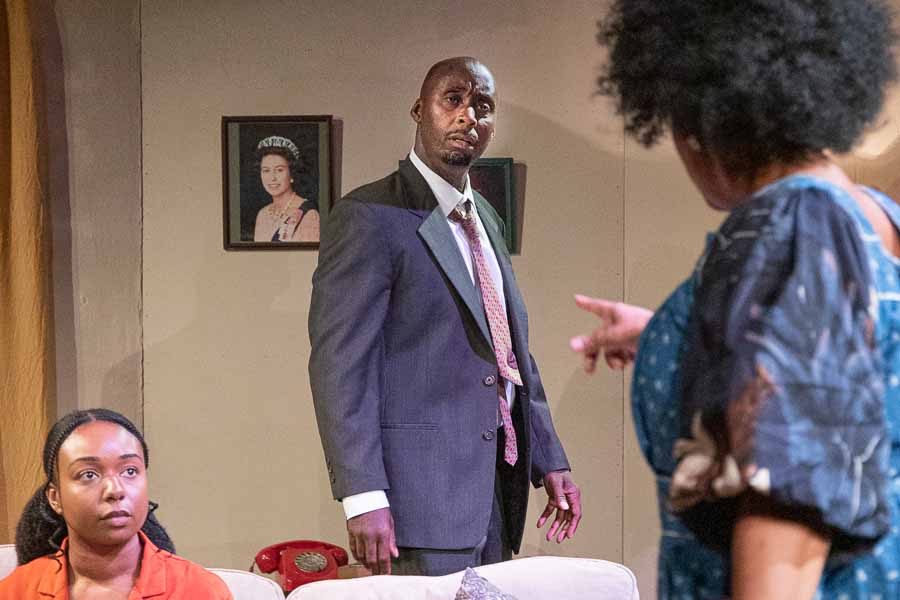
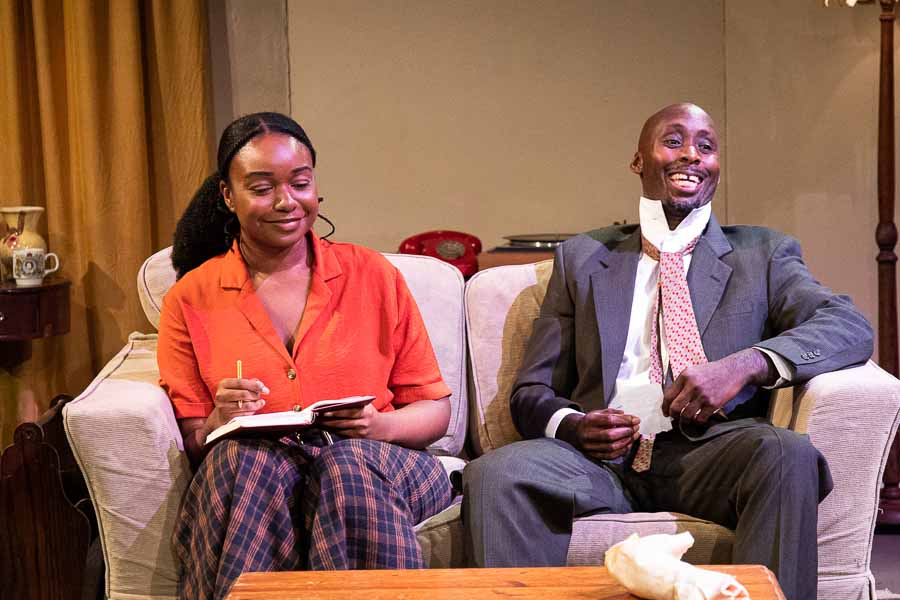
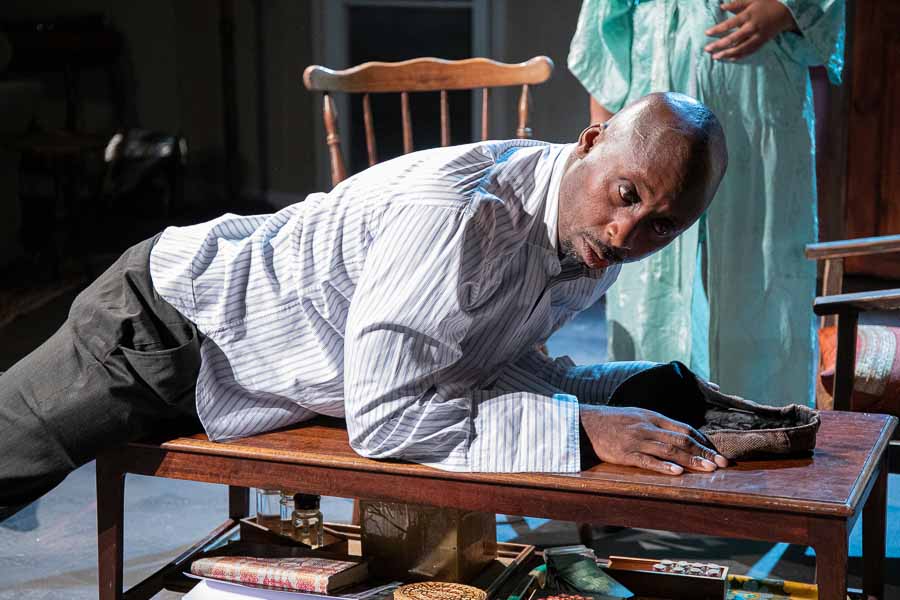
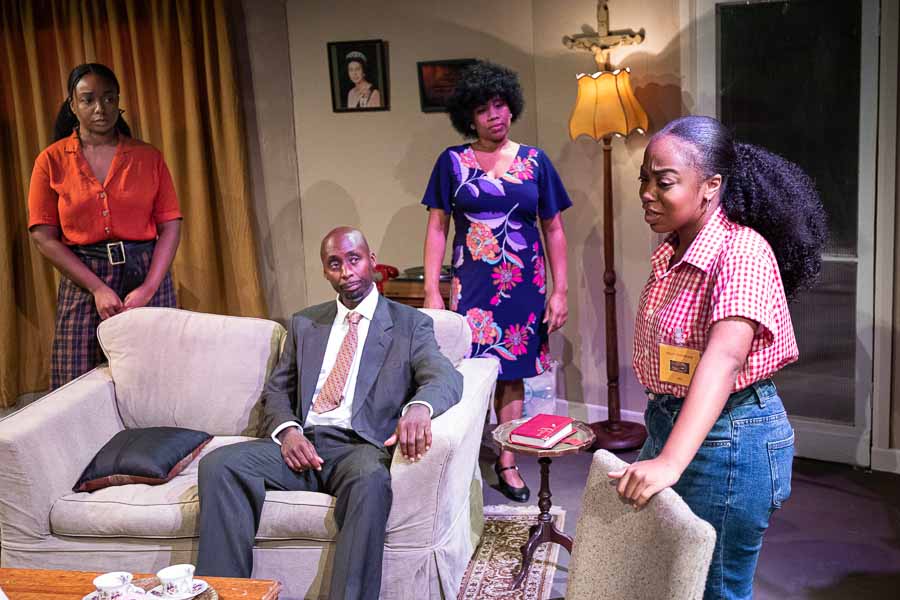
 Visually there's also the fact that the set (Ayo Oluwaleimu) is made up of Enid and Mai's living rooms next to one another. Mai's room is simple, not much in the way of furniture, and littered with magazines. Right next to it, you have Enid's living room, which I must admit looked like something you'd expect an old white couple to have, with the comfy sofas, cream carpet and particularly, a young picture of the queen on the wall. Two people in similar situations, choosing to live in very different ways. Another great, but brief visual representation of this conflict, is the scene where Enid gets dressed nicely for a visit from the pastor, she comes out wearing a hat. Broderick (Maxveal Mclaren), a family friend Enid grew up with back home tells her, in a very bitter tone. "English people don't wear hats indoors", causing Enid to have a little debate with herself before taking it off. The brilliance of this scene is that Broderick is wearing a hat indoors the whole time. Visually there's also the fact that the set (Ayo Oluwaleimu) is made up of Enid and Mai's living rooms next to one another. Mai's room is simple, not much in the way of furniture, and littered with magazines. Right next to it, you have Enid's living room, which I must admit looked like something you'd expect an old white couple to have, with the comfy sofas, cream carpet and particularly, a young picture of the queen on the wall. Two people in similar situations, choosing to live in very different ways. Another great, but brief visual representation of this conflict, is the scene where Enid gets dressed nicely for a visit from the pastor, she comes out wearing a hat. Broderick (Maxveal Mclaren), a family friend Enid grew up with back home tells her, in a very bitter tone. "English people don't wear hats indoors", causing Enid to have a little debate with herself before taking it off. The brilliance of this scene is that Broderick is wearing a hat indoors the whole time.
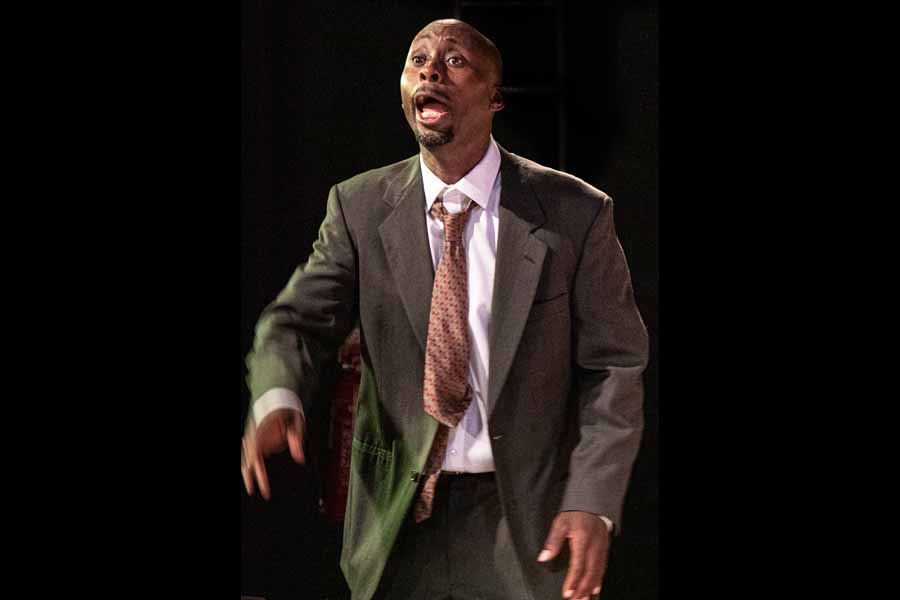 Looking at Broderick and Enid as foils for each other is also interesting, because I would argue that they have the most tragic character arcs of anyone else in the play. Broderick is first presented as a sort of yin to Enid's yang, the more chilled out, and relaxed adult figure in the girls' lives, providing a bit of calm energy in a tense house as well as being able to get Enid herself to loosen up a little. Their dance scene, the only scene where Enid seems to be having genuine fun, was a particular highlight for the audience. Looking at Broderick and Enid as foils for each other is also interesting, because I would argue that they have the most tragic character arcs of anyone else in the play. Broderick is first presented as a sort of yin to Enid's yang, the more chilled out, and relaxed adult figure in the girls' lives, providing a bit of calm energy in a tense house as well as being able to get Enid herself to loosen up a little. Their dance scene, the only scene where Enid seems to be having genuine fun, was a particular highlight for the audience.
Except, really reflecting on the character, I see him as a broken individual whose chilled attitude and hard drinking are his way of compensating for being let down in life. In his few scenes, we first get background to how he initially tried to "fit in" living in England, £I thought I was a British subject, then they told me to sort out my citizenship." From here he then compares it to an acquaintance he knew back home, who thought he had achieved a better life in England, to the point where he ignored everyone back home - only to then discover his car tagged with a racial slur. From then on he became a shell of himself, no longer holding his head up high or trying to fit into any community. From here, his character's backstory only unravels more, that he had a wife who left him, and sharing experiences with Del, of him and her father working in a factory. The racism faced from the white employees, how it turned him from a "smiling boy to a bitter man." We also find out that Broderick has a wife and kids back home; unlike Enid's husband however, Broderick didn't abandon them, but rather she left him, not wanting him to have anything to do with their children.
 We don't get a full story there, but I would have to guess, Broderick's way of coping with life in England, perhaps changed him for the worst in his wife's eyes. The line from Broderick that really gets me is "I'm not saying these things wouldn't have happened in Jamaica. Being here just sped them up." (I might be paraphrasing) That line really got to me, because I saw it as him saying, his life could have still fallen apart, he could still be this guy drinking and joking through his misery; only on top of that, the reality comes with an extra dose of bitterness because, perhaps Broderick was once idealising a better life in England, only to face a disappointing reality that hasn't achieved a positive resolution. We don't get a full story there, but I would have to guess, Broderick's way of coping with life in England, perhaps changed him for the worst in his wife's eyes. The line from Broderick that really gets me is "I'm not saying these things wouldn't have happened in Jamaica. Being here just sped them up." (I might be paraphrasing) That line really got to me, because I saw it as him saying, his life could have still fallen apart, he could still be this guy drinking and joking through his misery; only on top of that, the reality comes with an extra dose of bitterness because, perhaps Broderick was once idealising a better life in England, only to face a disappointing reality that hasn't achieved a positive resolution.
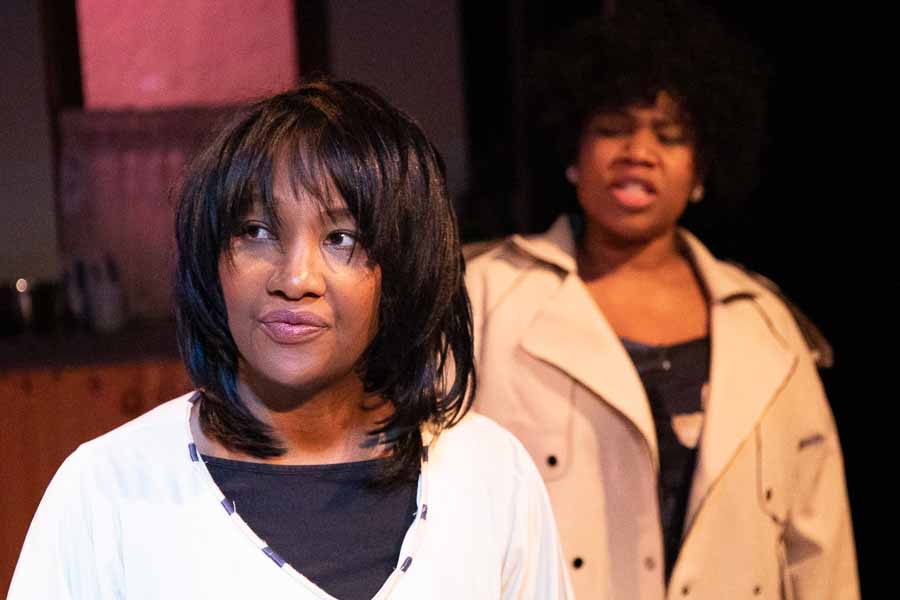
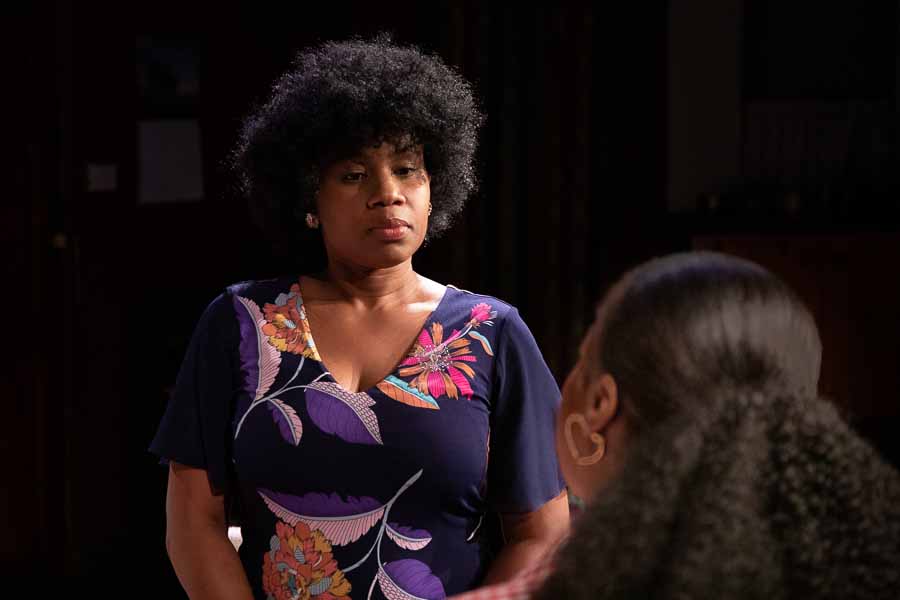 Similarly, I felt Enid was also a tragic character. Except the key difference is that while Broderick became disillusioned a long time ago, Enid is clinging to the hope that all her sacrifices will one day be worth it. She works herself to death to provide for her children, who she hopes will have more opportunities than she had growing up. However, she has a strained relationship with her rebellious daughter, who does not share her idealised view of living in England: "You don't see how they (the police) hunt us in the street". Her younger daughter is so desperate to keep the peace, as well as live up to her mother's expectations, that she has become tightly wound and lives her life through books. Not forgetting that in keeping details about her life before coming to England, Viv secretly yearns for experiences and a sense of identity she has never felt where she has grown up. Enid's move also had a negative impact on her mother, who she never gets the chance to reconcile with, and she only ended up in England to follow her husband, only to have him become abusive and eventually leave. Similarly, I felt Enid was also a tragic character. Except the key difference is that while Broderick became disillusioned a long time ago, Enid is clinging to the hope that all her sacrifices will one day be worth it. She works herself to death to provide for her children, who she hopes will have more opportunities than she had growing up. However, she has a strained relationship with her rebellious daughter, who does not share her idealised view of living in England: "You don't see how they (the police) hunt us in the street". Her younger daughter is so desperate to keep the peace, as well as live up to her mother's expectations, that she has become tightly wound and lives her life through books. Not forgetting that in keeping details about her life before coming to England, Viv secretly yearns for experiences and a sense of identity she has never felt where she has grown up. Enid's move also had a negative impact on her mother, who she never gets the chance to reconcile with, and she only ended up in England to follow her husband, only to have him become abusive and eventually leave.
 One moment that stands out is when Del talks about her mum's work-do where a colleague threw up, and her mum was signalled out by her superior as the person who has to clean the floor. Yet, despite these very poignant moments of discrimination that Enid has probably had to face on a regular basis, she refuses to lose hope that there will be some resolution for her family after bearing all this hardship, even if her children don't understand. Where Broderick seems to be very much in the mind-set of 'it was all for nothing', Enid seems to be in a constant struggle of hoping it won't all be for nothing, and by the end of the play we see that she's close to a breaking point. One moment that stands out is when Del talks about her mum's work-do where a colleague threw up, and her mum was signalled out by her superior as the person who has to clean the floor. Yet, despite these very poignant moments of discrimination that Enid has probably had to face on a regular basis, she refuses to lose hope that there will be some resolution for her family after bearing all this hardship, even if her children don't understand. Where Broderick seems to be very much in the mind-set of 'it was all for nothing', Enid seems to be in a constant struggle of hoping it won't all be for nothing, and by the end of the play we see that she's close to a breaking point.
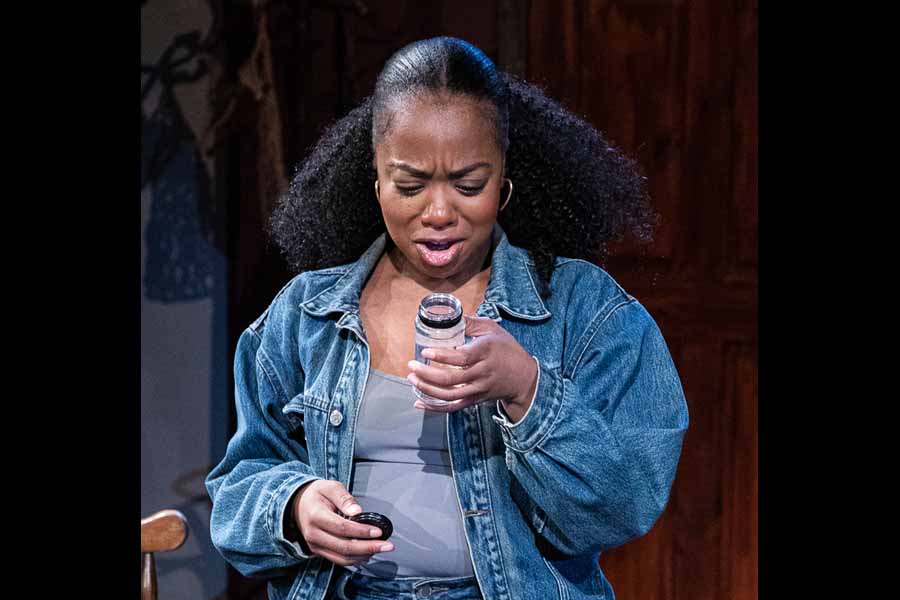
I also really enjoyed the later scenes between Del, Viv and Mai. With Del and Viv, it was interesting to see a little bit of Enid in Del after Viv tells her she walked out of an exam. At this stage, Del's life looks like it is on the down turn, pregnant and living with Mai, from her perspective someone her mother is ashamed of, and Viv is the perfect sister. However, when Viv tells her that education might not be for her and wants to live life, Viv reacts by throwing her out of the house, telling her not to come back until she has taken her exams. All because she wants better for Viv than she has for herself. Sound familiar?
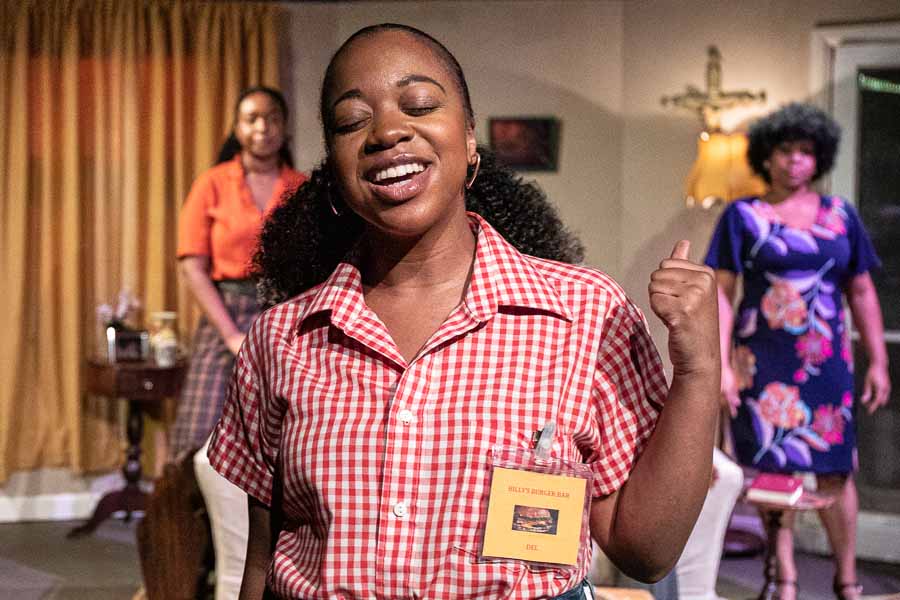 There's also the sweet relationship between Mai and Del that develops in the second act. We see Del become a little more respectful, and a bit more responsible as Mai helps her see that she does not fully understand or appreciate the reasons behind her mother's actions. I thought it was very relatable, to that idea of your children will listen to everyone else but you, and sometimes you just need to back off, to let your child come to these understandings themselves. It all leads to a final scene between Enid and Del, as they managed to come to some sort of understanding, despite, perhaps never fully being able to see eye to eye. I prefer a more realistic resolution to a sappy Hollywood one and Winsome Pinnock did not disappoint. There's also the sweet relationship between Mai and Del that develops in the second act. We see Del become a little more respectful, and a bit more responsible as Mai helps her see that she does not fully understand or appreciate the reasons behind her mother's actions. I thought it was very relatable, to that idea of your children will listen to everyone else but you, and sometimes you just need to back off, to let your child come to these understandings themselves. It all leads to a final scene between Enid and Del, as they managed to come to some sort of understanding, despite, perhaps never fully being able to see eye to eye. I prefer a more realistic resolution to a sappy Hollywood one and Winsome Pinnock did not disappoint.
 While this play is no longer on at the Tower Theatre, I would recommend theatre lovers keep an eye out for the next time this play is in production. Also, despite all the cast being superb, I would like to give a special shout-out to Chanté Frazer and Cerise Angela for absolutely nailing their first roles in a Tower Theatre production directed by Landé Belo. Really, this play was so well-done and so well-written that even if, like me, you could never relate to the character's experiences on a personal level, what you can take away is a much better understanding of the experiences some second-generation immigrant families go through. Not just in terms of what we may hear about every day, such as discrimination and poor employment opportunities. But also the different levels of emotional and mental strain it can have on the individual members of those families. Truly this was an amazing play which does not shy-away from the reality of the situation. While this play is no longer on at the Tower Theatre, I would recommend theatre lovers keep an eye out for the next time this play is in production. Also, despite all the cast being superb, I would like to give a special shout-out to Chanté Frazer and Cerise Angela for absolutely nailing their first roles in a Tower Theatre production directed by Landé Belo. Really, this play was so well-done and so well-written that even if, like me, you could never relate to the character's experiences on a personal level, what you can take away is a much better understanding of the experiences some second-generation immigrant families go through. Not just in terms of what we may hear about every day, such as discrimination and poor employment opportunities. But also the different levels of emotional and mental strain it can have on the individual members of those families. Truly this was an amazing play which does not shy-away from the reality of the situation.
Photography by David Sprecher
|