|
"To Those Who Appreciate Wisteria and Sunshine. Small mediaeval Italian Castle on the shores of the Mediterranean to be Let furnished for the month of April. Necessary servants remain." Agony Column, The Times.
 This intriguing item seems the perfect starting place for a review, as it contains the germ of the redemptive theme of the original 1922 novel by Elizabeth von Arnim, and gives us an expectation of the arc of the story: two unfulfilled married women, slight acquaintances, pluck up the courage to respond to the advertisement, engaging two further women to share the experience and the cost, and setting out with the hope of exchanging miserable English rain for heady Italian sunshine. This intriguing item seems the perfect starting place for a review, as it contains the germ of the redemptive theme of the original 1922 novel by Elizabeth von Arnim, and gives us an expectation of the arc of the story: two unfulfilled married women, slight acquaintances, pluck up the courage to respond to the advertisement, engaging two further women to share the experience and the cost, and setting out with the hope of exchanging miserable English rain for heady Italian sunshine.
Matthew Barber makes it clear in his instructions that the two acts of the play are intended to be contrasted as much as possible, both in structure and in atmosphere. He suggests mourning, with low lighting and dark clothing. Max Batty's impressive set certainly conveyed the stifling, oppressive mood of the opening, with its straight line of anonymous translucent window panels stretching the whole width of the stage. Nick Insley's lighting kept the tone varied but sombre (operator Jonathan Ringshall).
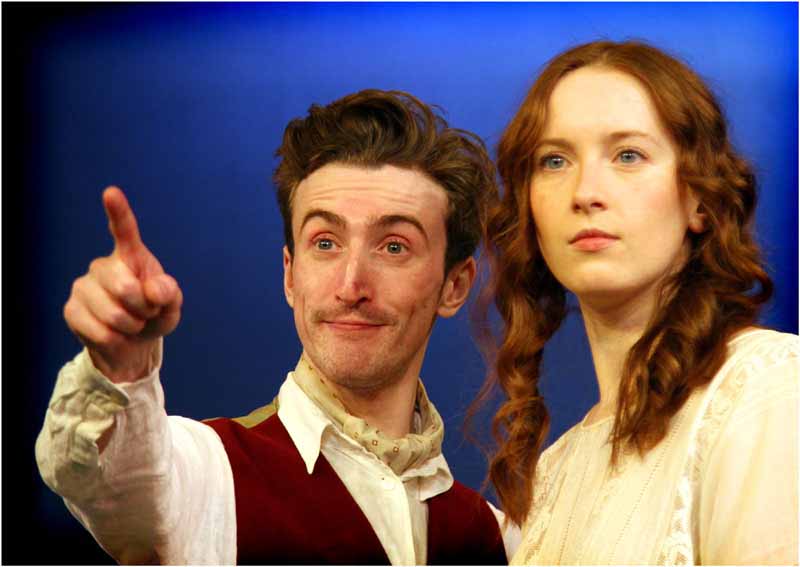 I thought the production was excellently cast – and for me Katherine Kennet, as Lotty Wilton, convinced from the outset as a true innocent speaking on impulse, considering the impact of her words only afterwards, if at all. Blessed with imagination and optimism, she refers repeatedly to having "seen" future possibilities for herself and others. Her apparent naïvety and earnestness were evident in her many gestures and facial expressions. Fortunate to be granted the opening and closing monologues that frame the play, she carried one along in the hopes of seeing her vision realised. A lovely creation. I thought the production was excellently cast – and for me Katherine Kennet, as Lotty Wilton, convinced from the outset as a true innocent speaking on impulse, considering the impact of her words only afterwards, if at all. Blessed with imagination and optimism, she refers repeatedly to having "seen" future possibilities for herself and others. Her apparent naïvety and earnestness were evident in her many gestures and facial expressions. Fortunate to be granted the opening and closing monologues that frame the play, she carried one along in the hopes of seeing her vision realised. A lovely creation.
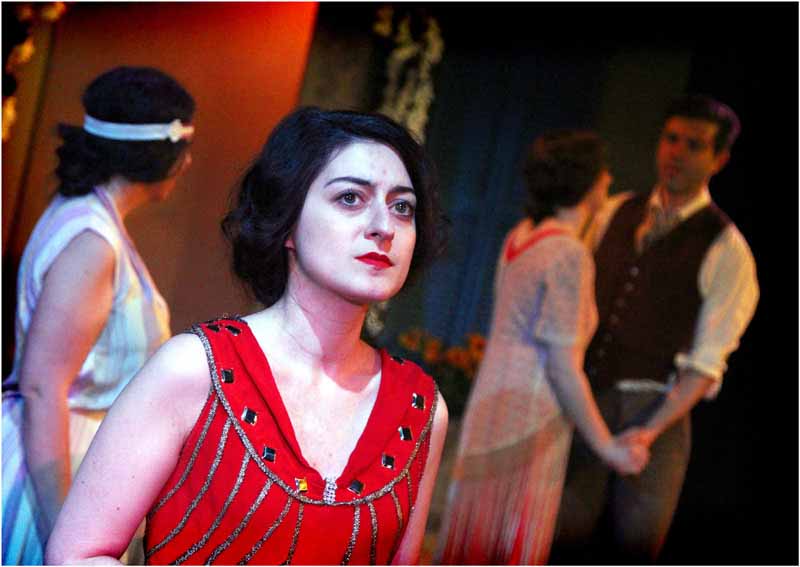
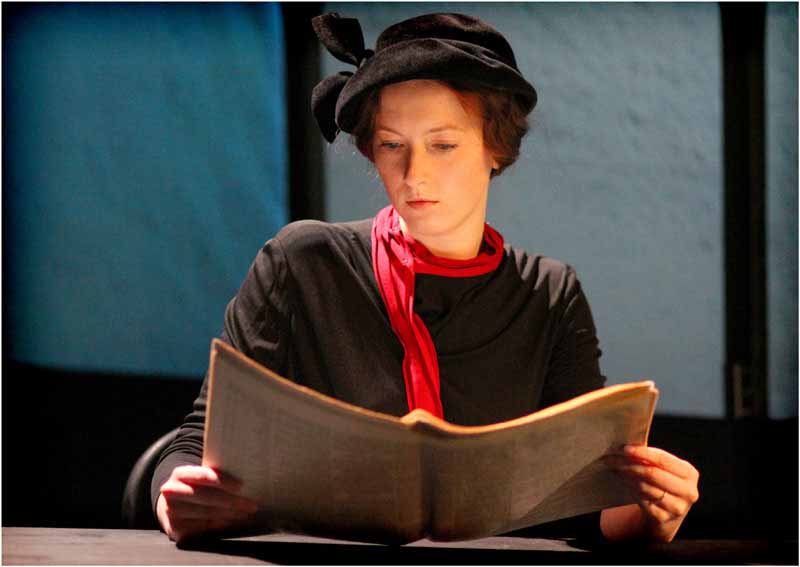
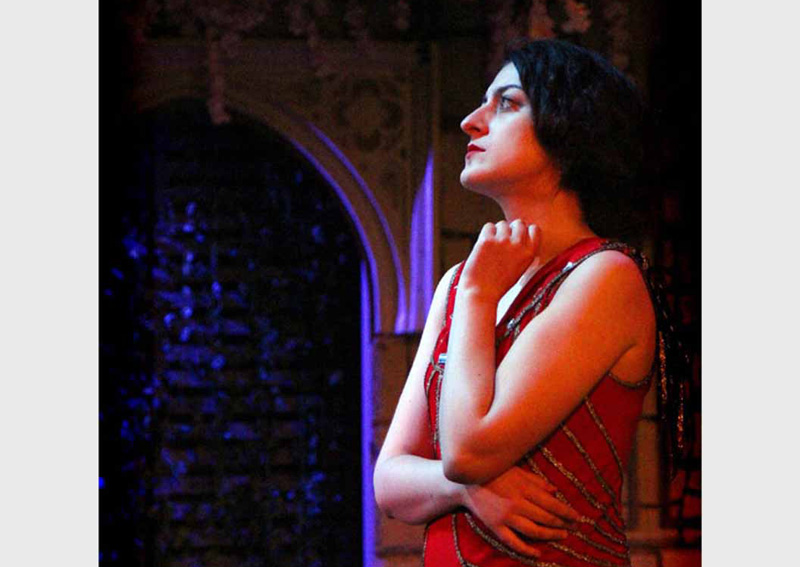
 She and Rose Arnott were dressed in sober black (causing other characters to tread warily lest they be war widows) – except for a devilish streak of red in Mrs Arnott's dress. I wondered whether to interpret this as a hint of deep-hidden fires, but Ailsa Dann gave nothing away. Her character was, to modern eyes, a repressed Christian teacher, carefully avoiding any ungodly thoughts, let alone acts. Her makeup was pale and minimal, her concessions to femininity few, so you could see why the Wiltons dubbed her 'a disppointed Madonna'. Her polite stoniness to this mere church acquaintance sets the scene for a long tussle between them (will they, won't they?). Rose feels that their plotting is wrong, that one ought to make 'happiness' out of one's circumstances, however dull. By the time they meet again in church the die is cast, Lotty having invested her clothing-allowance nest-egg in the deposit for the castle. She and Rose Arnott were dressed in sober black (causing other characters to tread warily lest they be war widows) – except for a devilish streak of red in Mrs Arnott's dress. I wondered whether to interpret this as a hint of deep-hidden fires, but Ailsa Dann gave nothing away. Her character was, to modern eyes, a repressed Christian teacher, carefully avoiding any ungodly thoughts, let alone acts. Her makeup was pale and minimal, her concessions to femininity few, so you could see why the Wiltons dubbed her 'a disppointed Madonna'. Her polite stoniness to this mere church acquaintance sets the scene for a long tussle between them (will they, won't they?). Rose feels that their plotting is wrong, that one ought to make 'happiness' out of one's circumstances, however dull. By the time they meet again in church the die is cast, Lotty having invested her clothing-allowance nest-egg in the deposit for the castle.
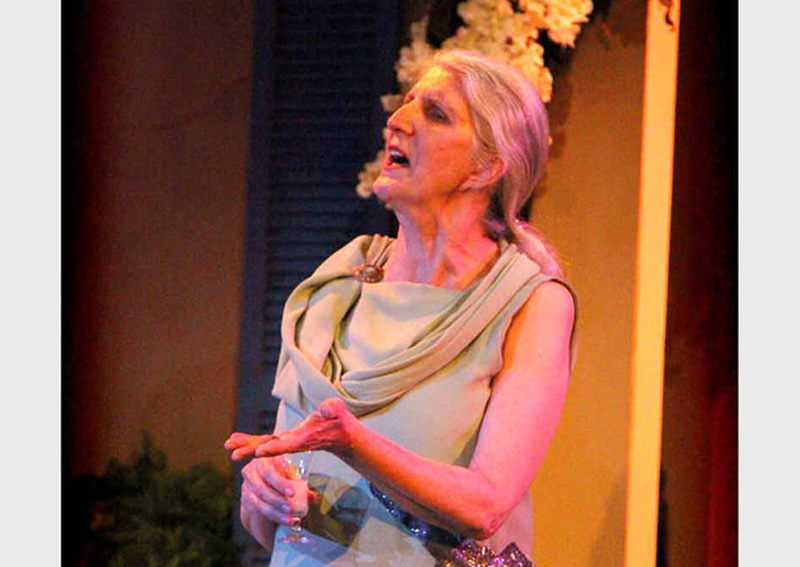
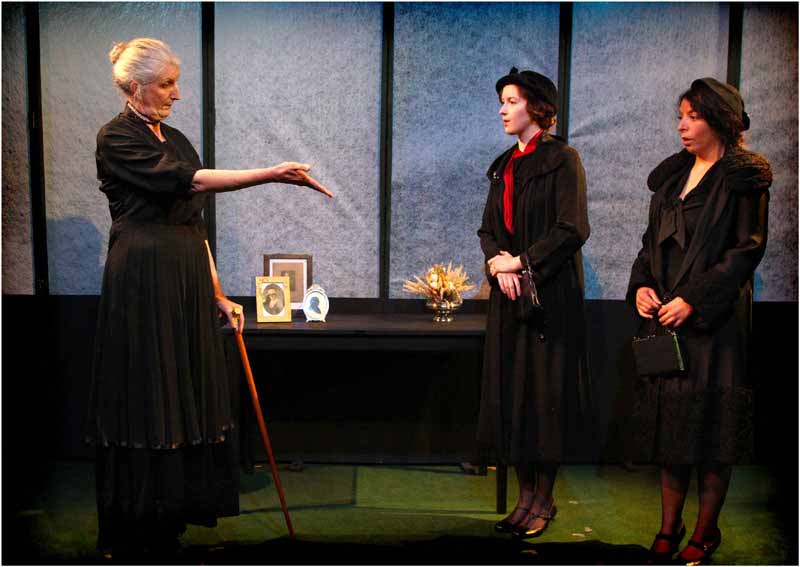 I trust Lynda Twidale's trawling through the Tower wardrobe proved as enjoyable as our experience of seeing the results: costumes throughout (several each for many characters) were excellent and evocative, and expressed what made the characters tick – voluminous and practical for Mrs Graves, elegantly casual or tight-fitting and shapely for Lady Caroline, homely and Italian for Costanza. I trust Lynda Twidale's trawling through the Tower wardrobe proved as enjoyable as our experience of seeing the results: costumes throughout (several each for many characters) were excellent and evocative, and expressed what made the characters tick – voluminous and practical for Mrs Graves, elegantly casual or tight-fitting and shapely for Lady Caroline, homely and Italian for Costanza.
The sequence of nine brief scenes serves to give us cleverly-constructed introductions to the backgrounds of all but one character. Two unremarkable tables, four chairs and a hat-stand go through numerous re-sitings in order to represent 9 different settings aided, of course, by hints in the text. 'Don't underestimate the imagination and intelligence of the audience' (and keep scene-change times to a minimum!). In line with the production values generally, ASMs David East, Nick Lacey and Richard Davies, under Stage Manager Nichola Vasey, briskly performed their smartly-choreographed changes with all the confidence of mid-run, but actually on the first night.
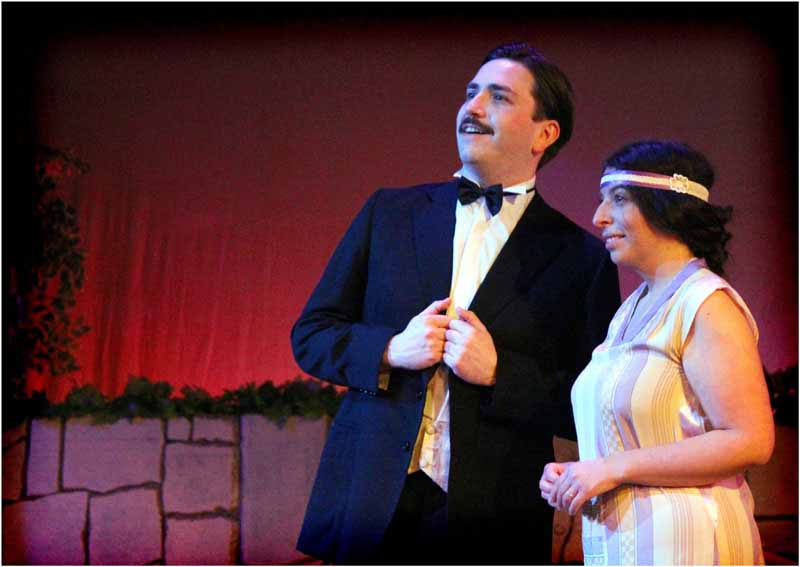 During our brief visit to the Wiltons' bedroom, Mellersh Wilton meticulously groomed his moustache. Ryan Williams' patronising solicitor had the audience itching to unseat him from the high horse of male privilege and 'ownership' of his wife. As with the Arnotts, one wondered a little about their reason for pairing up in the first place. He clearly required his life to be bound in red tape, safe, predictable and minutely controlled – his only outside interest the potential drumming-up of new clients from amongst their chance acquaintances. Barber takes care to give him the human touch of suggesting how Lotty might feel more at ease by saying "Marvellous" when flummoxed by The Impressionists. Lotty's unperturbed and expert tying of his bow-tie (Simon Vaughan meriting a programme mention for tuition!) neatly summarised the relationship. During our brief visit to the Wiltons' bedroom, Mellersh Wilton meticulously groomed his moustache. Ryan Williams' patronising solicitor had the audience itching to unseat him from the high horse of male privilege and 'ownership' of his wife. As with the Arnotts, one wondered a little about their reason for pairing up in the first place. He clearly required his life to be bound in red tape, safe, predictable and minutely controlled – his only outside interest the potential drumming-up of new clients from amongst their chance acquaintances. Barber takes care to give him the human touch of suggesting how Lotty might feel more at ease by saying "Marvellous" when flummoxed by The Impressionists. Lotty's unperturbed and expert tying of his bow-tie (Simon Vaughan meriting a programme mention for tuition!) neatly summarised the relationship.
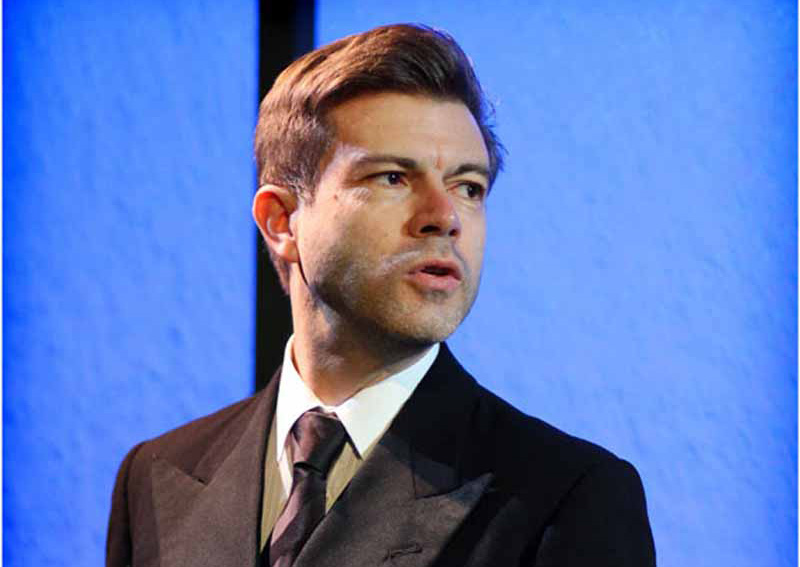 Next, at the Arnotts' house, Frederick Arnott was a less clichéd type – a biographer about to attend a book party. Paul Isaacs well conveyed a forlorn attempt at a joviality he cannot share with his wife. It seems his earlier poetry was originally a point of contact with Rose; now she disapproves of his writing lives of famous mistresses under the pen name Florian Ayres: "One should not write books that God would not like to read". You sense his poignant wish that she accompany him on his life's journey – his parting shot is "Should the things you have faith in ever include the people who love you... be in touch.". At the same time, she is moved by his suggestion that she join him on his book tour, as unappealing to her principles as that sounds. Next, at the Arnotts' house, Frederick Arnott was a less clichéd type – a biographer about to attend a book party. Paul Isaacs well conveyed a forlorn attempt at a joviality he cannot share with his wife. It seems his earlier poetry was originally a point of contact with Rose; now she disapproves of his writing lives of famous mistresses under the pen name Florian Ayres: "One should not write books that God would not like to read". You sense his poignant wish that she accompany him on his life's journey – his parting shot is "Should the things you have faith in ever include the people who love you... be in touch.". At the same time, she is moved by his suggestion that she join him on his book tour, as unappealing to her principles as that sounds.
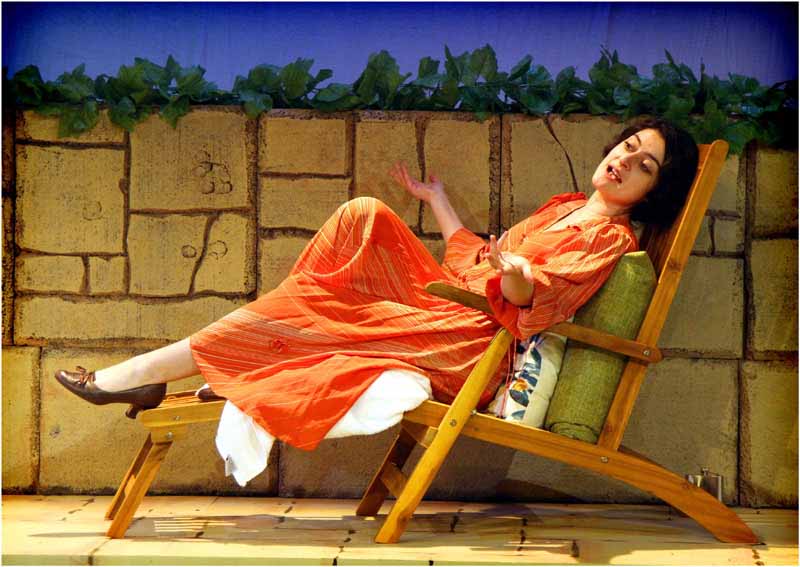
 Relaxing in a negligée, even with visitors at her home, Emily Carmichael impressed with her world-weary yet slightly haughty portrayal of the celebrity socialite Lady Caroline Bramble. She is seeking relief from the 'grabbing and making eyes' of the artists encountered at her mother's parties. When Lotty tells her that she and Rose are also escaping and Lady Caroline asks, joking, whether they are 'wanted women', Kennet makes the most of the line: "We're not wanted at all!". Caroline's invitation to them to take cognac at 11 in the morning alerts us to her personal way of dealing with the pressures of her life, but she is disinclined to give much away. Relaxing in a negligée, even with visitors at her home, Emily Carmichael impressed with her world-weary yet slightly haughty portrayal of the celebrity socialite Lady Caroline Bramble. She is seeking relief from the 'grabbing and making eyes' of the artists encountered at her mother's parties. When Lotty tells her that she and Rose are also escaping and Lady Caroline asks, joking, whether they are 'wanted women', Kennet makes the most of the line: "We're not wanted at all!". Caroline's invitation to them to take cognac at 11 in the morning alerts us to her personal way of dealing with the pressures of her life, but she is disinclined to give much away.
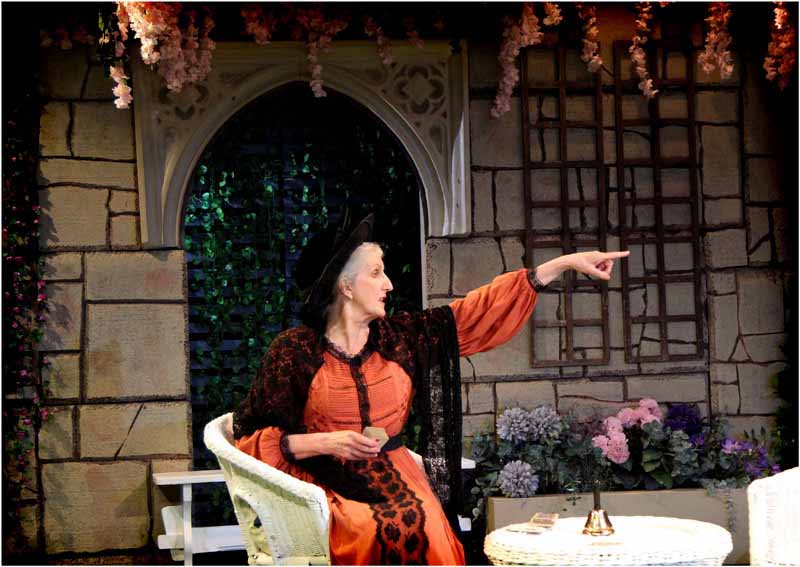
 Rosanna Preston was every inch the autocratic widow Mrs Graves, expecting to dictate and not listen – shades of a Lady Bracknell. Her self-esteem seems rooted in her father's having travelled with great men such as Carlyle and Tennyson, and is evident in her attempt to dictate a regime for all to follow. Her interest in the advertisement seems based on the opportunity to "sit and remember". By this stage, these various potential difficulties in the plan can be relished by the audience for their presumed ironing out to come later. Rosanna Preston was every inch the autocratic widow Mrs Graves, expecting to dictate and not listen – shades of a Lady Bracknell. Her self-esteem seems rooted in her father's having travelled with great men such as Carlyle and Tennyson, and is evident in her attempt to dictate a regime for all to follow. Her interest in the advertisement seems based on the opportunity to "sit and remember". By this stage, these various potential difficulties in the plan can be relished by the audience for their presumed ironing out to come later.
The part of Anthony Wilding proved an excellent début for new Tower member Tony Sears – he gave us a friendly and carefree painter who is the young proprietor of the castle. His frankness charms us (and Lotty) while simultaneously sounding alarm bells for Rose who, he says, reminds him of a Madonna portrait in the castle staircase.
 A source informs me that Scene 8 proved the hardest to rehearse – no surprise, since it represents the moments of leave-taking and husband-informing happening simultaneously in the two Hampstead homes. Far from seeming a gimmick, this was very smoothly and naturally performed, the interleaved and similar lines keeping the audience alert to catch both conversations. At one point, the two women exchange a glance; and, at the end, so do the men – a gentle theatrical joke. A source informs me that Scene 8 proved the hardest to rehearse – no surprise, since it represents the moments of leave-taking and husband-informing happening simultaneously in the two Hampstead homes. Far from seeming a gimmick, this was very smoothly and naturally performed, the interleaved and similar lines keeping the audience alert to catch both conversations. At one point, the two women exchange a glance; and, at the end, so do the men – a gentle theatrical joke.
Scene 9 is a train journey – excellently conveyed by a sequence of flashes lighting up the panels in sequence as a station was passed at speed. In some despair over their temerity, Rose drops to her knees to pray, shortly followed by Lotty, as 'the curtain falls'.
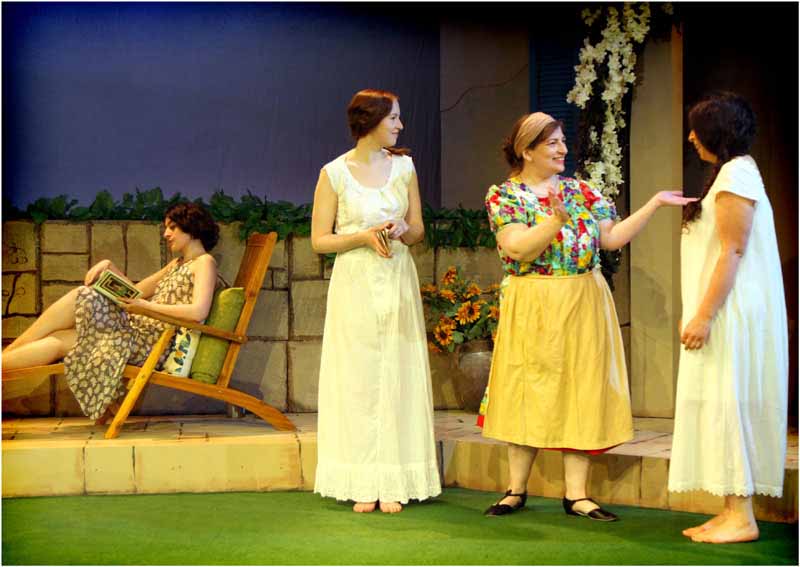
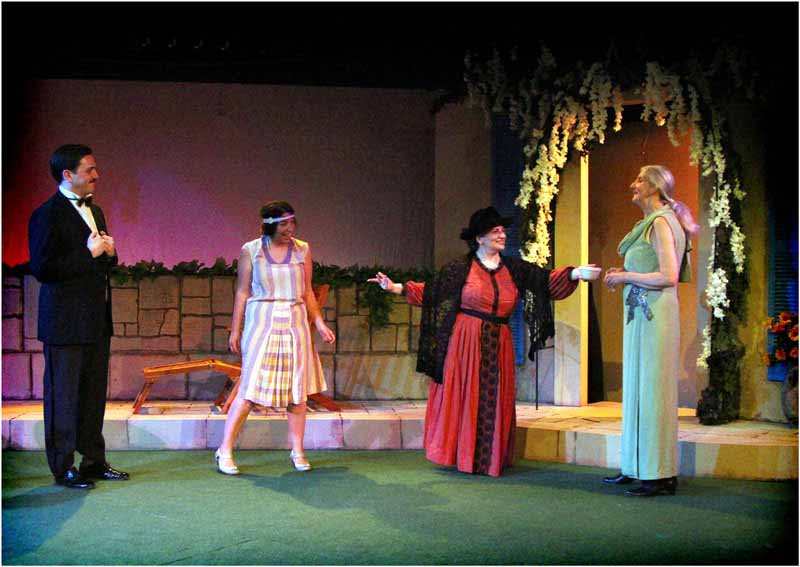 Those who, like me, headed for the bar, missed the transformation of the set, though I had been thinking throughout of the coup de théâtre of Shirley Valentine and guessed what I might find on my return. We were not disappointed: from behind the vanished panels emerged sundrenched stonework, Lloyd Loom garden seats, shutters, a trough of flowers and, yes, wisteria a-plenty hanging over doorways. And Mediterranean sunlight to match (modulated later for evening and moonlight). Those who, like me, headed for the bar, missed the transformation of the set, though I had been thinking throughout of the coup de théâtre of Shirley Valentine and guessed what I might find on my return. We were not disappointed: from behind the vanished panels emerged sundrenched stonework, Lloyd Loom garden seats, shutters, a trough of flowers and, yes, wisteria a-plenty hanging over doorways. And Mediterranean sunlight to match (modulated later for evening and moonlight).
After all the rain and thunder of Act I (sound by Robert Irvine, operator Chris Shiel), I was convinced I could hear very subtle, distant, small waves of the Med. down below, as well as English change-ringers (?) in the local town. The pace relaxes to suit the warmth and gives us more of a chance to see the interaction of these four unexpected companions. I found it consistently easy to believe that Anna Dimdore was the comfortable, motherly Italian housekeeper Costanza that she portrayed – full marks to the coaches for giving her, and Lady Caroline, such confidence in Italian speaking. She provided also the necessary extra comedy based around the 'English abroad', further enhancing the transformation of the characters' mood which is at the heart of the piece. An excellent and strong performance, grounding us firmly in the 'paradise' that Lotty is realising.
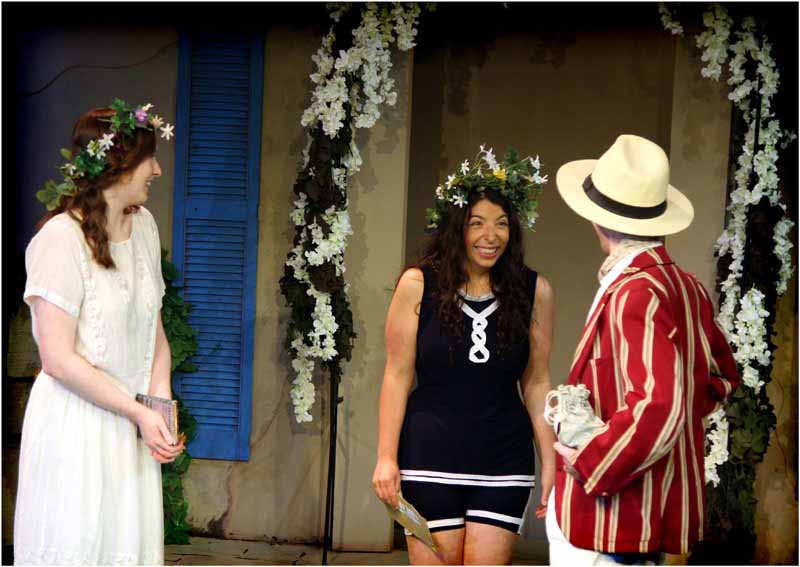
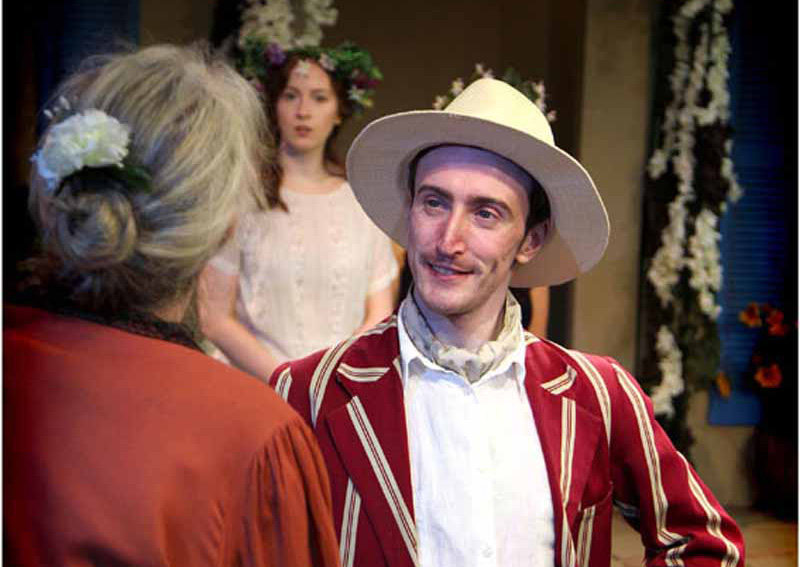 A Paradise slightly marred by grumbles about the provenance of the milk, why spare beds are cluttering Lotty and Rose's bedrooms, why Caroline needs to go alone into the town, and what can be done about Mrs Graves' insistence on running everything and everyone. In a way one can predict that there will be a general improvement and relaxation in everyone's demeanour: this is shown by the gradual letting-down of Rose's hair (tending towards a botticellian Madonna look); Mrs Graves forgetting to use her stick and not noticing (and proposing to teach Costanza the arcane mysteries of steak and kidney pudding); Lotty reappearing from the shore in a fetching 1920s bathing suit. A Paradise slightly marred by grumbles about the provenance of the milk, why spare beds are cluttering Lotty and Rose's bedrooms, why Caroline needs to go alone into the town, and what can be done about Mrs Graves' insistence on running everything and everyone. In a way one can predict that there will be a general improvement and relaxation in everyone's demeanour: this is shown by the gradual letting-down of Rose's hair (tending towards a botticellian Madonna look); Mrs Graves forgetting to use her stick and not noticing (and proposing to teach Costanza the arcane mysteries of steak and kidney pudding); Lotty reappearing from the shore in a fetching 1920s bathing suit.
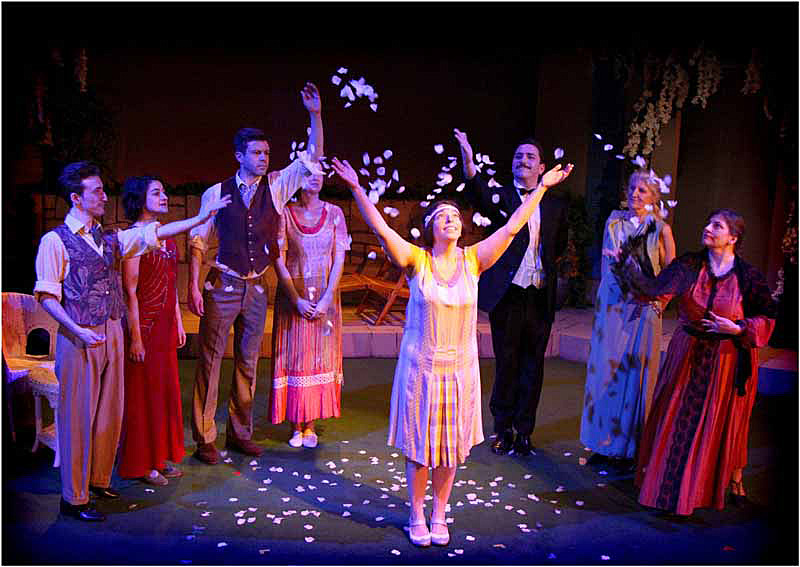 The rest of the story contains a number of machinations and revelations over the following weeks to intrigue the audience: suffice to say that these coincidences and unacknowledged acquaintanceships tend to bring people together in neat pairs on a romantic moonlit evening, rather than cause further friction. There is pain – Caroline's fallen eve-of-battle husband and Rose's guilt-ridden miscarriage of four years earlier; there is humour – Mellersh shouting badly mispronounced Italian from a phrase-book; and some farce – Mellersh again in a small towel after a scalding from dodgy plumbing (but subsequently redeeming himself by accomplished off-stage pianism). So, remaining knots are unravelled, the whole cast working hard to convey a rapid succession of plausible reactions to go with their transformed personalities. Pace was never in doubt, John McSpadyen keeping a tight rein on proceedings and avoiding the temptation to over-dramatise what the script was already telling us. The rest of the story contains a number of machinations and revelations over the following weeks to intrigue the audience: suffice to say that these coincidences and unacknowledged acquaintanceships tend to bring people together in neat pairs on a romantic moonlit evening, rather than cause further friction. There is pain – Caroline's fallen eve-of-battle husband and Rose's guilt-ridden miscarriage of four years earlier; there is humour – Mellersh shouting badly mispronounced Italian from a phrase-book; and some farce – Mellersh again in a small towel after a scalding from dodgy plumbing (but subsequently redeeming himself by accomplished off-stage pianism). So, remaining knots are unravelled, the whole cast working hard to convey a rapid succession of plausible reactions to go with their transformed personalities. Pace was never in doubt, John McSpadyen keeping a tight rein on proceedings and avoiding the temptation to over-dramatise what the script was already telling us.
A most enjoyable and high-class production!
Photography by Robert Piwko
|