|
 It's always interesting to review a show that's hardly ever been done and no one you know has ever seen. Then you find out that it wasn't a critical success when it was performed around 70 years ago, and you think really? Is it a good idea to produce a show that bombed first time round (and 70 years ago)?
Despite these misgivings, I'm happy to report that it was an entertaining evening. While the script is not without flaws (even the director described some of the dialogue as "clunky") what really shone through is Beaton's undoubted passion and enthusiasm for Gainsborough's work.
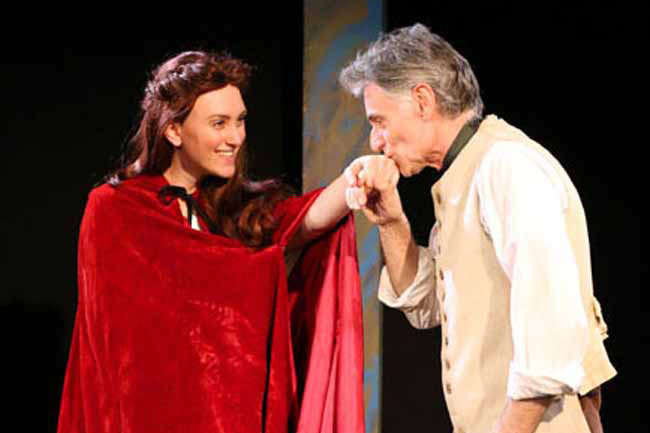
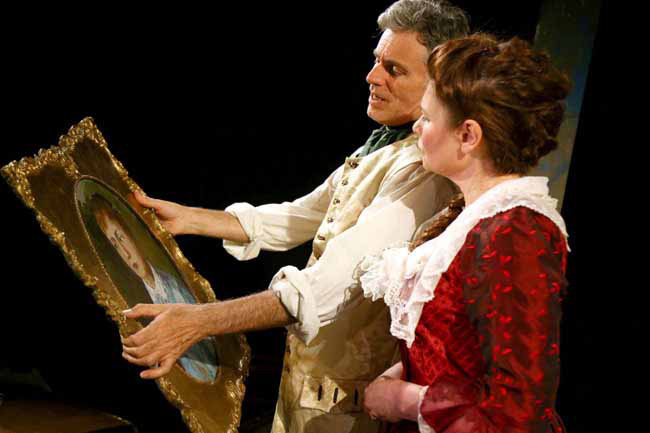
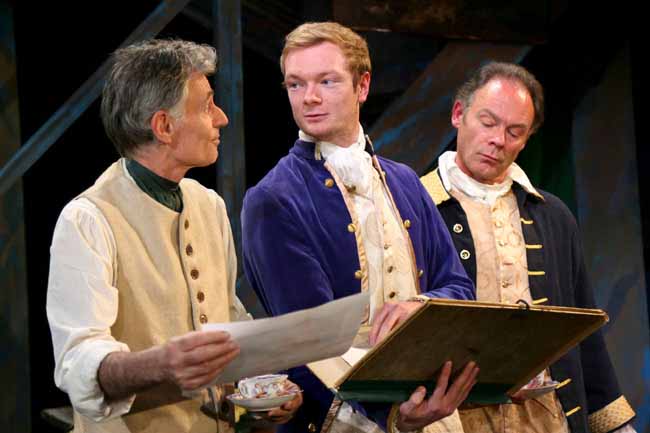
 The action of the play begins in 1774, when Gainsborough moves his family to London to seek commercial success as a portrait painter. The domestic setting gives an interesting slant to the telling of the story - we see Gainsborough as hugely talented and uncompromising as an artist, yet a loving father and husband. Also a bit of a party animal. Simon Lee gave a wonderfully nuanced performance and I came away from the show a lot more interested in Gainsborough's life and work than when I arrived.
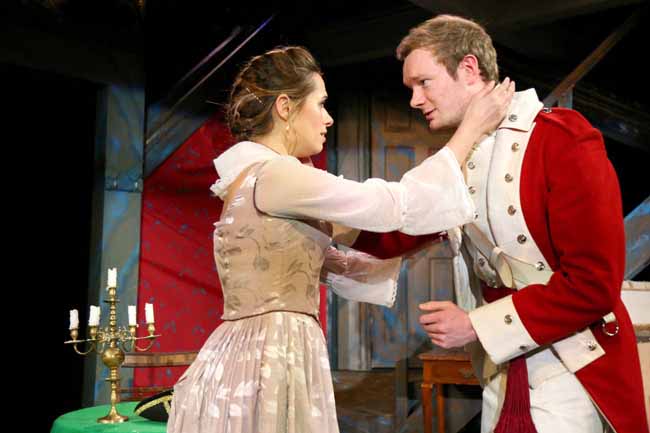
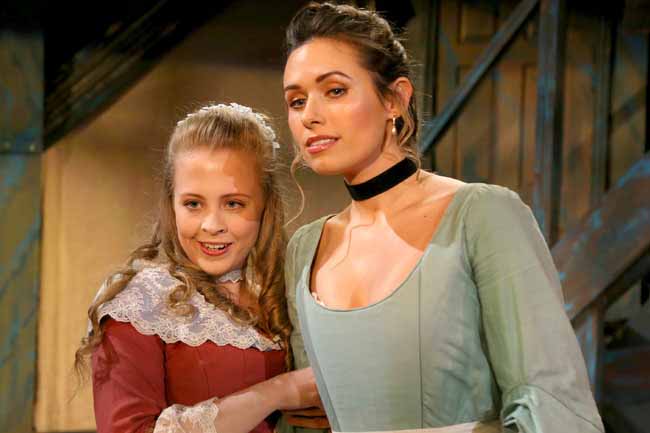
 Despite the contrived nature of the plot, it was a clever idea of Beaton's to bring the whole family into the play. Having the vagaries of Gainsborough's daughters' love-lives as the main driver of the action really moved the piece along. I was certainly not bored, though disappointed that the patient Margaret (sensitively played by Emily Deane) did not end up with the love of her life (though he was a bit of a twit to be fair, so she was probably well out of it). I also enjoyed Emily McCormick as Mary's performance as the polar opposite to her sister, jealous and unstable - but also lively and spirited - and clearly frustrated by her lack of opportunities for self-expression. Janet South was a delightful Mrs Gainsborough, keeping the household together and preparing a lot of cod and dumplings (a dish for which even Google seems unable to provide a recipe). She did a great job of keeping her polite tea party going even when one of the "artists' models" from next door (I know! On Pall Mall!) stripped off suddenly in her sitting room.
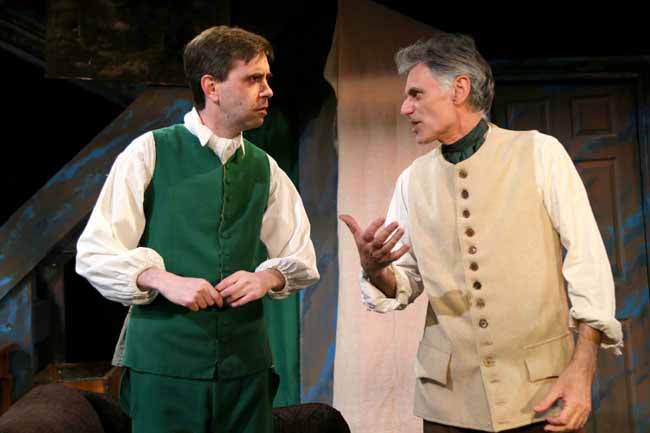
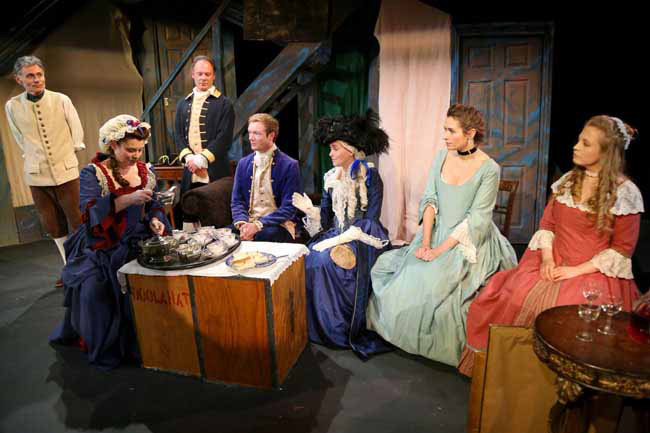 Finally, there was the faithful Luke (Matthew Ibbotson) as Mrs Gainsborough's first mate, keeping the Gainsborough domestic ship on an even keel while avoiding being pressed back into the Navy. A great cameo role - and nicely played, though I was worried that he might appear with a parrot on his shoulder at some point, given the heavy-handed seafaring references.
The visitors to the household were a watchable crowd as well. I liked Nick Hall's James Christie - a solid performance. Just a bit in love with Margaret and frustrated by his friend Gainsborough's unwillingness to play the game of courting his clients and obeying the rules of the Royal Academy. Amanda Waggott delivered a convincingly imperious Countess of Codlington (also unfazed by the artist model-stripping-off scenario, amusingly describing the tea party as "wonderfully impromptu" ). She had some good softer moments too, and her love for her annoying son was apparent and touching. Anthony Rhodes as Lord Philpott - the Countess' son and the girls' love interest - did well with a part that was wasn't brilliantly written (he definitely had the lions' share of the clunky dialogue) - but he looked good, carried himself well, and - in the end - you did feel a bit sorry for him, even though he had behaved badly.
 The Working Girls from next door were portrayed with gusto by Natasha Hawkes, Joanna Coulton and Sarah Kolb - though still wondering about the Gainsborough family with their two unmarried daughters living right next door to such an establishment. Jonathan Norris was top-notch as the affronted Alderman - clearly representative of the many clients that Gainsborough insulted in his frustration at having to channel his energies into lucrative society portraits, when his heart belonged to the landscapes of his native Suffolk.
In addition to the brothel next door, there was a good deal of dramatic licence, but the fictionalization of the story of Gainsborough's life in London was told with such vigour that it didn't matter. I enjoyed the prominence and stage time that was given to the female characters which added a good deal of interest to the story and helped to make it so much more than a couple of hours of Gainsborough being a brilliant but difficult artist, arguing with his auctioneer/friend and his clients.
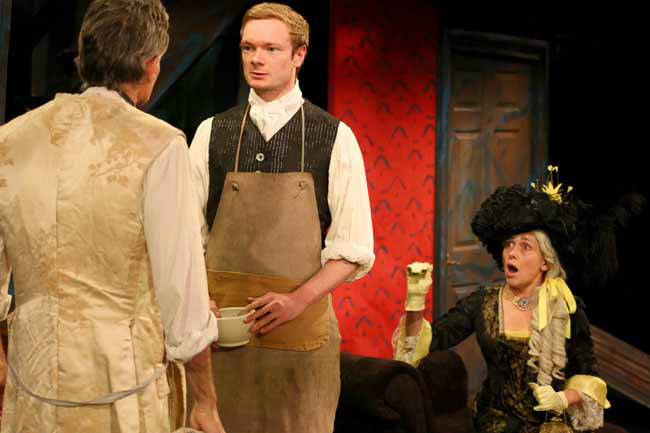 The set by Peter Foster was excellent, moving beautifully from just-moved-in-shabby to successful opulent décor with apparent ease. I loved the ending when the set came apart and reassembled to echo the landscape that Gainsborough so longed to paint.
The costumes too were exquisite - clearly illustrating the change for the Gainsboroughs from being prosperous country folk to fashionable London society players. All credit to Kathleen Morrison and Sue Carling.
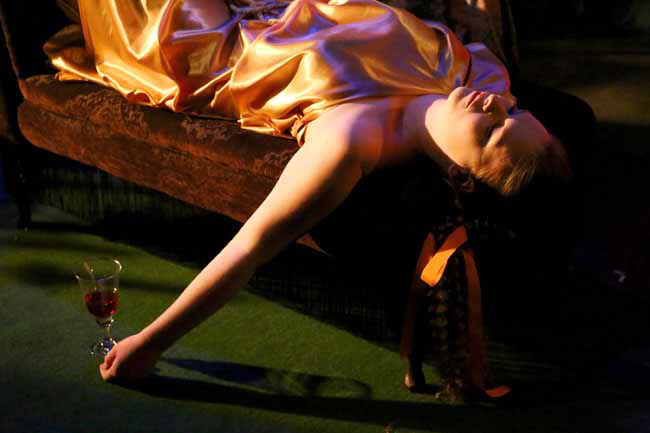
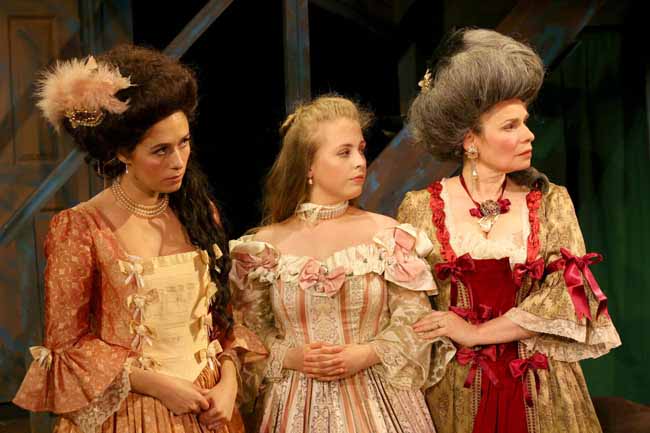 Stephen Ley and Alan Wilkinson's lighting was excellent, and the evening/candlelit scenes were just gorgeous to look at. With the colours of the set and the fabulous costumes, those scenes in particular looked like the most glorious period paintings themselves.
So while it wasn't the best script ever, director David Taylor managed to pull a truly entertaining evening out of the bag, ably assisted by a production team with an eye for colour and detail, and a cast who worked hard to give well-rounded performances and deliver their lines with aplomb.
Photography by Robert Piwko
|