|
 Kudos to Tower Theatre for producing another great contemporary play as part of this year's programme. Lynn Nottage became the first female playwright to win a second Pulitzer Prize for Drama when Sweat won in 2017.
The play focusses on a group of factory workers in Pennsylvania whose community is damaged by the industrial decline of the early 2000s. The excellence of the script lies in the way it makes an undisputable case for the impact of political turmoil on the life of the individuals. Ian Hoare's sleek production, brought together by a truly brilliant cast and creative team, rises to the challenge of portraying this story of fragmentation of the American working-class.
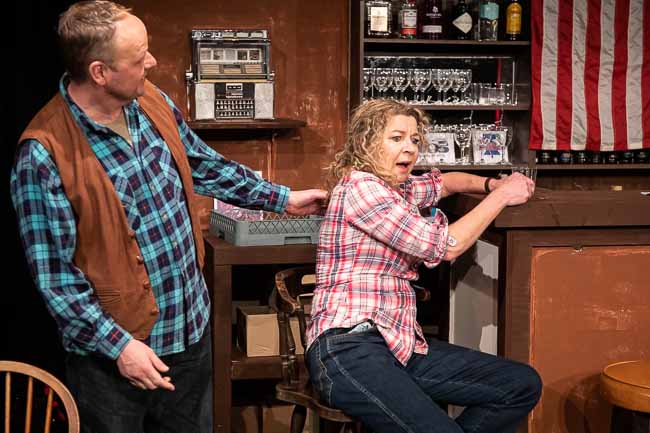
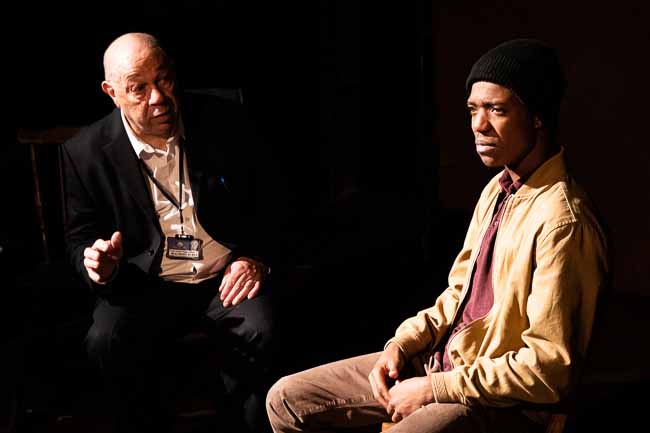 The plot is topped and tailed by the encounters between a parole officer, played with chilling truthfulness by Peta Barker, and two ex-convicts. The events between these two encounters unfolds in the downtown bar where a group of lifelong friends share drinks, secrets and laughs while working together on the factory floor. It's an intimate space that immediately feels familiar and safe. The floor is worn out by many happy dancing feet. Rob Irvine's soft lights smooth the edges of the workers' repetitive yet uncertain way of life.
 Here we are drawn close to each one of the characters, getting to know them intimately as you would a friend. Stan, the bar manager (Matthew Vickers), is a benign referee, fair but strict, pragmatic and disillusioned about the future of the factory and the power of the union. His regulars include Tracey, Cynthia and Jessie, childhood friends and colleagues. This leading trio thrives in their female bond. Standing up for each other against the adversity of working life, motherhood and men, they dance, drink too much, laugh to tears, and never shy away from compassionate though brutal honesty.
 Yet from the very beginning we know we are witnessing a downward curve. In a rapid succession of events which match the historical timeline, Cynthia's promotion to managerial position is followed by the relocation of the factory to Mexico. When union strikes put jobs on the line, individual culpability becomes the answer to each character's personal frustration. A lifetime of friendship tragically breaks when Tracey, who comes from a family of German craftsmen, turns against Cynthia, ascribing her career advancement to her African-American heritage.
 It is the younger generation who pay the heavy price of the devolution of the American dream. When Oscar, (a deeply engaging interpretation by Carlos Fain-Binda) the "invisible" low paid bar aid, US born from Columbia, crosses the picket line grasping an opportunity thus far denied to him, Tracey and Cynthia's children react with an act of violence that explains the parole interviews.
 The acting is superb. Julie Arrowsmith, Lande Belo and Katie Smith invests each woman with wonderfully unique personality, depth and honesty. Their children, played by the versatile Isaiah Bobb-Semple and by Nick Edwards are painfully believable in their portrayal of two young men from a betrayed generation. It was great to see Richard Bobb-Semple adapting so easily to the character of the destitute father, a role so different to his previous Tower Theatre's appearance as the headstrong Brother Kiyi in Fix Up.
 Sweat is undoubtedly a script worth all its praises. We get to love each of the characters, to root deeply for their friendship, which from the very beginning appears to be the only source of steady content in their lives. When the going gets tough, we can't but hope for love to overcome it all. Alas, history shows us, in the US as in UK, that reality matches Nottage's drama; social uncertainties disrupt our sense of identity and subvert our values, pitching communities against each other, irreparably.
More of this, please, Tower.
Photography by David Sprecher
|