|
The Tower Theatre presents a fresh renovation of a classic story 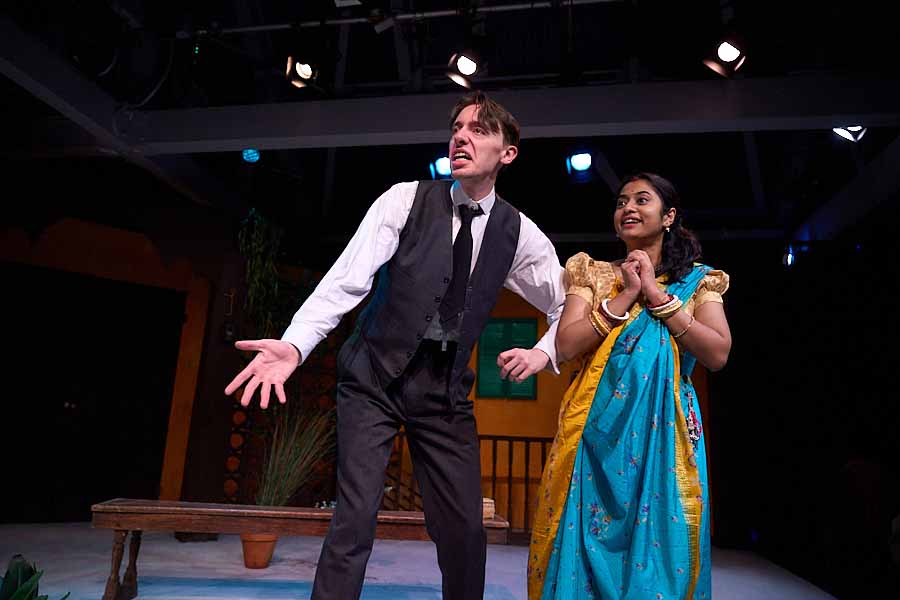 A big house in Calcutta’s city centre. A marriage between a Bengali woman and an English man, set in colonized times. A ticking time bomb, waiting to explode at any moment. A big house in Calcutta’s city centre. A marriage between a Bengali woman and an English man, set in colonized times. A ticking time bomb, waiting to explode at any moment.
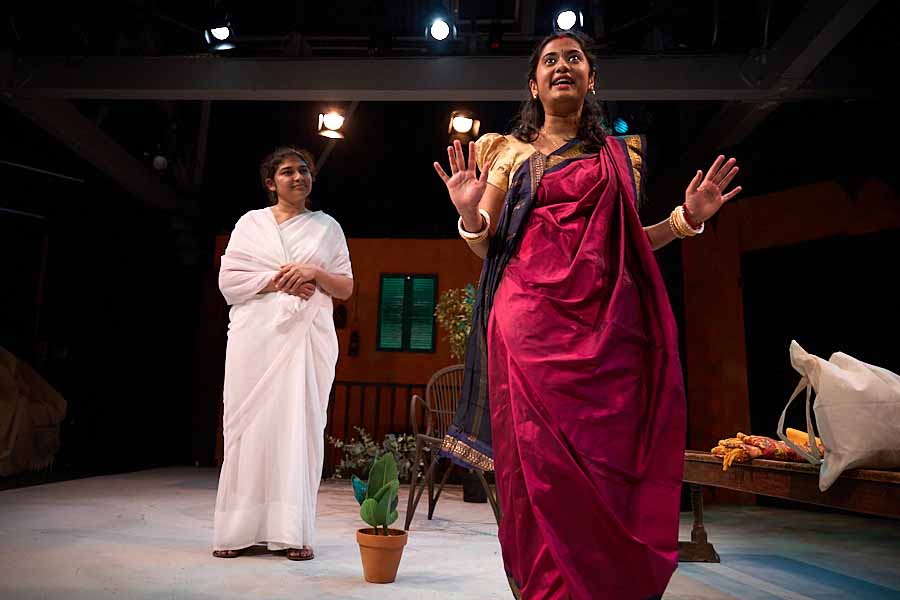
That’s how tense it feels when A Doll’s House, Tanika Gupta’s reinterpretation of Henrik Ibsen’s 1879’s play, starts. Because, even if the carpet, the couch and the orange walls evoke a simple life with nothing to hide, you can tell something is wrong from the beginning. Niru (Vaishnavi CG), our protagonist, longs for money and a spoiled life, and she gets some semblance of that with marriage to Tom (Micky Gibbons), the British Colonial Administration’s employee, whose luck is about to change, getting him and his wife better opportunities. But for whom? And to what cost?
Those questions get explored over the course of the two and a half hour show, which shines a light on rich character interactions within the constrained spaces of this big house, which can make you feel as trapped as Niru.
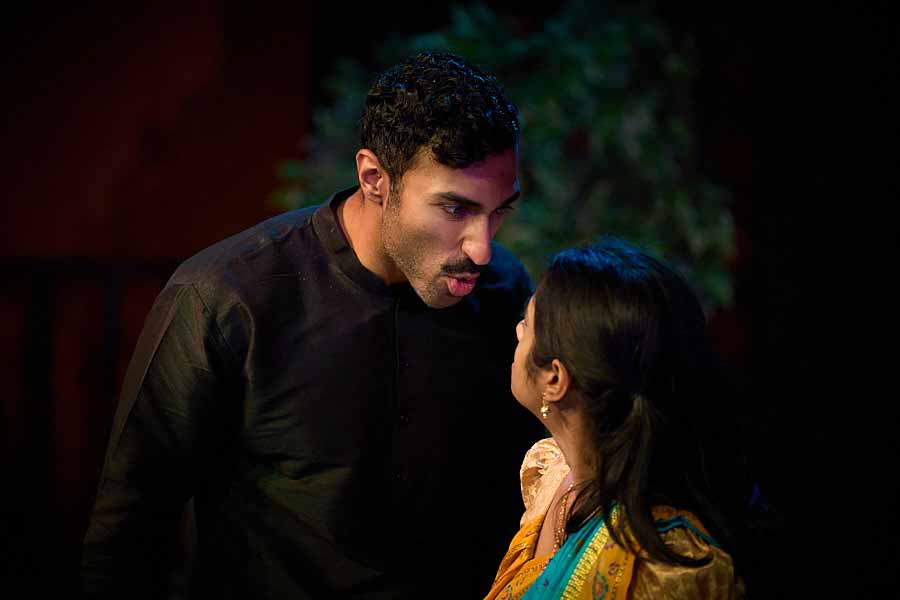 Olivia Chakraborty, having led productions of Julius Caesar, The Merchant of Venice and Mind Your Language, has a special connection to the material, because her parents were born in Calcutta. That care and attention to detail is shown throughout her confident direction. Olivia Chakraborty, having led productions of Julius Caesar, The Merchant of Venice and Mind Your Language, has a special connection to the material, because her parents were born in Calcutta. That care and attention to detail is shown throughout her confident direction.
Ryan Webster’s dynamic set design, changing the furniture to decorate new spaces so that you can get the feel of how big the house really is, as well as actors reacting to new information—distracting the audience while these changes occur—make the play never lose momentum.
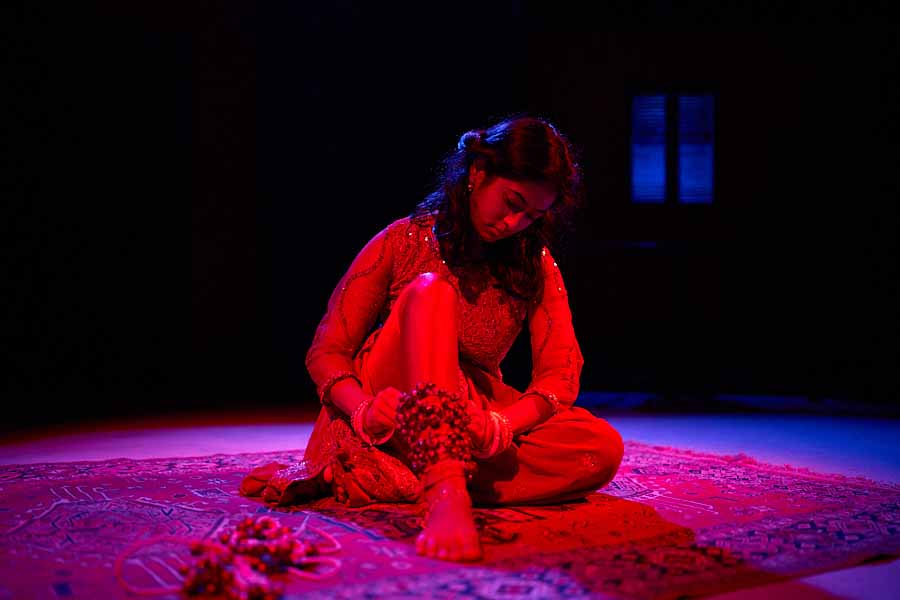
Nick Insley’s lighting design can also evoke the characters’ journey, particularly the use of red for an awkward, tense dance sequence; the blue of the night to represent transparency and truth; the yellow as a signal of the outside world and hope; and white as a sign of a plastic world, the illusion in which most of the characters live.
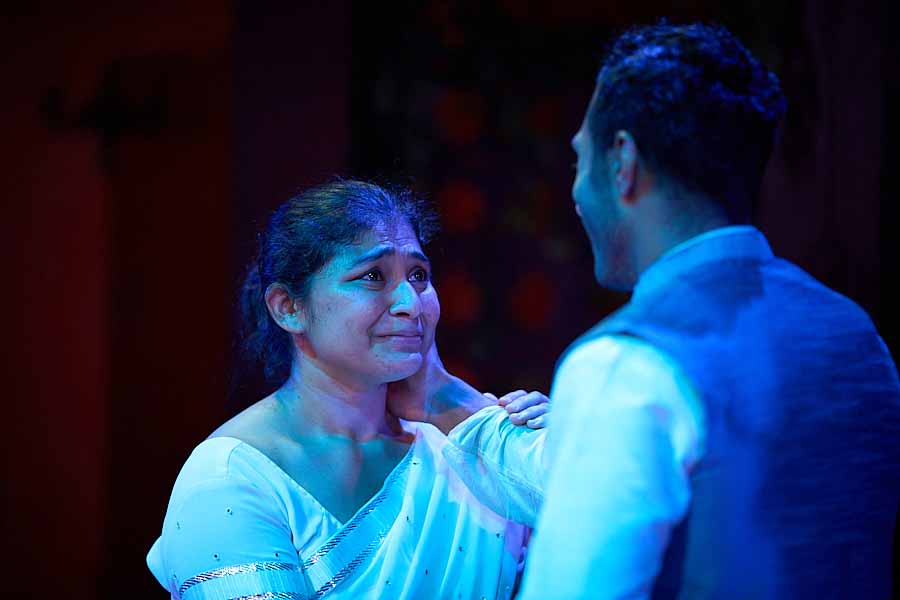
 But of course, the focus is, as it should be, on the deep, important conversations that go on inside these walls, ones that seem simple but actually talk about feminism, toxic male behavior, life’s purpose, freedom and so much more. Tanika Gupta, a skilled writer who has had 25 produced plays and 30 radio plays broadcast under her belt, expertly handles multiple themes and character dynamics that show depth, growth and lyrical beauty, specifically in that astonishing final confrontation between Niru and Tom and in every conversation she has with Mrs. Lahiri (Rachanna Reddy), a childhood friend of Niru who tries to make an independent life for herself as a working widow in colonial Calcutta. But of course, the focus is, as it should be, on the deep, important conversations that go on inside these walls, ones that seem simple but actually talk about feminism, toxic male behavior, life’s purpose, freedom and so much more. Tanika Gupta, a skilled writer who has had 25 produced plays and 30 radio plays broadcast under her belt, expertly handles multiple themes and character dynamics that show depth, growth and lyrical beauty, specifically in that astonishing final confrontation between Niru and Tom and in every conversation she has with Mrs. Lahiri (Rachanna Reddy), a childhood friend of Niru who tries to make an independent life for herself as a working widow in colonial Calcutta.
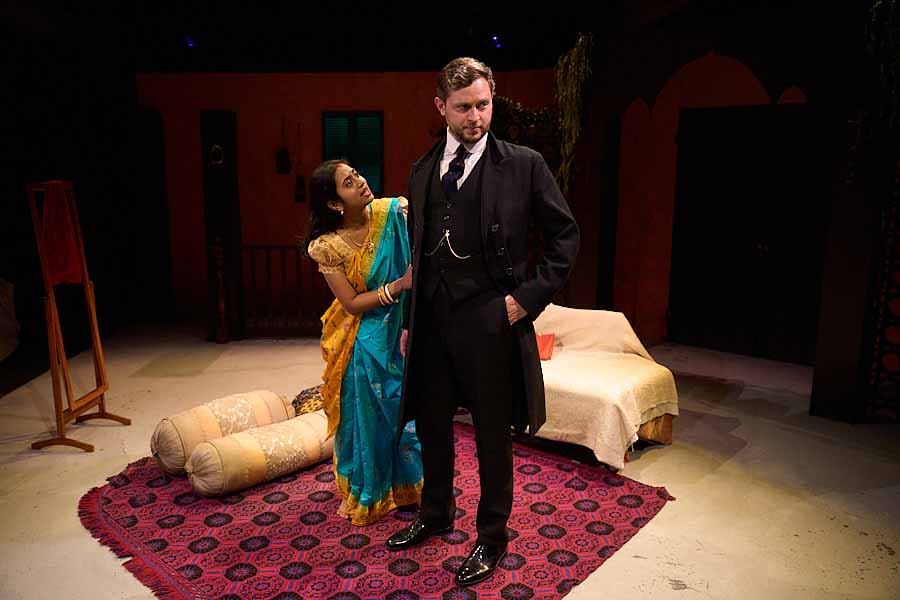 Aside from the main couple’s struggles, the friendship between Lahiri and Niru is the one that feels the most genuine. Since Mrs. Lahiri is a woman who values her independence more than anything, and Niru is a woman used to being in the care of a man, the discussions they have surrounding work, marriage, Calcutta and all in between hold the key to Niru’s journey of self-reliance and trust throughout the course of the play. Equally, her confrontations with Das, an Indian working as a Tax Worker for the same company as Tom, strike a chord with the audience because it brings issues of racism and exploitation to the surface, with Janak’s commanding stage presence feeling menacing every time he appears…or even mentioned. Aside from the main couple’s struggles, the friendship between Lahiri and Niru is the one that feels the most genuine. Since Mrs. Lahiri is a woman who values her independence more than anything, and Niru is a woman used to being in the care of a man, the discussions they have surrounding work, marriage, Calcutta and all in between hold the key to Niru’s journey of self-reliance and trust throughout the course of the play. Equally, her confrontations with Das, an Indian working as a Tax Worker for the same company as Tom, strike a chord with the audience because it brings issues of racism and exploitation to the surface, with Janak’s commanding stage presence feeling menacing every time he appears…or even mentioned.
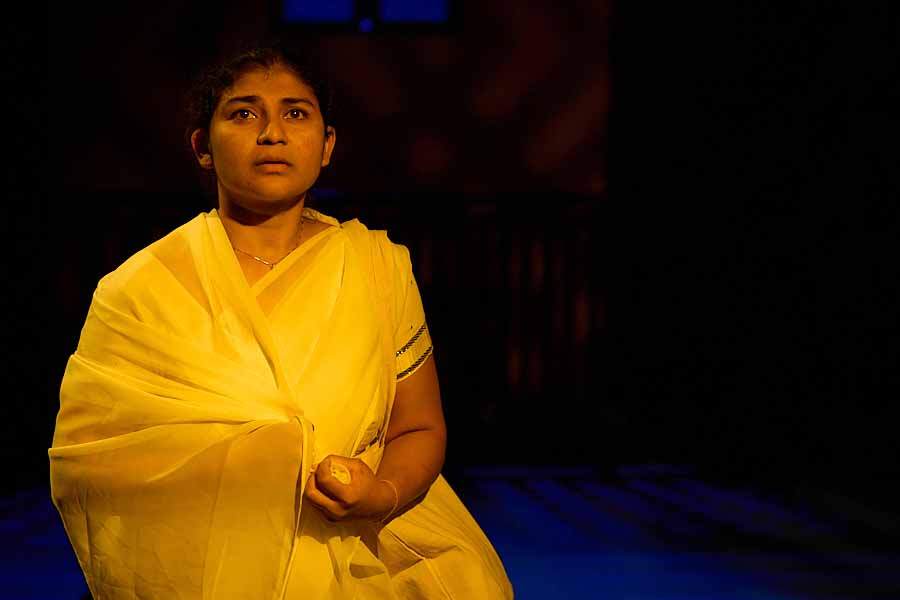 During the course of the play, we see Niru slowly open her eyes more and more, paying off in the triumphant finale, hopeful about new beginnings. None of it would have worked as well as it did without Vaishnavi’s nuanced performance as Niru, playing the naïveté and its transformation perfectly. As a debut for the Tower Theatre, she did an astounding job of getting beneath the skin of this complicated character. The chemistry she has with Micky, Arthur and Rachanna, showcasing different sides of her personality, land the thought-provoking and emotional moments of this production. Her scenes with Arthur are particularly moving in their own right, because of the other’s emotional commitment to interpreting the family’s friend and confidant, Dr. Rank. During the course of the play, we see Niru slowly open her eyes more and more, paying off in the triumphant finale, hopeful about new beginnings. None of it would have worked as well as it did without Vaishnavi’s nuanced performance as Niru, playing the naïveté and its transformation perfectly. As a debut for the Tower Theatre, she did an astounding job of getting beneath the skin of this complicated character. The chemistry she has with Micky, Arthur and Rachanna, showcasing different sides of her personality, land the thought-provoking and emotional moments of this production. Her scenes with Arthur are particularly moving in their own right, because of the other’s emotional commitment to interpreting the family’s friend and confidant, Dr. Rank.
 This is a story crafted 200 years ago, reinterpreted beautifully by Tanika Gupta in the Lyric Theatre at Hammersmith, in 2019. However, this version makes the themes feel fresh, reminding ourselves that women and immigrants have still a big, wide road ahead in order to be seen as equal in society. By the end, this play will fill you with a sense of hope, showing you that, even if change is scary, searching for yourself is essential to find bliss, inner peace and happiness. This is a story crafted 200 years ago, reinterpreted beautifully by Tanika Gupta in the Lyric Theatre at Hammersmith, in 2019. However, this version makes the themes feel fresh, reminding ourselves that women and immigrants have still a big, wide road ahead in order to be seen as equal in society. By the end, this play will fill you with a sense of hope, showing you that, even if change is scary, searching for yourself is essential to find bliss, inner peace and happiness.
Photography by Jason Harris
|