|
 One of the saddest aspects of the pandemic as far as our theatre is concerned was that it denied us the chance to see Alan Ayckbourn’s The Norman Conquests trilogy in all its glory. Three interlocked full length plays taking place in three areas of the same house across a weekend; a real piece of event theatre. You may recall that after six months in production it was cruelly cancelled by events with the opening night in very clear sight. It would have been a great coup for Tower as it is seldom, if ever, that all three parts are produced in a non-professional context. I was fortunate enough to sit through an all day rehearsal of the pieces just before the axe fell and can absolutely say that a rare treat was well and truly missed and will go down in the company archives as “the one that got away”. One of the saddest aspects of the pandemic as far as our theatre is concerned was that it denied us the chance to see Alan Ayckbourn’s The Norman Conquests trilogy in all its glory. Three interlocked full length plays taking place in three areas of the same house across a weekend; a real piece of event theatre. You may recall that after six months in production it was cruelly cancelled by events with the opening night in very clear sight. It would have been a great coup for Tower as it is seldom, if ever, that all three parts are produced in a non-professional context. I was fortunate enough to sit through an all day rehearsal of the pieces just before the axe fell and can absolutely say that a rare treat was well and truly missed and will go down in the company archives as “the one that got away”.
 Now that we are out the other side of the pandemic (if indeed we are) the intrepid director Vic Craven has picked himself up, dusted himself down and given us Queers which if less modest in ambition was just as strong in terms of impact. The set of four solo performance pieces was presented with a simple naturalism which allowed the stories to speak for themselves and gave us characters which shone a light on the LGBTQ+ community and their ongoing fight for recognition and equality. The production was used mark the 50th anniversary of London Pride, an event which seeks to celebrate diversity in all its forms and without which many of the societal shifts which have taken place in the last half century might well not have occurred or, at least, have been further delayed. Not that the pieces themselves looked at that particular historical period. Rather they served as a reminder that change has been a much more gradual process and that prior to 1972 there was a long history of repression and prejudice being faced by many within the global community we term humanity. Now that we are out the other side of the pandemic (if indeed we are) the intrepid director Vic Craven has picked himself up, dusted himself down and given us Queers which if less modest in ambition was just as strong in terms of impact. The set of four solo performance pieces was presented with a simple naturalism which allowed the stories to speak for themselves and gave us characters which shone a light on the LGBTQ+ community and their ongoing fight for recognition and equality. The production was used mark the 50th anniversary of London Pride, an event which seeks to celebrate diversity in all its forms and without which many of the societal shifts which have taken place in the last half century might well not have occurred or, at least, have been further delayed. Not that the pieces themselves looked at that particular historical period. Rather they served as a reminder that change has been a much more gradual process and that prior to 1972 there was a long history of repression and prejudice being faced by many within the global community we term humanity.
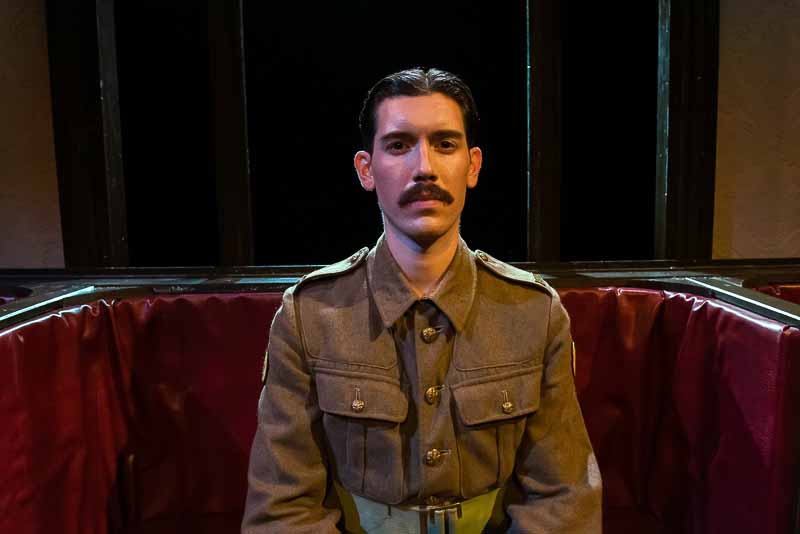 The first monologue The Man On The Platform transported us back to 1917 as young soldier/medical orderly Perce returned from a spell on the front line of hostilities and gradually revealed to us facets of his personality which he felt obliged to keep hidden. In particular, he told us of a fleeting and muted though epiphanic liaison with a fellow soldier. This in turn sparked memories of a childhood close encounter with a gay icon which he now realises was a seminal moment in his own development. Written by Mark Gatiss (who curated the original TV series of Queers) it was an understated and beautifully drawn portrait of a tormented soul who had to snatch moments of happiness where he could. It was sensitively and stilly played by Simon Christian and proved a fine opener with which to draw in the rapt audience. The first monologue The Man On The Platform transported us back to 1917 as young soldier/medical orderly Perce returned from a spell on the front line of hostilities and gradually revealed to us facets of his personality which he felt obliged to keep hidden. In particular, he told us of a fleeting and muted though epiphanic liaison with a fellow soldier. This in turn sparked memories of a childhood close encounter with a gay icon which he now realises was a seminal moment in his own development. Written by Mark Gatiss (who curated the original TV series of Queers) it was an understated and beautifully drawn portrait of a tormented soul who had to snatch moments of happiness where he could. It was sensitively and stilly played by Simon Christian and proved a fine opener with which to draw in the rapt audience.
 The quartet, arranged in a pleasing chronological order, continued with The Perfect Gentleman by Jackie Clune. Neither the adjective nor the noun of the title was strictly accurate as we met Bobby from late 1920s London subverting the (so called) norms of the era by dressing as a swaggering male alter ego. This was clearly influenced by music hall performer Vesta Tilley’s turn as Burlington Bertie from Bow, a routine involving cross dressing. Rather more robustly comic than the preceding piece, Rebecca Allan captured the transgressive nature of her character and captivated the audience who laughed heartily at a lengthy (in more senses than one) anecdote involving the rather unusual deployment of a candle. Peter Westbury’s costume designs were a joy to look at throughout, but were particularly effective here. The quartet, arranged in a pleasing chronological order, continued with The Perfect Gentleman by Jackie Clune. Neither the adjective nor the noun of the title was strictly accurate as we met Bobby from late 1920s London subverting the (so called) norms of the era by dressing as a swaggering male alter ego. This was clearly influenced by music hall performer Vesta Tilley’s turn as Burlington Bertie from Bow, a routine involving cross dressing. Rather more robustly comic than the preceding piece, Rebecca Allan captured the transgressive nature of her character and captivated the audience who laughed heartily at a lengthy (in more senses than one) anecdote involving the rather unusual deployment of a candle. Peter Westbury’s costume designs were a joy to look at throughout, but were particularly effective here.
 Post interval our next encounter was with Fredrick in 1941. Not only was he gay but a black West Indian immigrant and therefore enduring a double whammy of prejudice which reinforced his outsider status. Hopes of the character becoming a lawyer were soon dashed and he turned to artistic modelling to pay the rent. The advent of World War 2 ironically provided him with a degree of freedom. He was able to use the Blitz as a cover for nocturnal activities which take in both the East End docks and West End theatreland; the latter has rather a different and surprising meaning in this particular context. Keith Jarret’s Safest Spot In Town landed its punches well and Leon Wander as Fredrick gave a nicely judged performance with moments of spiky humour. Post interval our next encounter was with Fredrick in 1941. Not only was he gay but a black West Indian immigrant and therefore enduring a double whammy of prejudice which reinforced his outsider status. Hopes of the character becoming a lawyer were soon dashed and he turned to artistic modelling to pay the rent. The advent of World War 2 ironically provided him with a degree of freedom. He was able to use the Blitz as a cover for nocturnal activities which take in both the East End docks and West End theatreland; the latter has rather a different and surprising meaning in this particular context. Keith Jarret’s Safest Spot In Town landed its punches well and Leon Wander as Fredrick gave a nicely judged performance with moments of spiky humour.
 The final piece took us to forty years after the first piece and the tale of a housewife in Jon Bradfield’s Missing Alice. Although a keen observer of the minutiae of life (e.g. the speck of cheese sauce on a friend’s wrist), Alice enters unknowingly into a so called “lavender marriage” of convenience. This means husband Michael can pursue his liaisons under a cloak of respectability and she gets back some of the societal status she lost by becoming an unmarried mother at just 16. Alice accepts her lot and even conspires to make the system work but there’s an underlying sadness to her biography which reminds us that the repressive milieu also had an indirect knock on effect to many another. Helen McGill delivered a pitch perfect performance which exuded a surface level cheery bonhomie while ensuring that we knew of her deep seated pain. The piece ended on a note of hope with news of the publication of the Wolfenden report. The final piece took us to forty years after the first piece and the tale of a housewife in Jon Bradfield’s Missing Alice. Although a keen observer of the minutiae of life (e.g. the speck of cheese sauce on a friend’s wrist), Alice enters unknowingly into a so called “lavender marriage” of convenience. This means husband Michael can pursue his liaisons under a cloak of respectability and she gets back some of the societal status she lost by becoming an unmarried mother at just 16. Alice accepts her lot and even conspires to make the system work but there’s an underlying sadness to her biography which reminds us that the repressive milieu also had an indirect knock on effect to many another. Helen McGill delivered a pitch perfect performance which exuded a surface level cheery bonhomie while ensuring that we knew of her deep seated pain. The piece ended on a note of hope with news of the publication of the Wolfenden report.
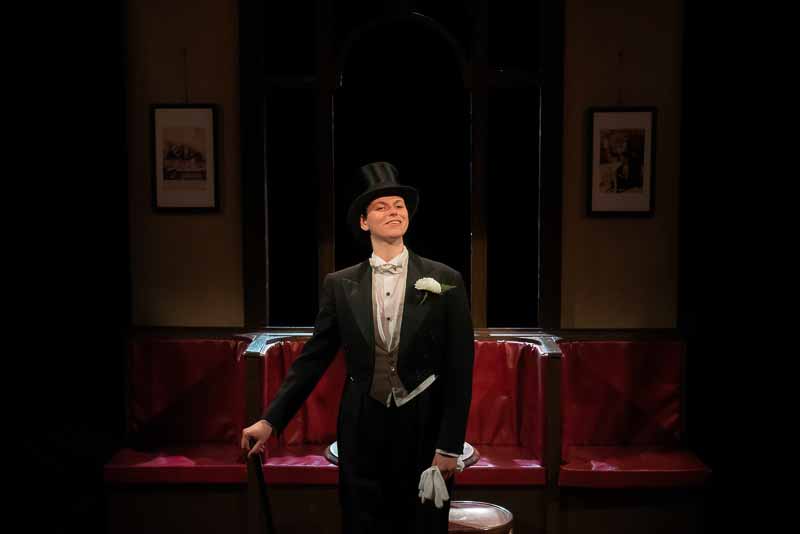 Vic Craven’s direction of all four pieces was nothing short of masterly. He rightly insisted that his actors did almost nothing more than tell a story; however, in reality, there was so much more going on. Stephen Ley’s beautifully realised lighting was both subtle and evocative. Meanwhile Jude Chalk’s spare Victorian pub setting (which totally believably didn’t change in four decades) had, appropriately, something of the church confessional about it with its pew like bench seating and its arched window. The pictures on the wall, which changed for each monologue, had symbolic significance. Rather more low key than Pride itself tends to be, this spare but essential production was everything good theatre should be – educational, enlightening, emotive and above all entertaining. I still regret that the sweeping scope of the Normans never came to fruition but in many senses this was just as unique as a piece of event theatre and proved the truth of the old adage that less can indeed be more. Vic Craven’s direction of all four pieces was nothing short of masterly. He rightly insisted that his actors did almost nothing more than tell a story; however, in reality, there was so much more going on. Stephen Ley’s beautifully realised lighting was both subtle and evocative. Meanwhile Jude Chalk’s spare Victorian pub setting (which totally believably didn’t change in four decades) had, appropriately, something of the church confessional about it with its pew like bench seating and its arched window. The pictures on the wall, which changed for each monologue, had symbolic significance. Rather more low key than Pride itself tends to be, this spare but essential production was everything good theatre should be – educational, enlightening, emotive and above all entertaining. I still regret that the sweeping scope of the Normans never came to fruition but in many senses this was just as unique as a piece of event theatre and proved the truth of the old adage that less can indeed be more.
Photography by Giulia Paratelli
|


