|
 I came to this production intrigued to see how E.M Forster's A Passage to India could be condensed to two and a half hours of theatre. How could justice be done to this beautifully written book, now nearly 100 years old, depicting the tensions in India at the time of the Raj, seeking to explore the motivations and attitudes of both the British and Indians, whilst also being suffused with elements of mysticism and philosophy ? In fact, the production was one of which all involved could be rightly proud - a strong cast, excellently staged and directed, and telling a compelling story. The first plaudits must go to the choice of an excellent adaptation by Martin Sherman, who managed to prune the material to retain the essential elements of the story and the essence of the characters.
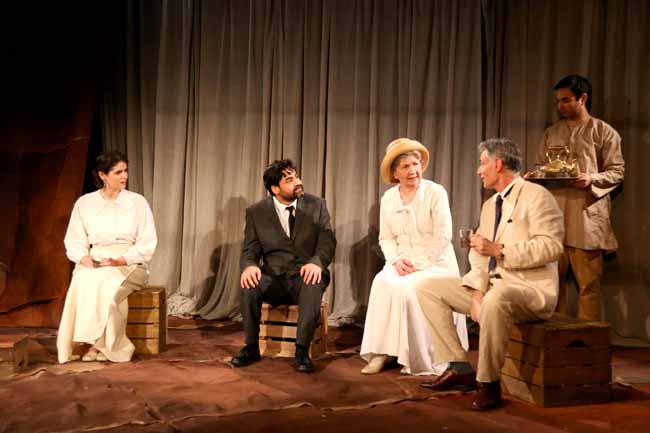
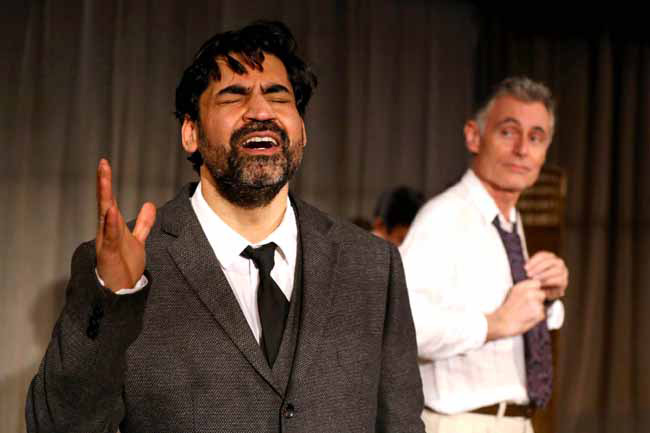 Adela Quested is newly arrived in India to see her intended, Ronny Heaslop, the local Magistrate, in the environment where he lives and works. She has travelled from England with his mother, Mrs Moore. However, the two women arrive with attitudes which cause consternation. Adela wishes to meet some Indian people - little realising the disquiet this causes amongst the 'old India hands' who mutter darkly that no good will come of it. Mrs Moore similarly causes upset by talking freely to a young Indian doctor, Dr Aziz, whom she encounters whilst escaping from the stultifying atmosphere of 'the Club'. When Adela and Mrs Moore accept his invitation to a trip to the Marabar Caves, the stage is set for the incident which will wreck Dr Aziz's life. Once inside the caves, the crush of people, the echoes and the darkness leave Mrs Moore distressed. Fatefully, she leaves Adela, Dr Aziz and a servant to explore the further caves alone. It is never entirely clear what, if anything, actually happens in the caves - all we know is that Adela emerges distraught and runs from them in the belief that she has been "insulted". Was it her mind playing tricks upon her in the dark and echoey caves - or did she really feel something or someone touching her? The outcome is that Dr Aziz is accused, summarily arrested and imprisoned without the allegation ever being spelt out - causing relations in the town between the British and the Indians to deteriorate. When the matter eventually comes to court, Adela speaks out and says she believes she has made a mistake and Dr Aziz is released, but the damaging effect of the episode cannot be repaired . The story is a microcosm of the hardening of attitudes towards the British in India following the Amritsar massacre.
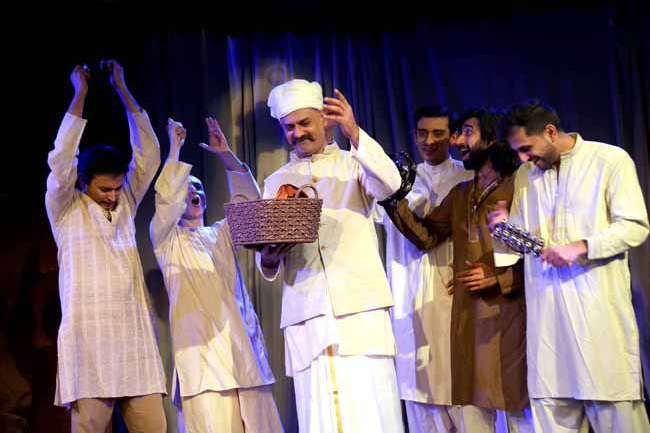
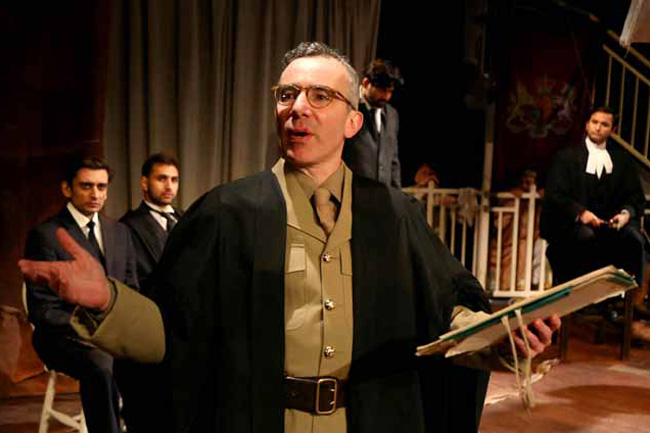
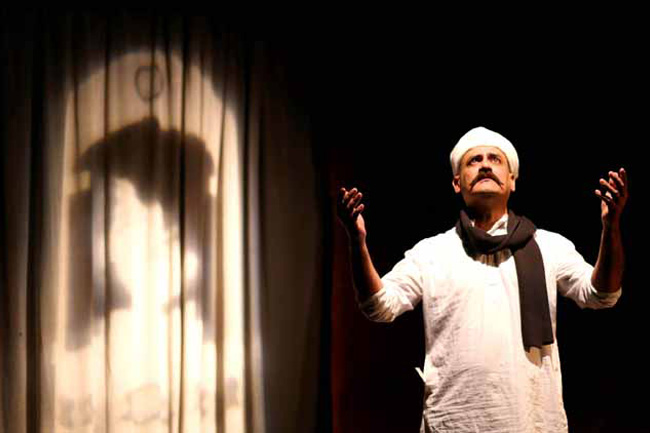 The handling of such large themes could easily become cumbersome, but the production was skilfully directed by Simona Hughes, letting the story do the work and keeping the action flowing seamlessly. A deceptively simple set design by Max Batty brought us the essential locations - from 'the Club' and a garden party to a deserted Mosque, a railway station, a hillside picnic and on to the Marabar Caves. After the fateful trip, on to a prison and the courtroom where Dr Aziz's nightmare is finally brought to an end. A gauze across the back of the stage illuminated by clever lighting and sound effects, took us into the caves themselves, where the darkness and echoes allowed us to feel something of Adela's fear and disorientation. The Indian music played by three musicians, on stage throughout, provided instant atmosphere and a soundtrack to the unfolding story.
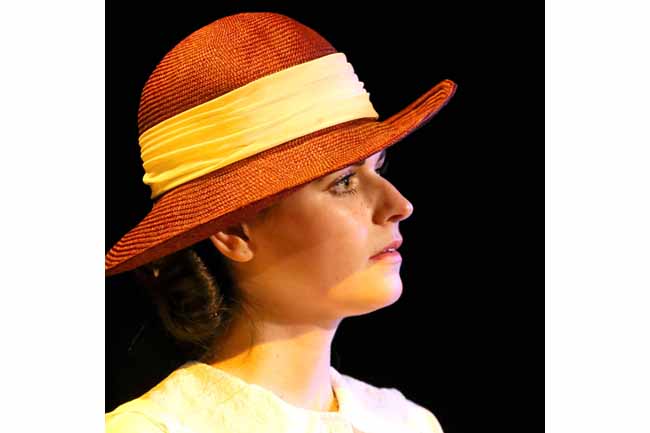
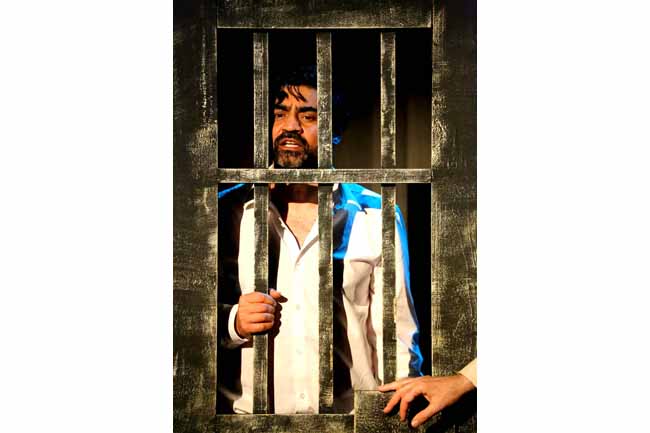 An excellent cast brought the characters to life - Rahul Singh as the passionate but slightly haphazard Dr Aziz was full of energy and vitality until he was left embittered by his experiences; Alison Liney was a quintessential Mrs Moore unable to reconcile her humanity and principles with the regime her son was enforcing; and as her son, Robin Taylor gave an immaculately priggish performance as he lectured his mother and fiancée on how not to behave whilst running an empire. Simon Lee was excellent as Cyril Fielding, the teacher who stands apart from the 'old hands' and tries to maintain a friendship with Aziz. Rebecca Allan brought us the ambiguity of Adela's character beautifully - one minute, wishing to break down barriers, making a questionable allegation the next, before finally, publicly retracting. Adnan Kapadia was able to imbue a mystical quality to the character of Professor Godbole, used in this adaptation as something of a narrator; and there were fine performances from Menesh Patel and Yasir Senna, as Aziz's family members and friend who debated over his sick bed before the trip to the caves and supported him in his ordeal afterwards. The cast was strong throughout and other cast members were used ingeniously to portray everything from the elephant on which the ladies rode towards the caves, to 'human rocks' as the party clambered through the caves. Well done to all providing technical input - lights, sound, costumes and stage management for a seamless show. Congratulations to all involved in this production - a compelling story, well told.
Photography by Robert Piwko
|