|
 I saw the play on an evening that was not quite so hot as it had been earlier in the week – and there was a full house. It is a long time since I either read Moby Dick or saw the film, so I wasn’t sure what to expect. I had seen, probably 15 years ago, another musical version of Moby Dick at the Arcola Theatre – one that was very different to this one. I saw the play on an evening that was not quite so hot as it had been earlier in the week – and there was a full house. It is a long time since I either read Moby Dick or saw the film, so I wasn’t sure what to expect. I had seen, probably 15 years ago, another musical version of Moby Dick at the Arcola Theatre – one that was very different to this one.
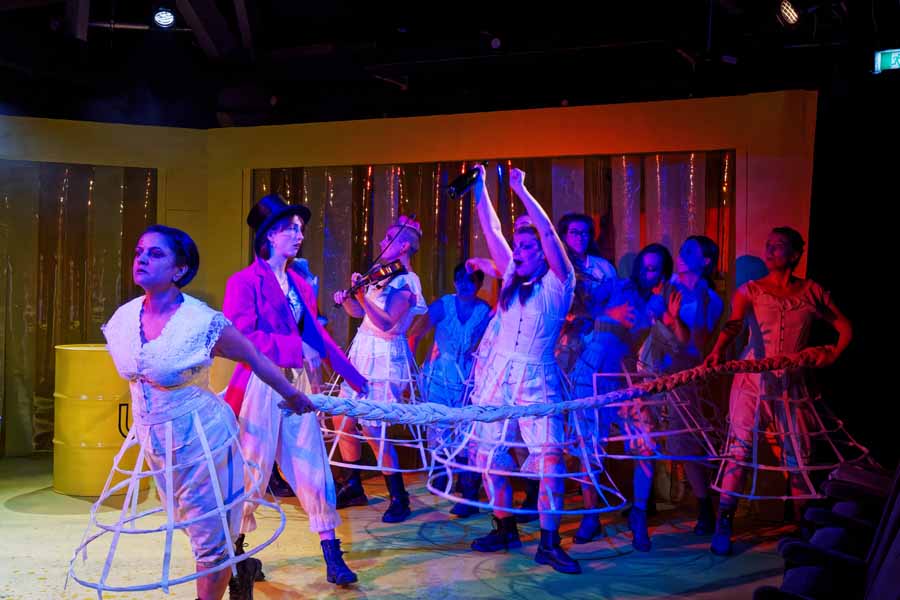
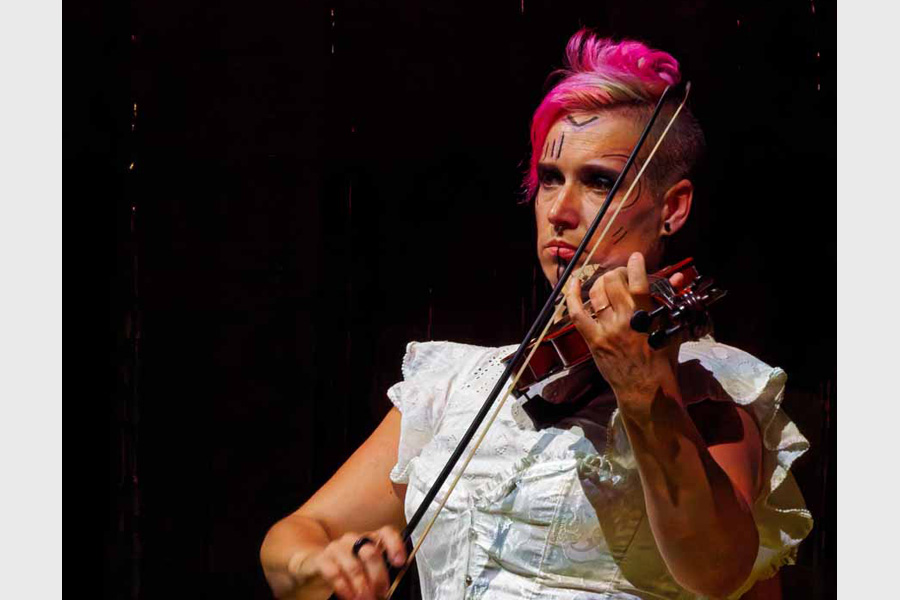
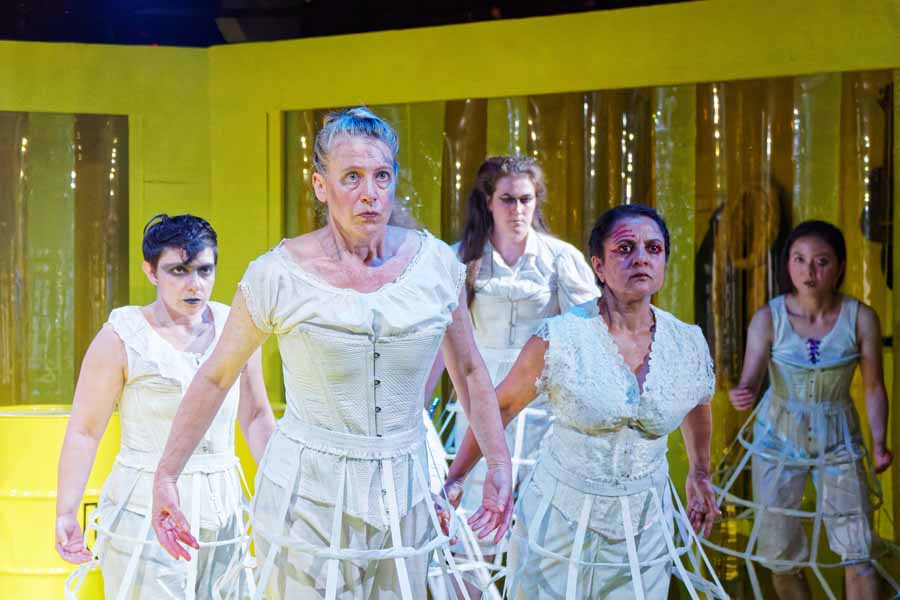 The play begins with the cast on view behind the sort of plastic curtaining that one sees in refrigerated warehouses. Many of them are wearing what looks like Victorian female underwear – an obvious nod to the use of whalebone in corsetry in Victorian times. Some carried musical instruments. As they stand behind the curtaining there is a voice over by Sir David Attenborough that discusses wildlife. A violinist with a “tattooed” face steps forward into the simple scenery in the performance area – painted oil drums – playing haunting music. She is joined by an accordionist, Colin Guthrie.
 Some of the cast begin to dance – and here I must comment on the movement throughout. This was one of the biggest casts I have ever seen at The Tower (and I have been coming for a long time – the first play I ever saw was in Canonbury!) and the dance and movement were exceptionally good. The amount of rehearsal required must have been prodigious. Nevena Stojkov is to be congratulated on the way in which this all came together.
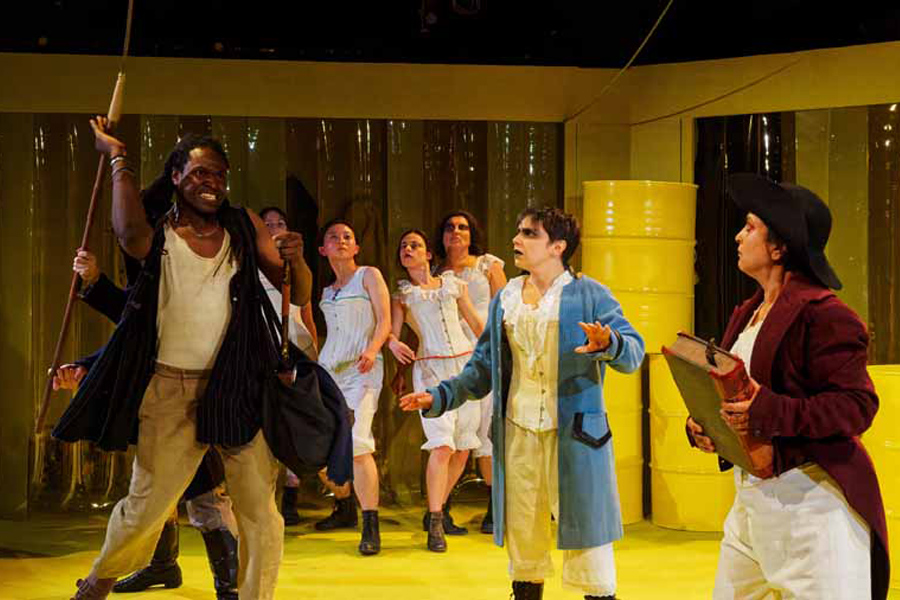
Tony Sears’ (Ishmael) appearance was something of a surprise. He is quite slight but offered an engaging presence as he told his audience that he loved the sea but, rather than go as a passenger, took on paid work on ships. On this occasion going to Nantucket to see whales – including Moby Dick, He seeks a room and has to share with the harpooner, Queequeg (Femi Davies), which he finds rather frightening. When the two men are signing onto the ship, I was not entirely sure that the performances of the two women (Sangita Modgil and Flavia Di Saverio) playing the men signing them on, although their performances were good, really worked.
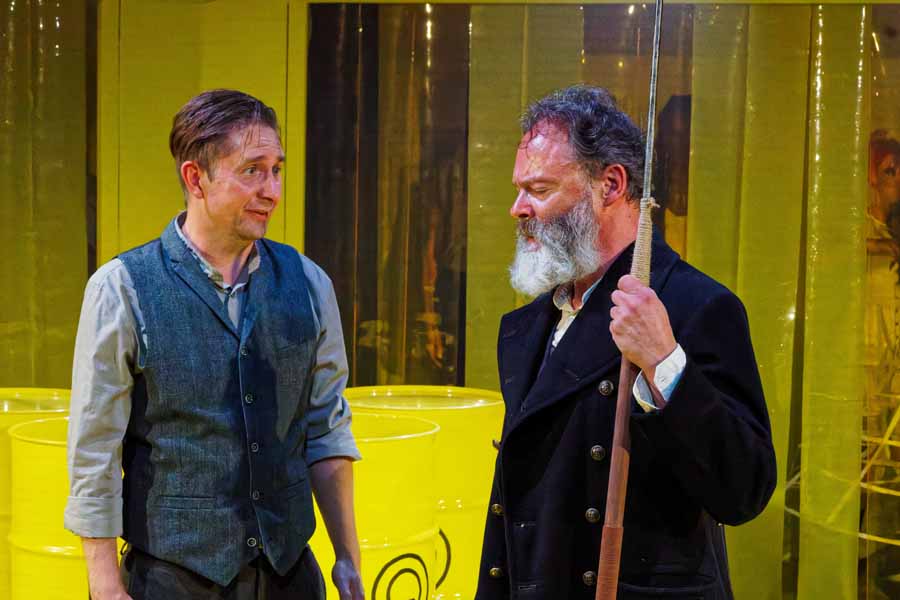
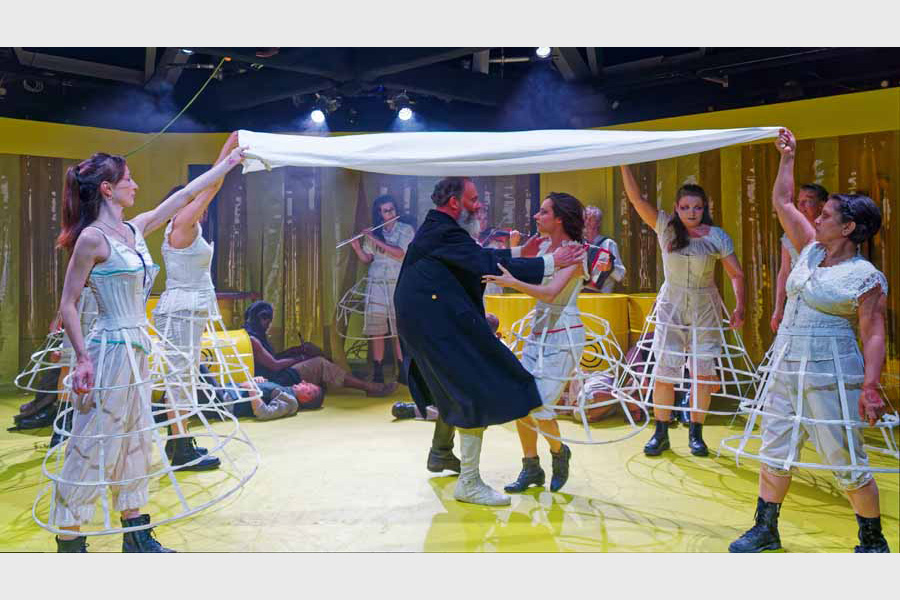 Moby Dick is basically a story about obsession that descends into a form of madness. Captain Ahab (Nick Hall – great beard, by the way!) becomes, like many obsessives, difficult to impossible to live with – which is particularly difficult when that person is the person in charge. Added to this there was the warning about 'The Pequod' given to Queequeg and Ishmael by a strange old man (again played by a woman - Ruth Sullivan. I think this iteration of gender bending worked better – no offence to the other two women is intended here). It is here that the religious undertones that run throughout the play become apparent – when a rather shaken Ishmael is told by Queequeg that he should make his peace with his God, just as Queequeg has made his peace with his own. Here, it becomes apparent why Captain Ahab became obsessive about Moby Dick, since it took his leg.
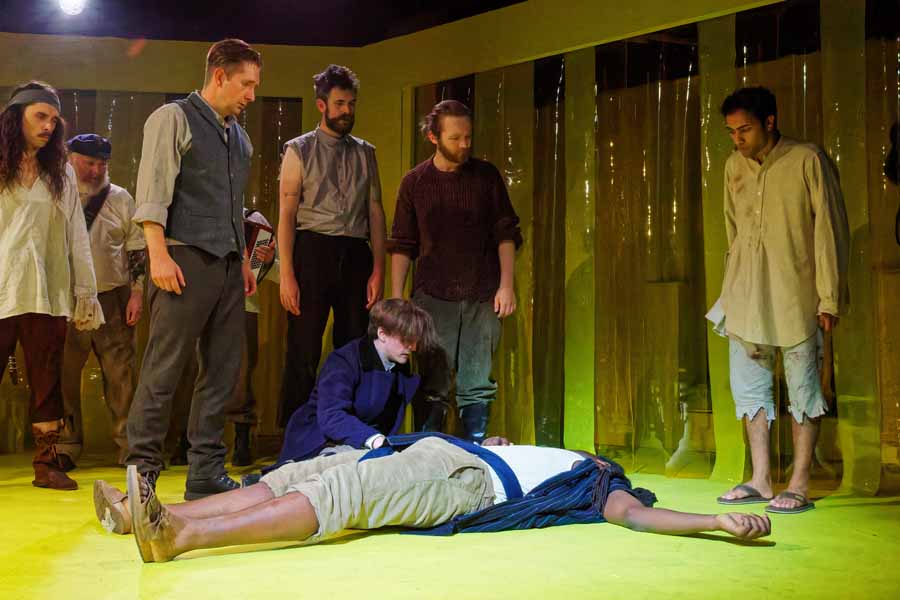
 When Ahab tells Starbuck (admirably played by Paul Graves) about attempting to kill Moby Dick for what the whale has done, Starbuck chides him for being blasphemous. Moby Dick is, after all, just a dumb animal, doing what dumb animals do, and he is a man. Ahab has evidently passed the point of sanity, Starbuck is loath to shoot him as that would make him a sinner too. Pip (very well played by Mayank Adlakha) also displays signs of mental illness, perhaps due to being almost drowned earlier. With the religious undertones the mental health questions underlay the whole play.
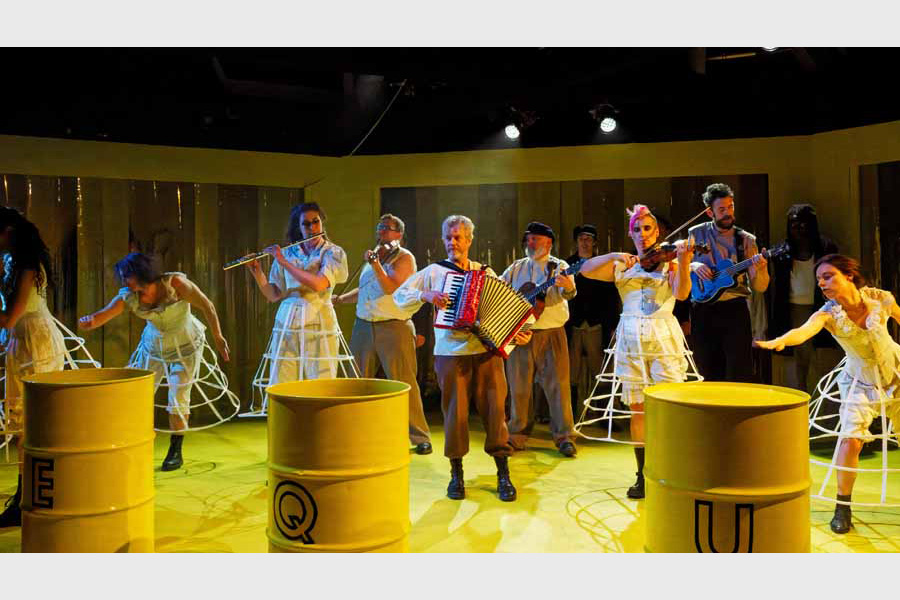 The design of the play – with the rope used as various things but mainly boats – worked very well, as did the costumes. I have already mentioned the movement. This was an evening of excellent performances and of props, like the rope, being used to great effect, for instance the folded cloth baby. This is a play which is simultaneously able to give its audience a sense of fear, freedom and enjoyment. I will now have to go back to read Moby Dick again. My congratulations to the whole team, production and well as performers, for what was an ambitious piece of work that came together extremely well. The music was excellent also, drawing as it did on well known tunes but bringing in works that I did not know. It is a shame that the play had such a short run. The performance I attended seemed to have been sold out and I know at least one person who would like to have gone to see it but was unavailable on any of the performance dates. It must have been a fairly exhausting play to perform and, once again, I was impressed by the performances and the “business” that told the story that they were performing.
Photography by Ahmed Kamara
|