|
 It's interesting to review a play without reference to the writer's other work. I've only ever seen Death and the Maiden, and I have only seen one other production of this (the Tower's previous staging of the play in 1995). So, I couldn't consider the play in the context of a body of work or compare it to the author's other plays (In fact, a quick Google search reveals that productions of Dorfman's other plays have been thin on the ground in London). It's also in quite a niche genre (so that's another avenue of interesting comparisons closed to me). I knew broadly what the play was about but had forgotten the finer plot points from the previous production, so I was playing close attention as the story unfolded. It's interesting to review a play without reference to the writer's other work. I've only ever seen Death and the Maiden, and I have only seen one other production of this (the Tower's previous staging of the play in 1995). So, I couldn't consider the play in the context of a body of work or compare it to the author's other plays (In fact, a quick Google search reveals that productions of Dorfman's other plays have been thin on the ground in London). It's also in quite a niche genre (so that's another avenue of interesting comparisons closed to me). I knew broadly what the play was about but had forgotten the finer plot points from the previous production, so I was playing close attention as the story unfolded.
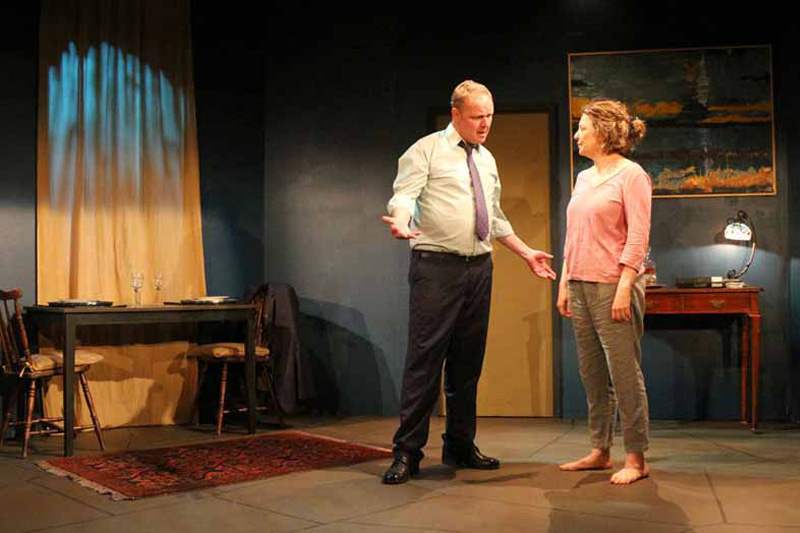
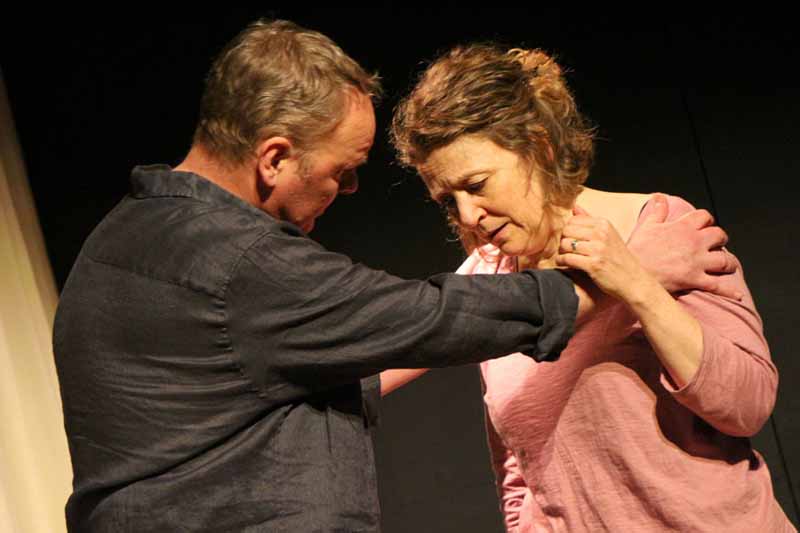 The narrative is straightforward: Paulina is married to Gerardo who (it transpires) is working for the new government in a society which is transitioning from dictatorship to democracy. At the beginning of the play, Paulina is waiting nervously for Gerardo at their home, and pulls a gun when an unfamiliar car draws up. It turns out Gerardo's vehicle has broken down and he has been given a lift by a friendly doctor, Roberto. When Roberto returns later that night (to return Gerardo's spare tyre), Paulina is convinced his voice is that of the state agent responsible for her rape and torture 15 years previously (which helps explain why she is somewhat highly strung). Subsequent events are driven by Paulina's need to resolve this appalling episode from her past. The narrative is straightforward: Paulina is married to Gerardo who (it transpires) is working for the new government in a society which is transitioning from dictatorship to democracy. At the beginning of the play, Paulina is waiting nervously for Gerardo at their home, and pulls a gun when an unfamiliar car draws up. It turns out Gerardo's vehicle has broken down and he has been given a lift by a friendly doctor, Roberto. When Roberto returns later that night (to return Gerardo's spare tyre), Paulina is convinced his voice is that of the state agent responsible for her rape and torture 15 years previously (which helps explain why she is somewhat highly strung). Subsequent events are driven by Paulina's need to resolve this appalling episode from her past.
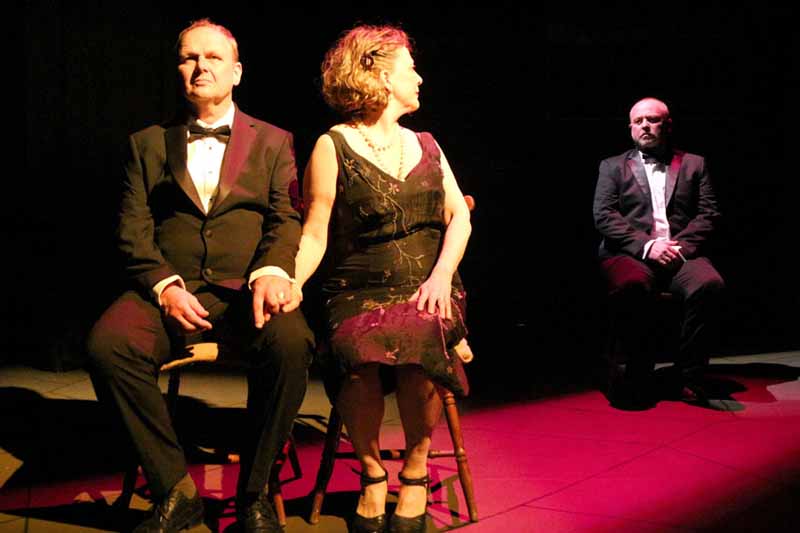
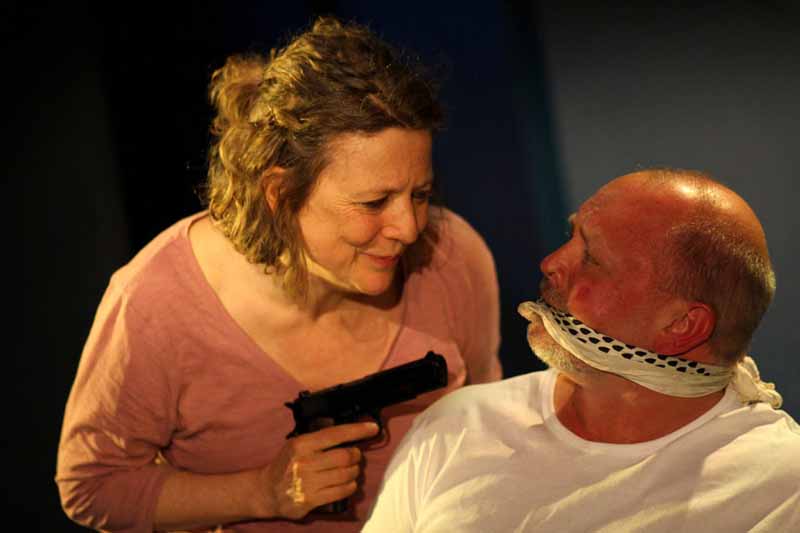
 Emma Cornford, as Paulina, gives a convincing study of a woman on the edge. She was unsettling to watch (in a good way) and you could feel her pain and anxiety. She's also the one who drives the narrative forward and she did this extremely well – never allowing the sense of tension to drop when she was on stage. Emma Cornford, as Paulina, gives a convincing study of a woman on the edge. She was unsettling to watch (in a good way) and you could feel her pain and anxiety. She's also the one who drives the narrative forward and she did this extremely well – never allowing the sense of tension to drop when she was on stage.
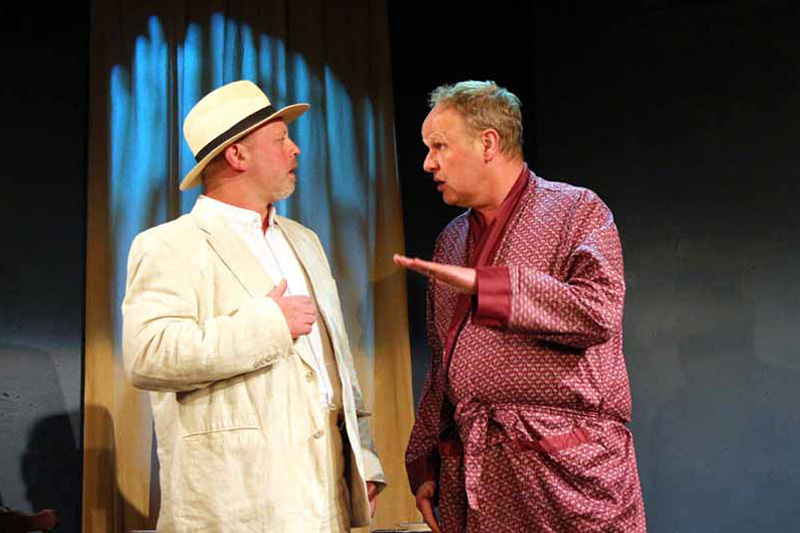
Matthew Vickers, as her husband Gerardo, gave a solid performance, as someone who has somewhat moved on from the traumatic events of the previous regime and who is forging a successful path in the new democracy – though his role will be that of trying to bring the previous government's criminals to justice. He trod a fine line between wanting to do the right thing for his wife and yet seeing that the future he has envisaged will be annihilated if he colludes with her revenge plans. The audience were drawn inexorably into his moral dilemma.
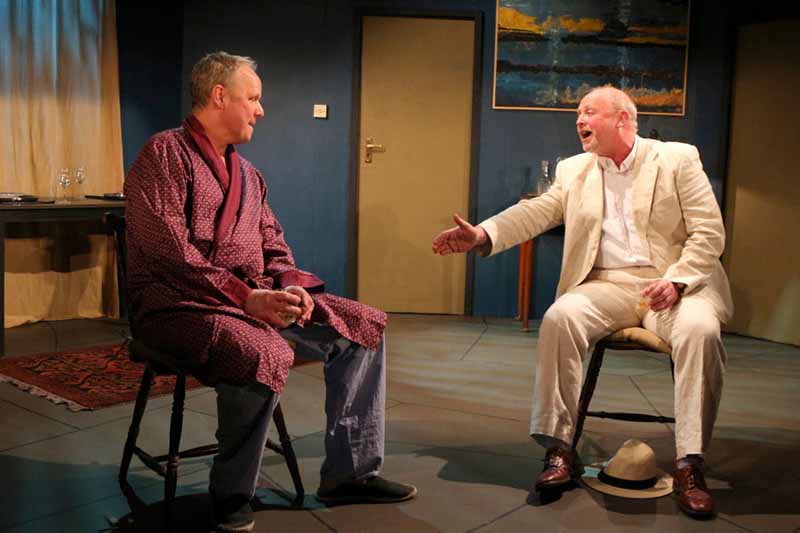
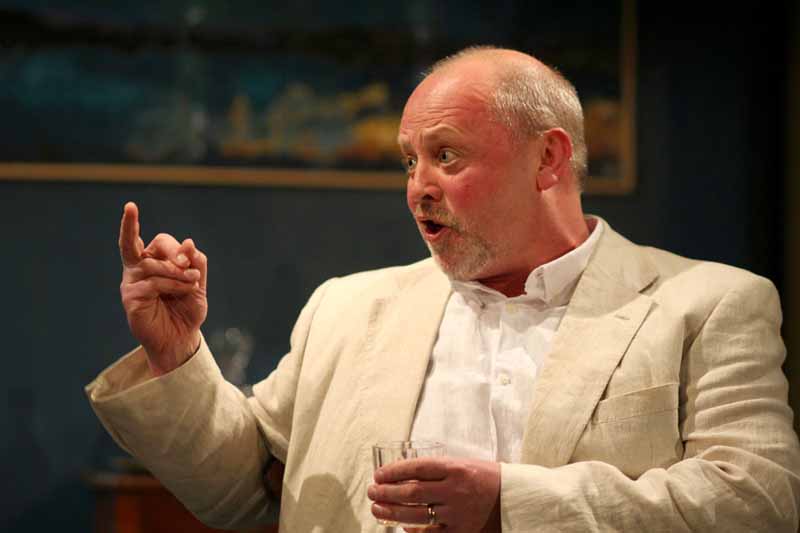
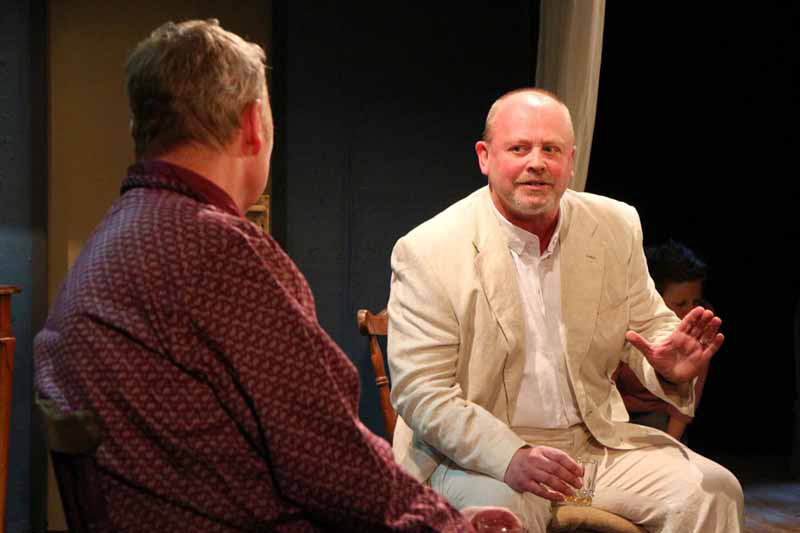 Martin Shaw as Roberto was excellent – thoroughly believable. Was he the man who had damaged Paulina so devastatingly or was he an innocent cast in this role because of her trauma? I couldn't tell. Shaw kept us guessing and did a fine job of portraying this ambiguous character – particularly since he was tied to a chair and gagged for a lot of the action. Martin Shaw as Roberto was excellent – thoroughly believable. Was he the man who had damaged Paulina so devastatingly or was he an innocent cast in this role because of her trauma? I couldn't tell. Shaw kept us guessing and did a fine job of portraying this ambiguous character – particularly since he was tied to a chair and gagged for a lot of the action.
It's a shortish play, but Dorfman certainly packs a lot in. Director James McKendrick skillfully managed the interplay of all the characters so your sympathies were constantly shifting between the three of them – and the tensions never let up. So despite the length of the piece I came away quite emotionally wrung out and with a lot more questions than answers to think about, not least the clever ending. Did Paulina exact her revenge or didn't she? Either way, she is still unable to free herself of her terrible past.
 Angelika Michitsch's set looked good, but seemed rather sparsely furnished for a living room. There were no comfortable chairs - but the available hard chairs worked well when the room was transformed into an interrogation space. I had a minor gripe with a detail of the setting: in the first scene the table was laid for dinner – and indeed the couple refer to eating dinner after Gerardo arrives home. Yet later when they have apparently gone to bed and Roberto returns with the spare tyre, the table still seemed to be laid for dinner. It's those of us who stage manage that spot this stuff, no-one else I know who saw it commented (or even noticed). We're just obsessed with stage mealtimes. Angelika Michitsch's set looked good, but seemed rather sparsely furnished for a living room. There were no comfortable chairs - but the available hard chairs worked well when the room was transformed into an interrogation space. I had a minor gripe with a detail of the setting: in the first scene the table was laid for dinner – and indeed the couple refer to eating dinner after Gerardo arrives home. Yet later when they have apparently gone to bed and Roberto returns with the spare tyre, the table still seemed to be laid for dinner. It's those of us who stage manage that spot this stuff, no-one else I know who saw it commented (or even noticed). We're just obsessed with stage mealtimes.
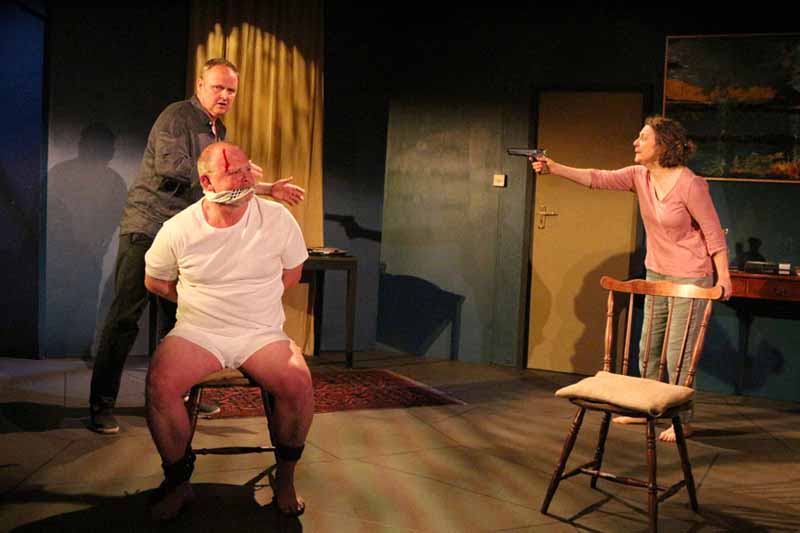 I really enjoyed the effect of the cars "pulling up outside the house" – I know it's a neat trick of lights and sound, but it helped to establish the location of the house beautifully. Otherwise the lights and sound were what I have come to expect from the crack team of and Stephen Ley and Laurence Tuerk– subtly emphasizing the tension and drama and upholding the underlying sense of unease throughout. I really enjoyed the effect of the cars "pulling up outside the house" – I know it's a neat trick of lights and sound, but it helped to establish the location of the house beautifully. Otherwise the lights and sound were what I have come to expect from the crack team of and Stephen Ley and Laurence Tuerk– subtly emphasizing the tension and drama and upholding the underlying sense of unease throughout.
So I've seen this play twice now. 25 years+ between the two viewings, and it's still a fresh and relevant airing of some important questions that have never been resolved: Can a society move on and repair its damaged history? Is private revenge ever justified? No doubt I'll still be mulling these over by the time I see the next production.
Photography by Robert Piwko
|