|
 It’s tough being second-best. Harry Wade knows that better than most. A prolific hangman in his own right, Wade lives forever in the shadow of Albert Pierrepoint, a famous executioner who has hanged (“not hung!” as we are repeatedly reminded during the play) at least twice as many people as he has.
Director Liam Stewart has his first actors already on stage when the house opens. The year is 1963 and the scene is a dimly-lit prison cell. A condemned man, Hennessey (played with convincing desperation by Matt Scholes in his first appearance at Tower Theatre) is lying on a simple bed, watched over by a jailer. The audience finds itself in the role of voyeur, witnessing Hennessey’s final minutes, as he lies in silence, until Harry and his team arrive. Hennessey protests his innocence, while clinging quite literally for dear life to his bedstead, all the while taunting Harry for being second-best. After a struggle and some well-staged violence, he is frog-marched to the gallows.
 Fast-forward to 1965. Britain has now abolished the death penalty, leaving Harry at something of a loose end. Bad pun intended - be prepared for plenty of gallows humour during the course of the play.
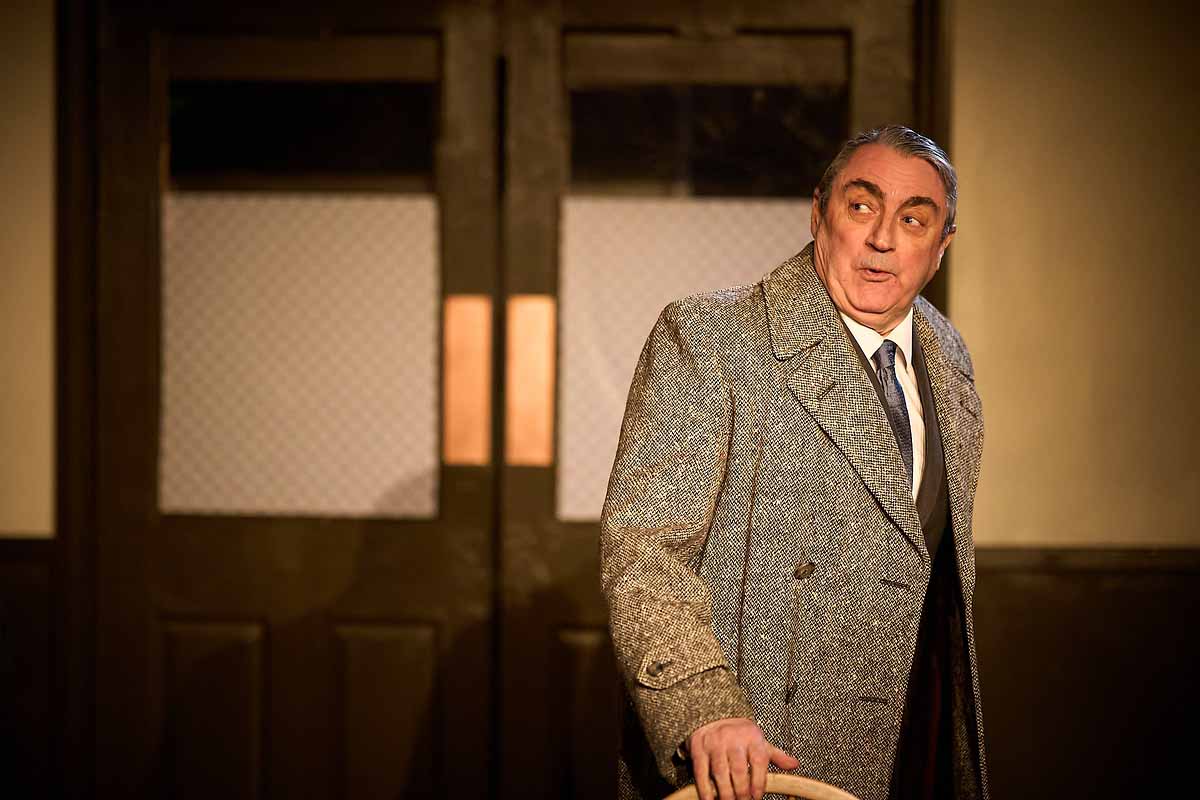
This is Ed Reeve’s debut performance at Tower Theatre and he successfully captures Harry’s toxic mix of self-importance and brittle ego. Now that his hanging career is over, Harry trades on his past glories behind the bar of his public house in Oldham. Which includes a visit from a cub reporter from the local rag.
The director chooses an unconventional staging for the interview. Clegg, the reporter (Luke Yianni, another Tower debut) and Harry face the audience rather than each other. A spotlight is trained on Clegg, the inquisitor, and the audience finds itself in Harry’s shoes, with the questions directed into the auditorium.
 For a junior reporter, Clegg astutely presses on Harry’s sore point: Pierrepoint. The real historical figure carried out somewhere between 435 and 600 executions during a 25 year career. So how many convicted people did Harry dispatch? Harry blusters that numbers don’t matter, but it doesn’t take much probing to get him to spit out his: 233. By the end of the play, that figure will have risen... but let’s not get ahead of ourselves.
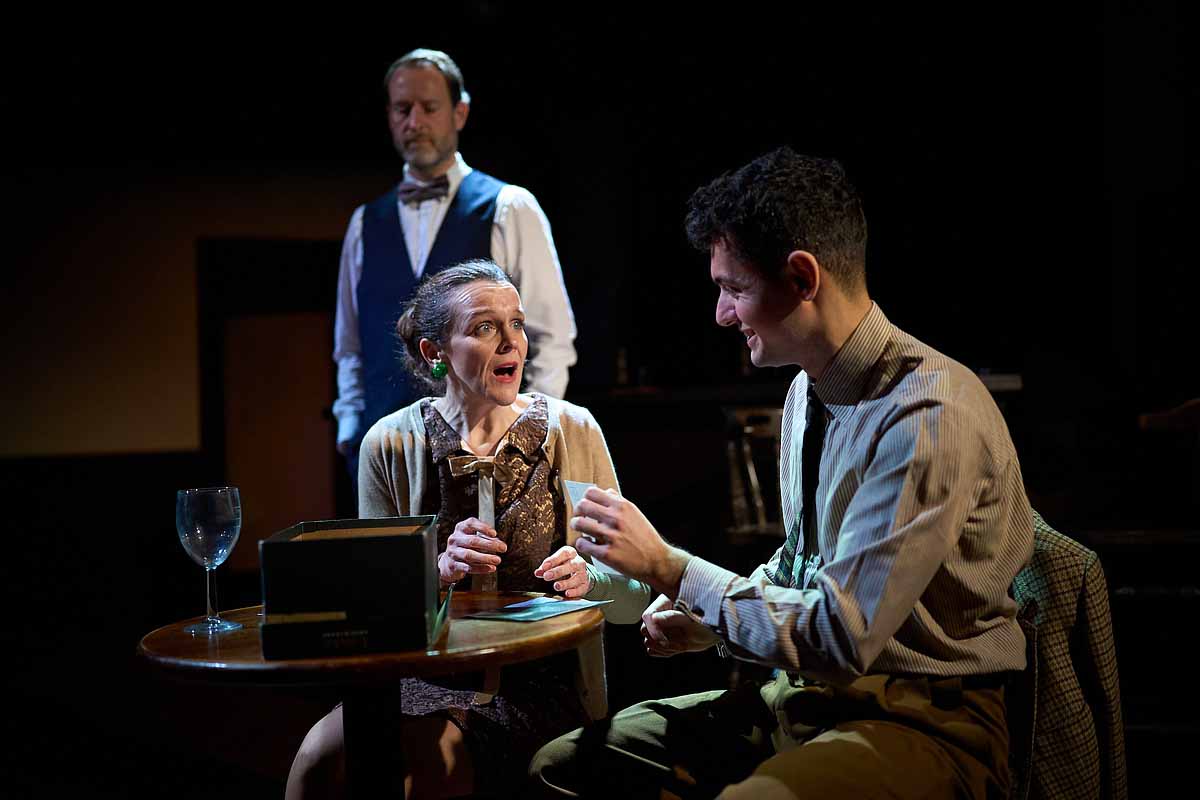
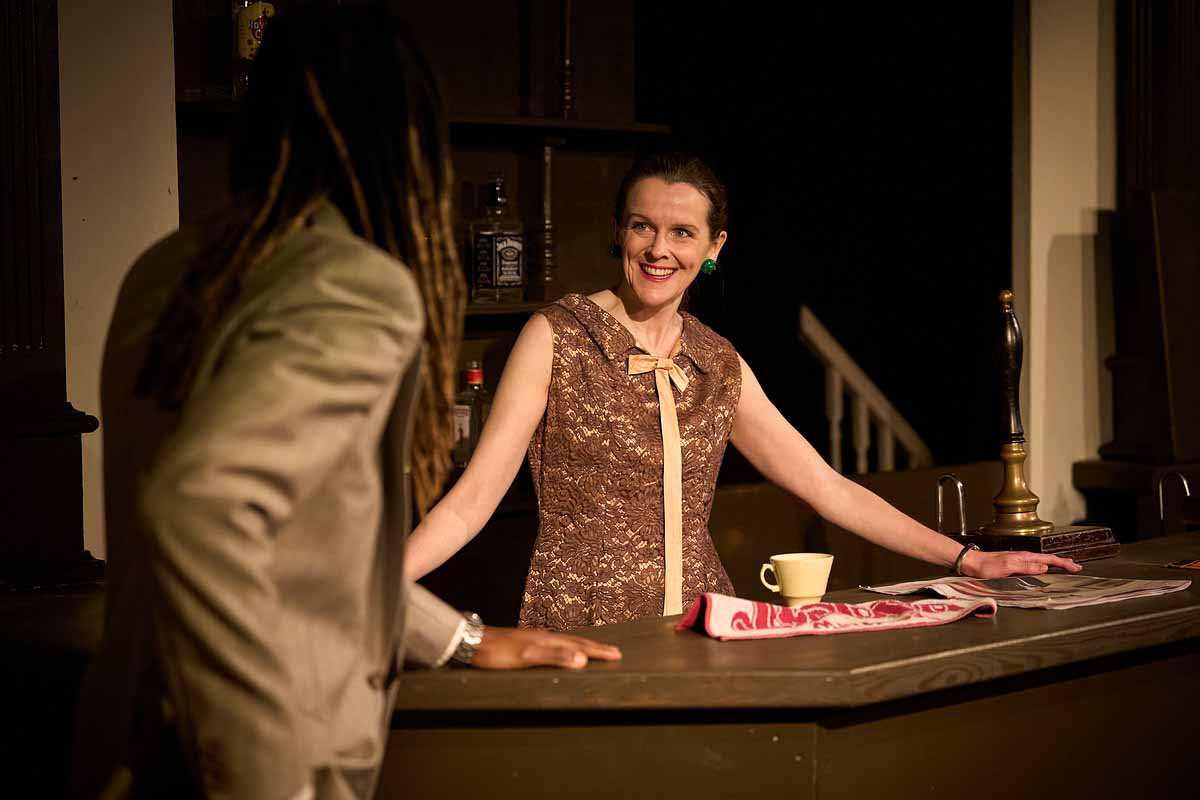
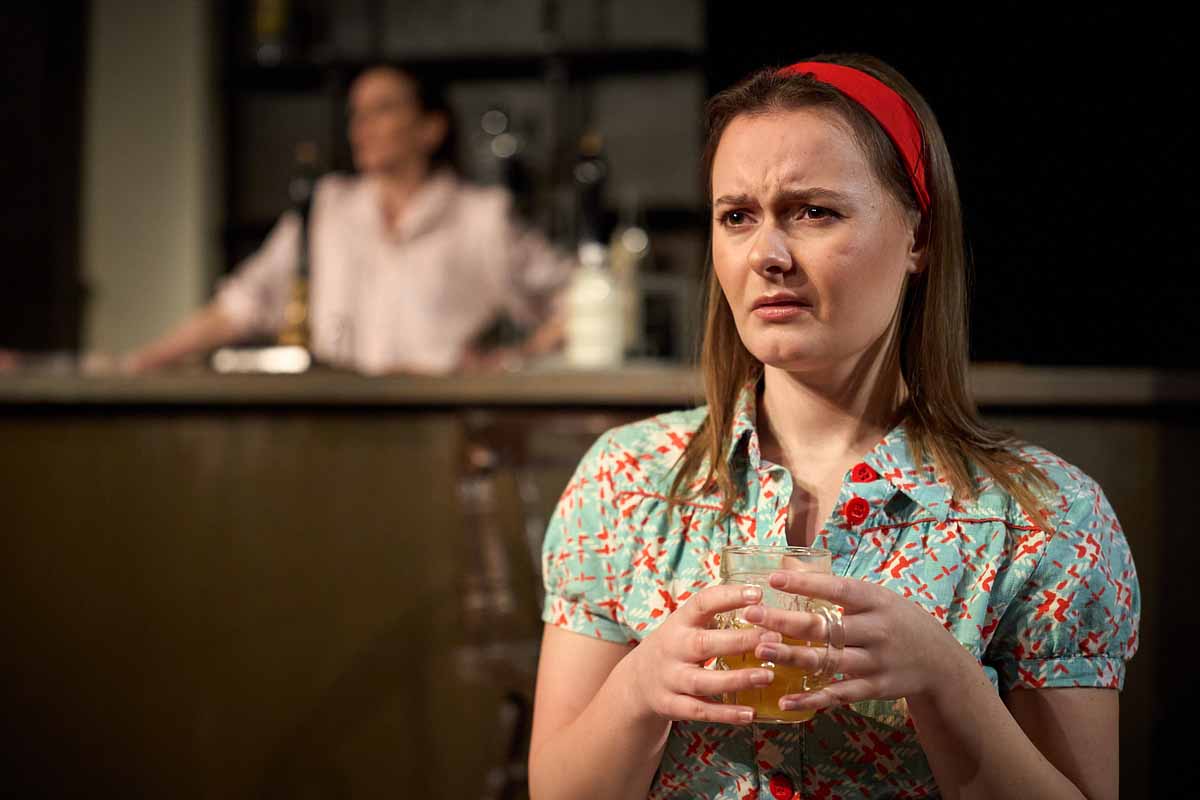
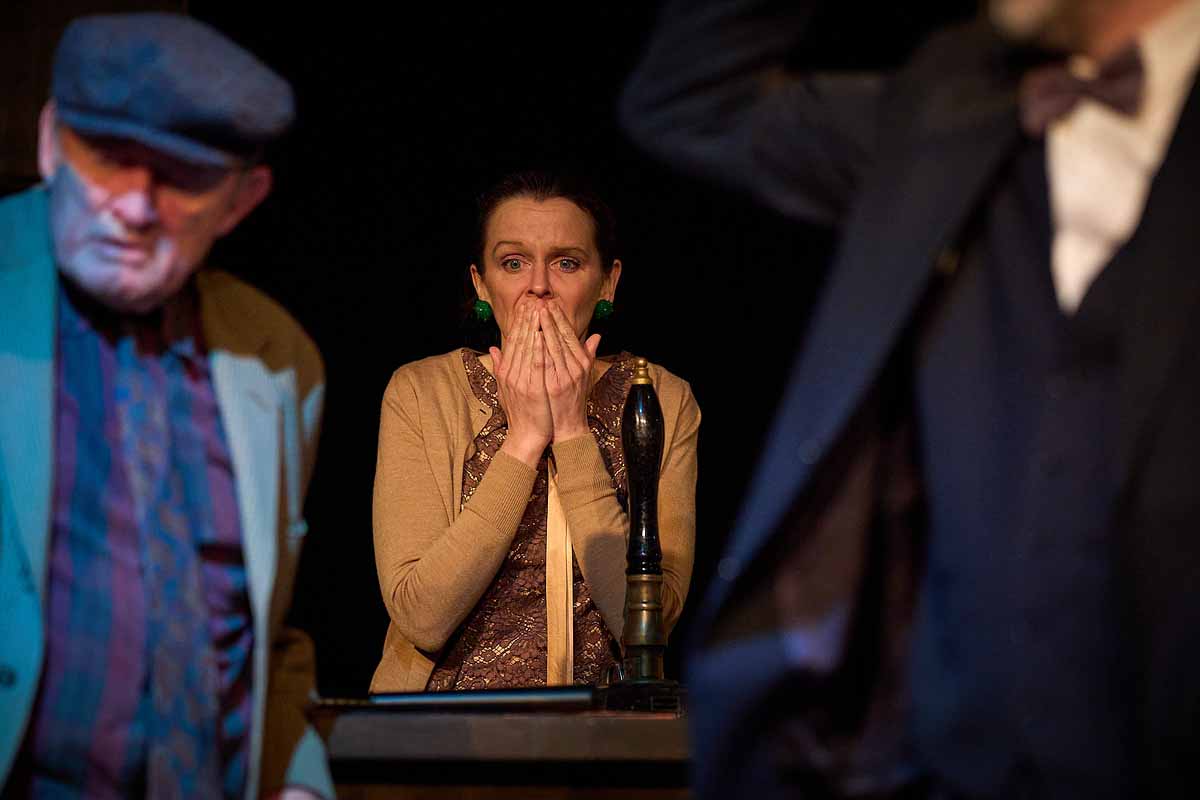
Alongside Harry behind the bar is his wife, Alice, played by Helen McGill, who subtly conveys the tinge of despair behind the smiling landlady demeanour. Why else does Alice drink gin by the tumblerful before getting dressed in the morning?
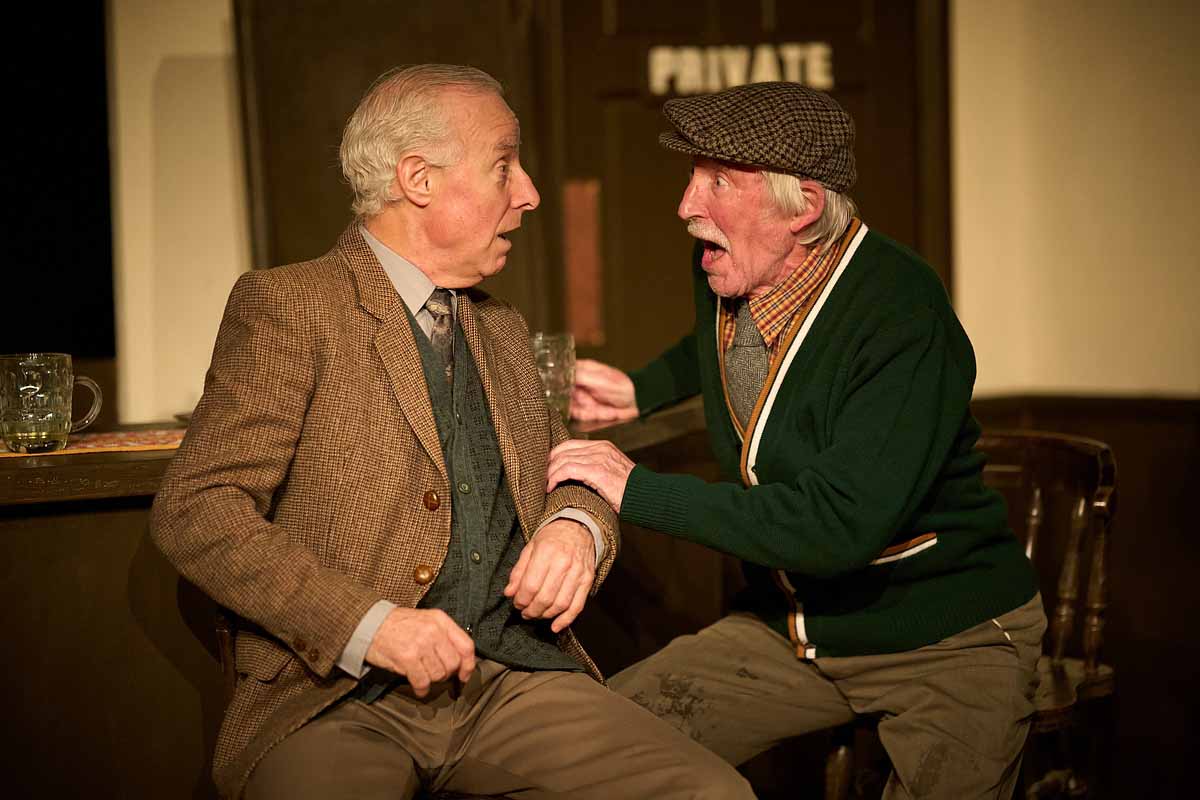
 A sycophantic cohort of regulars - Arthur, Bill and Charlie - played with great comic timing by Bob Hough, Bob Hutt and Richard Kirby - prop up the bar. They do a fantastic turn as a trio of old codgers and would not have been out of place on the set of “Last of the Summer Wine”. They are joined by the lazily corrupt Inspector Fry, played by Giles Fouhy (yet another Tower debut) whose slicked-back hair, dripping in Brylcreem, speaks volumes about this policeman.
The ensemble scenes are well-paced and draw the audience into the life of the pub and the wider community. And on the subject of the pub, a huge hat-tip to the set designer, Phillip Ley, and the team of set builders. The detail is impressive, from the wood panelling, to the beer taps, to the foot rail around the bar.
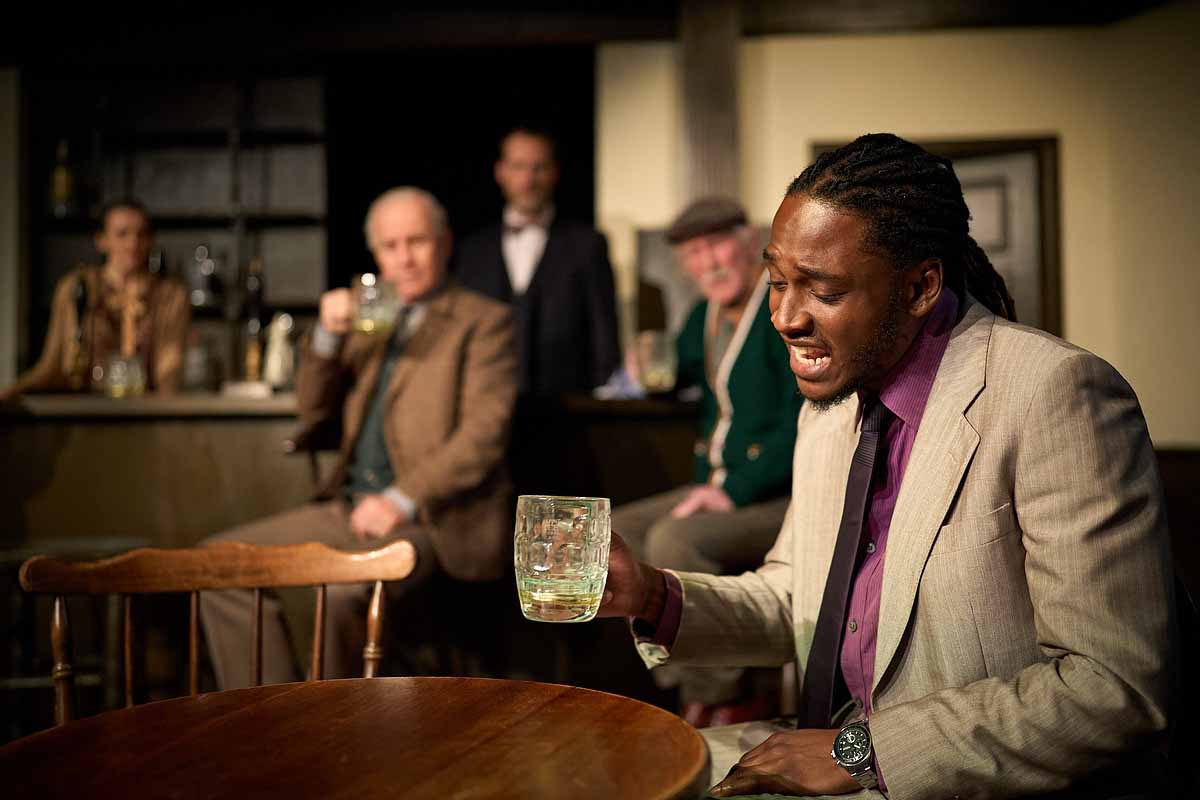
 The second half opens with a change of location: a small section of wall, complete with dado rail, has appeared in front of the pub set, to denote the greasy spoon where the outsider, Mooney ("menacing, not creepy!" as he insists) played by Liam Brown meets to scheme with Harry’s erstwhile assistant, Syd. Tim Waghorn does a deliciously snivelling and weaselly turn as Syd, who was bullied and taunted by Harry and is now set for revenge.
The apparent disappearance of Harry and Alice’s daughter, Shirley (played with great teenage petulance by Eloise McCreedy) sets the play on course for its grim denouement (pun not intended, but let’s keep the black humour coming). Mooney is held responsible and Harry plans to extract a confession. This is where the set design (and indeed stunt coordination) reach a climax - a convincing hangman’s noose which Harry brings out of retirement to string Mooney up. Liam Brown performs some fine physical theatre as Mooney, on the end of the rope, teeters on the edge of a chair.
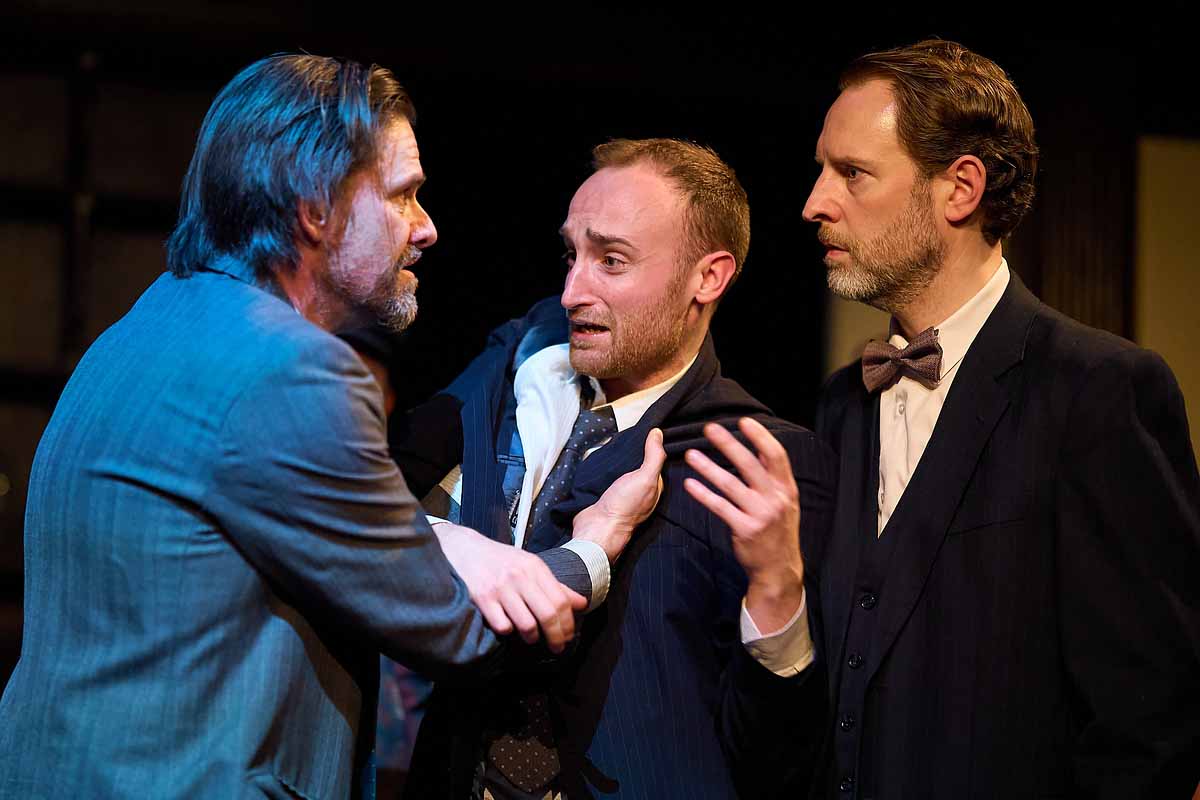
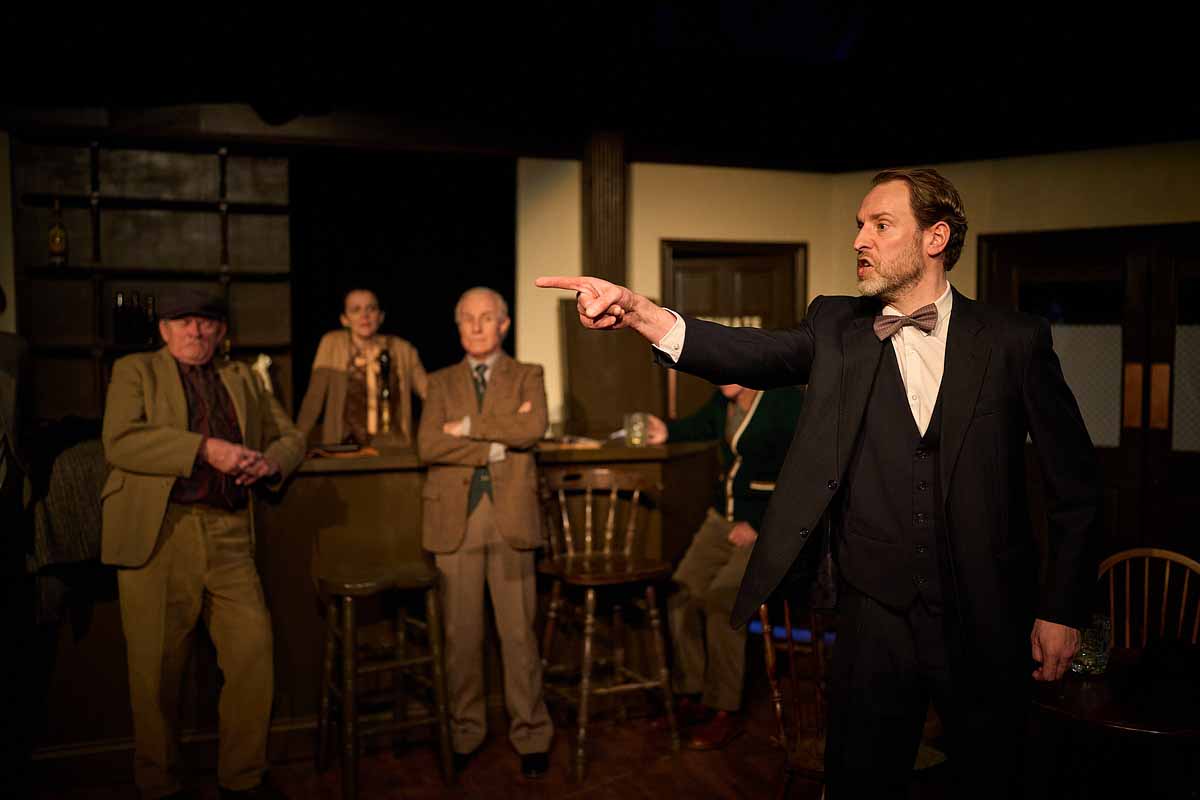 As if the stakes could not be higher, who should turn up at the pub at this moment but Harry’s arch-nemesis. Adam Kimmel (another Tower debut) plays Pierrepoint with fury and wounded pride, injecting a valuable new energy into the play in this final scene. By the time he leaves, Mooney (concealed behind a hastily drawn curtain) is dead.
The play paints a brutal picture of provincial Britain just before the Sixties had become Swinging. The indictment of capital punishment has added sting in this production. The casting decision to make Mooney a person of colour injects overtones of lynchings in the Southern United States. This Tower Production makes us laugh and it also makes us shudder.
Photography by Jason Harris
|