|
 If the next time you visit the Tower Theatre you fancy visiting a pilgrimage site nearby which is not home to either Arsenal or Spurs, you should get on the 106 bus to Finsbury Park and then the W7 to Muswell Hill or as it would have been known at the time of Chaucer , the shrine to Our Lady of the Mossy Well. Several other options would have been open to you in medieval times that were less than a day's ride away for pilgrimage was for a lot of people a local journey not a national or supra national one. Chaucer's pilgrims were therefore at the sort of mid range of pilgrimage neither staying close to home or taking their lives in their hands by crossing the sea to Rome, Jerusalem, Compostella or any of the known world's numerous sites of devotion. And thus in the age of public transport we embark once again with stories seven centuries old.
 A train journey to Canterbury in the modern age would still fit into the 'mild peril' category these days, especially at times of heat, rain, cold,leaves or industrial dispute, and this is how we proceeded on our way. Alexa Wall was our guide and theirs through their communal and as it turned out, interrupted journey. As a train guide she is a very endangered species herself and the modern pilgrims would ironically have found themselves in a worse situation than their medieval counterparts who could have just hired another had their initial choice departed. Fortunately for them she stuck around and more than that introduced their tales with a Chaucerian lack of moralising and more than a little relish.
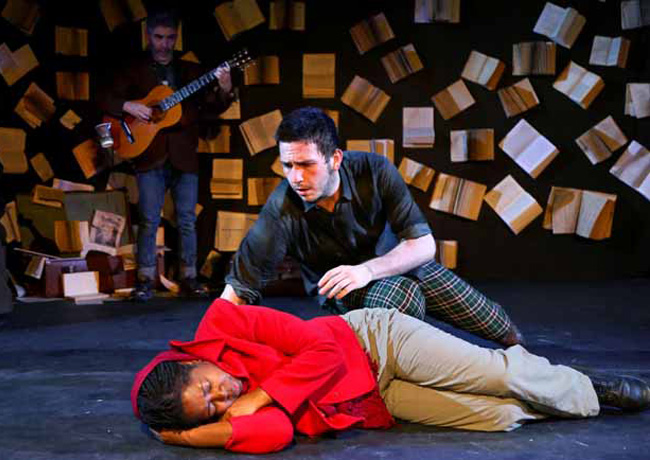
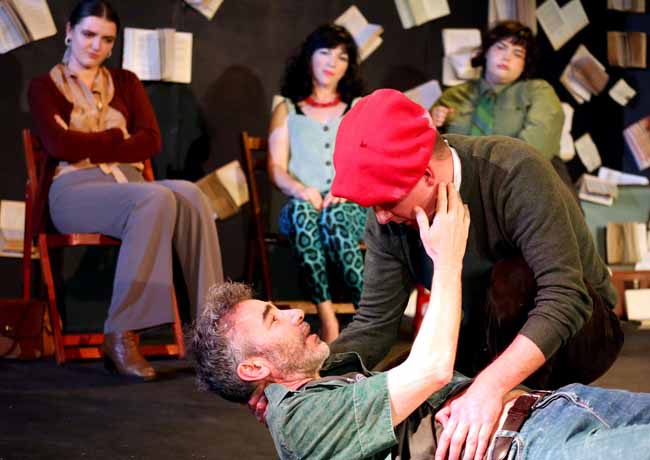
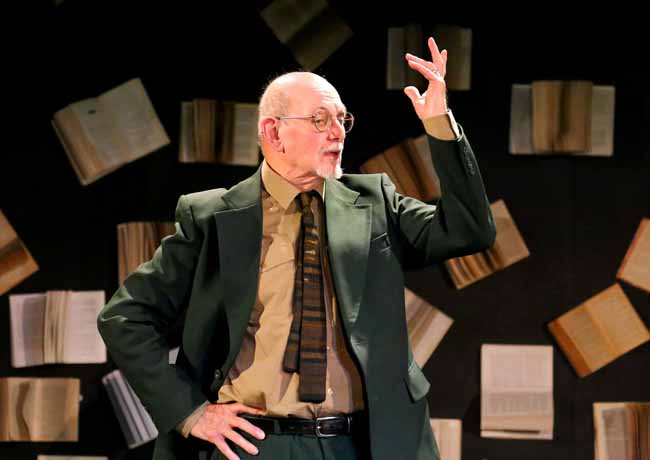 As with Chaucer's original text (which may or may not have been finished as he intended), not every pilgrim here gets to tell their full complement of tales, although all feature in others stories and in the welter of music, dance and general mayhem that supports the narrative enterprise. I was most taken with Paul Graves's Priest (called John Nunn – I see what you did there) who though apparently (judging by his anxious expression) having fallen among commuters got the prize tale of farmyard pride almost leading to a fall. Ryan Williams featured as one of literature's most famous chickens, Chauntecleer, and garnered the biggest laughs of the evening with his wide eyed preening and posing. Alistair Maydon's turn at the front introduced us to that unlikely medieval character, the trustworthy and humanitarian lawyer and you felt he might well be representing some of his fellow passengers when they sought compensation for their delayed journey at Canterbury. At this point, by the way we should feel sorry for Chaucer's contemporary John Gower, more famous than him at the time but now far less celebrated and most often come across these days as the possible source for the original Man of Law's tale.
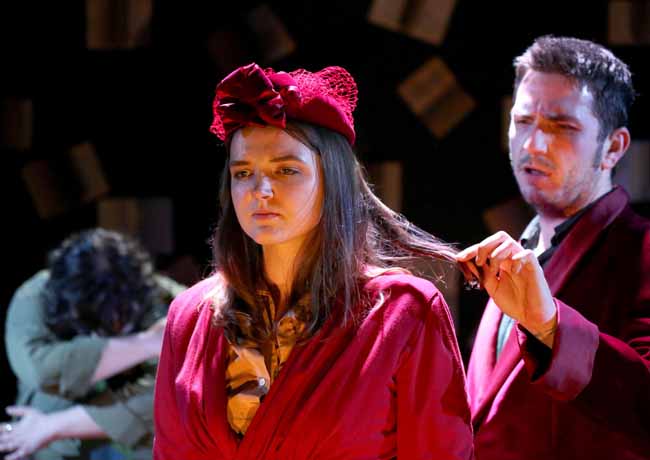
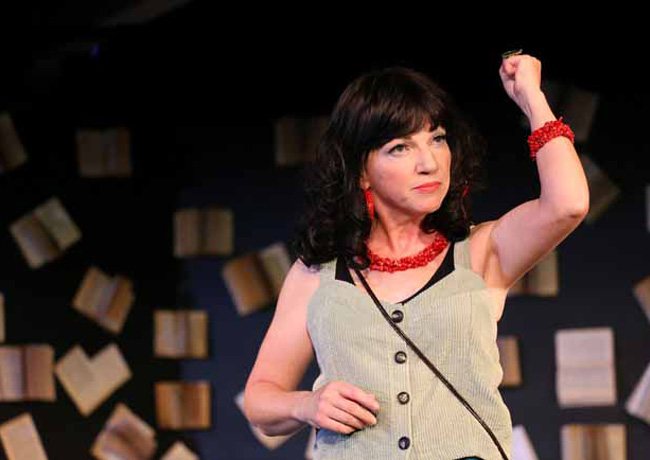
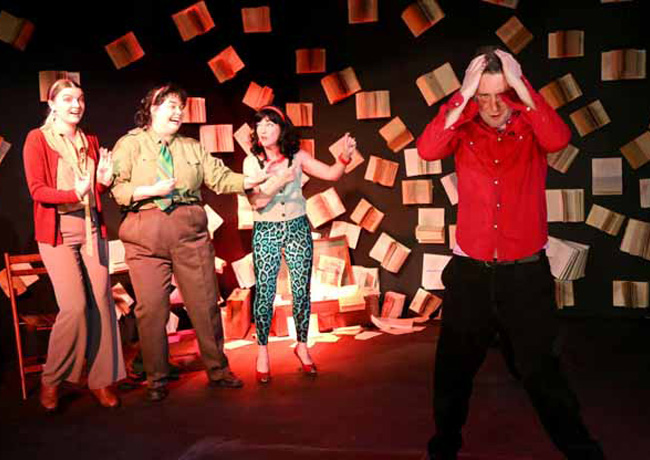 Deborah Ley's entertaining turn as Alice Bath (a matchmaker) on the eternal search for gender equality posed interesting questions about how much things have changed for women in the interim. Famously having lost, or worn out, five husbands the original Wife of Bath was by the standards of the time, considerably independent and must have been wealthy judging by the fact that she had been severally abroad on pilgrimage as well as in her own country. Her experiences mirrored that of Chaucer's near contemporary Margery Kempe who had a similar travel record and continued to move around in the service of her religious devotions despite not being accompanied by her husband or other male escort. (At one point this earned her a pursuit by John of Bedford the nearest thing England had to a witchfinder general at the time). Sarah Bower's Librarian gave us Griselda's tale with Arabella Hornby as the titular heroine whose plight surely engendered horror and concern among the audience. Toni Madja's soldier (the modern descendent of Chaucer's knight) seemed less high up the social scale than he was although seemingly more sympathetic than someone who was more or less, a mercenary. I can't remember if it was this tale or another that gave us Paul Wilcocks in lycra, but either way it is something that will stick in my memory for some time to come. That and his multi instrumental prowess of course.
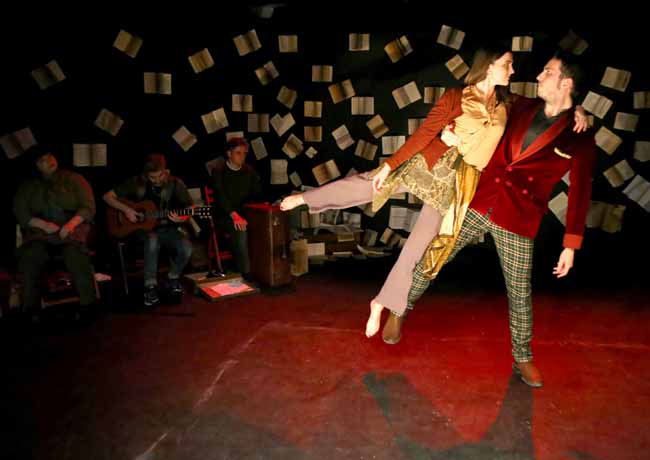 Overall things were less salacious and outrageous than I was expecting (The RSC were much more explicit ten years ago, especially with the fart jokes) although Emily Carmichael seemed to spend a lot of the evening being used and abused by various others. I admired her fortitude under such medieval circumstances.
The original music by Rosie Hayes helped the proceedings along merrily and Sam Littley's lighting did illuminate star turns properly without casting everyone else into the outer darkness when they were appreciating rather than narrating and participating. A special mention must go to the special tickets given to the audience instead of our usual plastic passes. Overall I thought that despite the tremendous job that Lucy Moss and Ian Hoare had done on the text and Angharad Ormond on directing the multi faceted undertaking we were somewhat caught between the original and the modern day and some of the contradictions couldn't really be resolved. As (unlike Chaucer's pilgrims) our characters did not set off together with a common endeavour but were stranded together by force majeure the end result was a bit more like Bocaccio's Decameron than Chaucer's founding text.
Overall things were less salacious and outrageous than I was expecting (The RSC were much more explicit ten years ago, especially with the fart jokes) although Emily Carmichael seemed to spend a lot of the evening being used and abused by various others. I admired her fortitude under such medieval circumstances.
The original music by Rosie Hayes helped the proceedings along merrily and Sam Littley's lighting did illuminate star turns properly without casting everyone else into the outer darkness when they were appreciating rather than narrating and participating. A special mention must go to the special tickets given to the audience instead of our usual plastic passes. Overall I thought that despite the tremendous job that Lucy Moss and Ian Hoare had done on the text and Angharad Ormond on directing the multi faceted undertaking we were somewhat caught between the original and the modern day and some of the contradictions couldn't really be resolved. As (unlike Chaucer's pilgrims) our characters did not set off together with a common endeavour but were stranded together by force majeure the end result was a bit more like Bocaccio's Decameron than Chaucer's founding text.
Photography by Robert Piwko
|