|
 As usual, I arrived not knowing a whole lot about Festen, apart from it being a stage adaptation of a Scandinavian film (Danish, as it turns out), that as well as being adapted into a play was made into an opera very recently. I also got that the drama centres on a family celebration that takes a dark turn as all the family skeletons come dancing out of the cupboard. I was expecting angst and intensity – but I wasn’t expecting to laugh so much (appropriately, I should add). Allan Stronach really pulled it out of the bag. As usual, I arrived not knowing a whole lot about Festen, apart from it being a stage adaptation of a Scandinavian film (Danish, as it turns out), that as well as being adapted into a play was made into an opera very recently. I also got that the drama centres on a family celebration that takes a dark turn as all the family skeletons come dancing out of the cupboard. I was expecting angst and intensity – but I wasn’t expecting to laugh so much (appropriately, I should add). Allan Stronach really pulled it out of the bag.
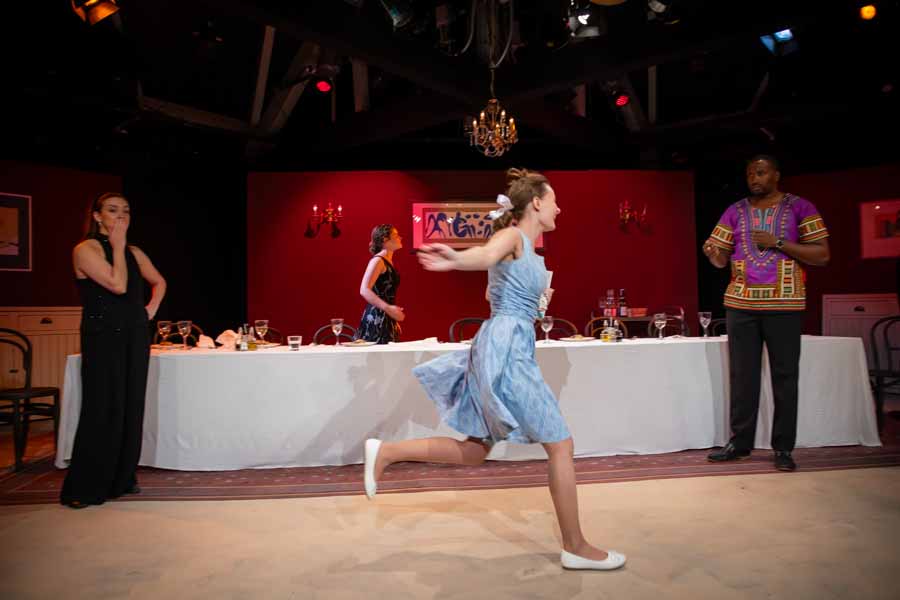 So the wealthy family gather together to celebrate Helge’s sixtieth birthday, at the hotel that he owns. The grown-up children arrive and are directed to their bedrooms to dress and then the family – along with some old friends/business acquaintances - settle down for dinner. And then the shocking stuff really gets going.
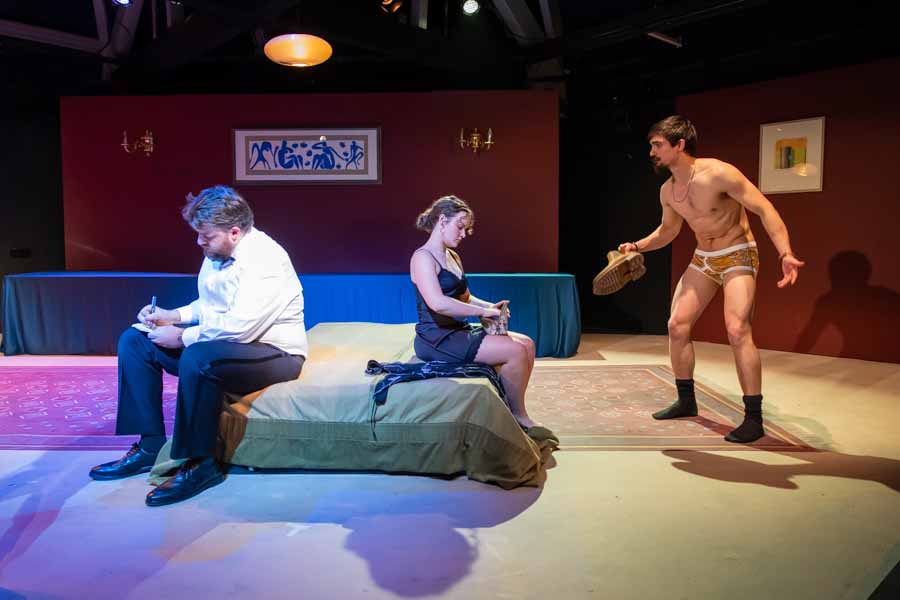
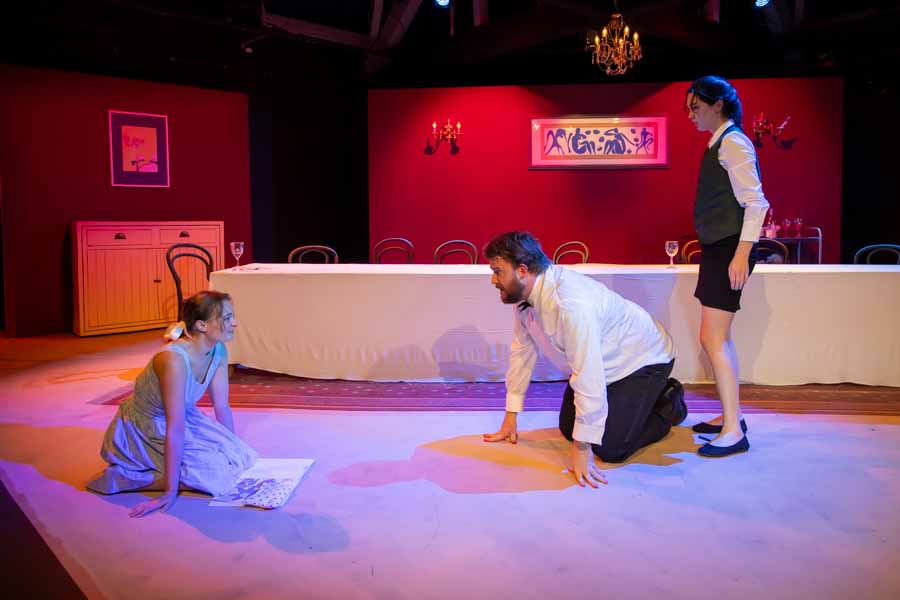
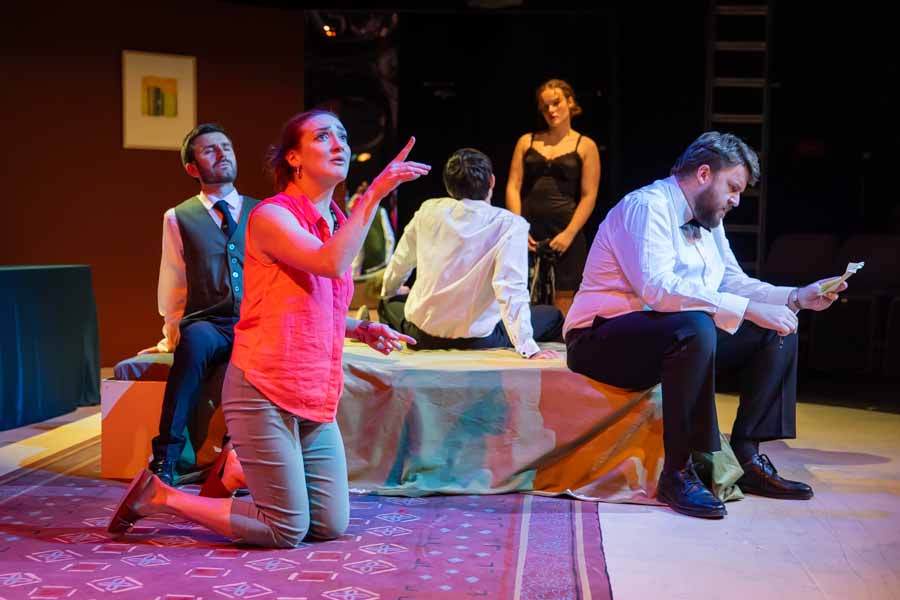 The hotel dining room was a masterly piece of set design by Angelika Michitsch. With a minimal amount of adaptation it was quickly turned into the bedrooms of the returning children, with the different rooms being delineated by pools of lighting and some neat choreography of the characters moving into the “acting zone”. Nick Insley’s lights overall looked stunning (though obviously I have to declare that I am not unbiased in this assessment).
There wasn’t a lot of sound – and this worked to particularly good effect in the main course scene where no-one speaks for several minutes. You could sense the tense string music, even though it wasn’t there. I will have to watch the film for this scene alone – it was certainly an astonishing piece of theatre.
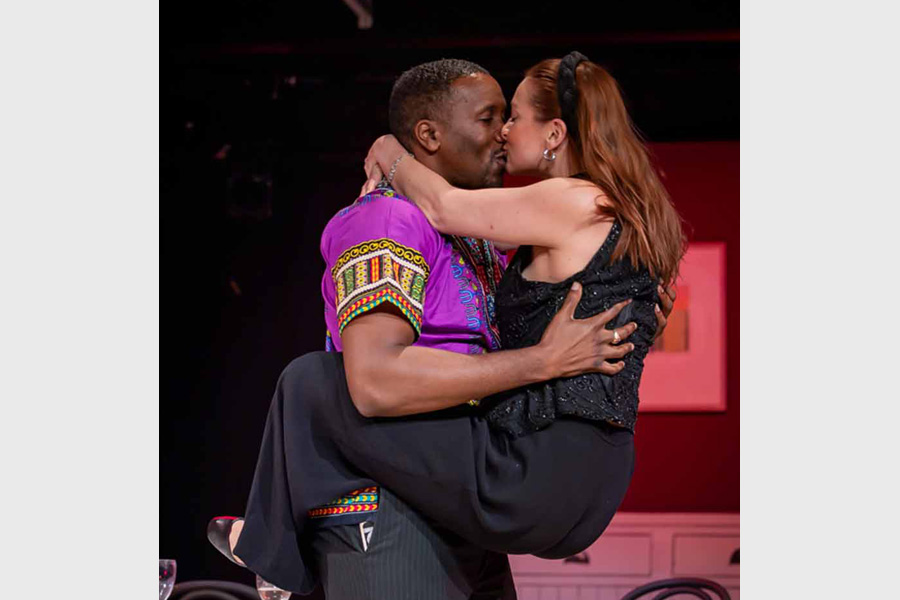
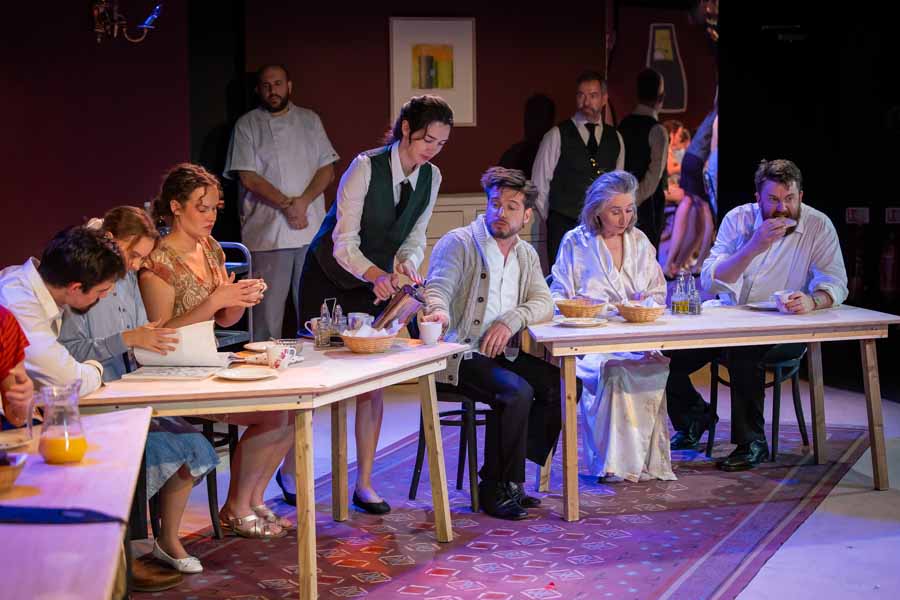 In a strong cast, there were some outstanding performances. Joshua Picton was a nuanced Christian, the oldest and surviving twin. The undercurrents of sadness about the loss of his sister were very evident – even before the full tragic story was revealed. Alexander Dalton was excellent as the explosive and unpredictable Michael. I loved the eye-rolling weariness of Grace Maltman as Michael’s put-upon wife, Mette. Martin Shaw gave a masterly performance as Helge. He seemed such a nice chap, and then we find out about all the bad stuff! Kieron Mieres as Gbatokai gave a convincing portrayal of a man who has experienced considerable racism, but didn’t want to call it out in a situation where there was already plenty of family tension to contend with it. The unspoken back-and-forth between him and his girlfriend, Helene - Helge’s youngest daughter played by Laura Riekkola - during the silent dinner scene was very compelling.
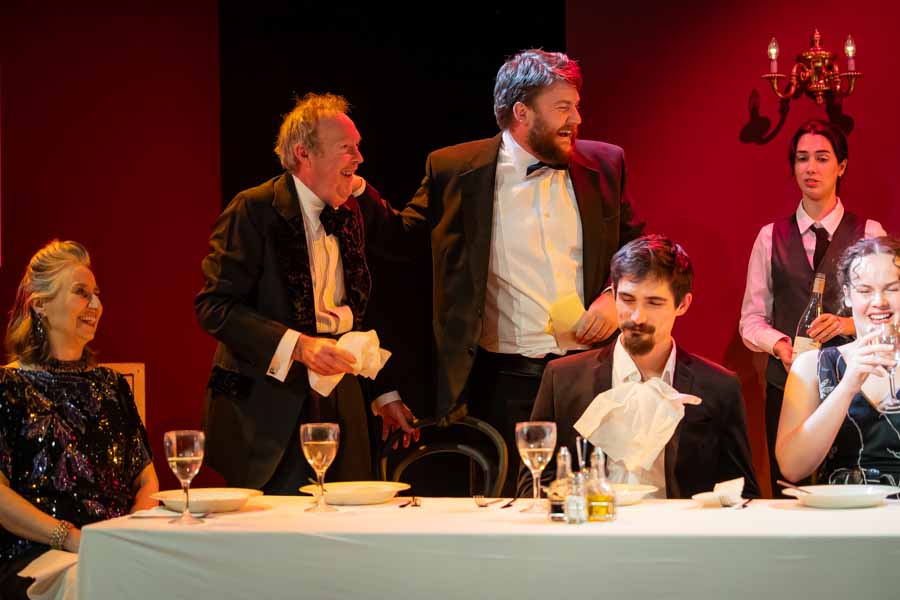 The family dynamic and interplay between characters was extremely convincing. I was dying to know what Michael had done at a previous event that meant he wasn’t officially invited to the current celebration. I was sure that this would be part of the Big Reveal – but we never found out, even though I was sure that the wonderfully snooty hotel manager, Lars (David Lindley-Pilley) would spill the beans. The same with the relationship between Christian and the chef Kim (nicely portrayed by Jason Rosenthal). They had known each other since childhood, and it felt as though there was some “history” between them that would throw more light on the current unfolding of events, but it wasn’t shared. The backstory of Christian and Pia (beautifully played by Medea Manaz) was more obvious – and they appeared to end up together. Perhaps a happy ending? With all of Christian’s obvious baggage I am not so sure.
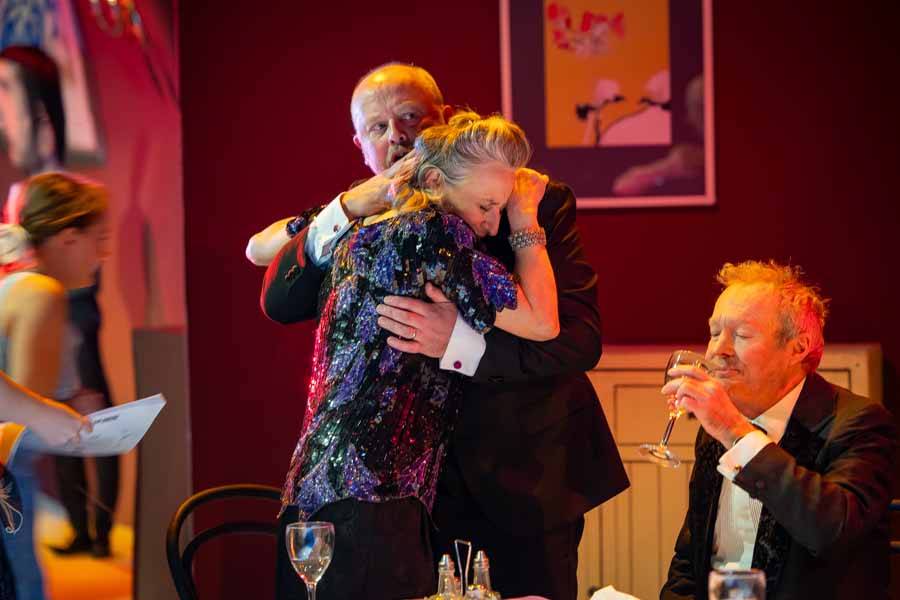
A highlight was the interaction between all of the siblings. Particularly the disagreements between Michael and Helene, when after a quick shouting match they would end up shoving each other like ten-year olds. It was very funny but also poignant.
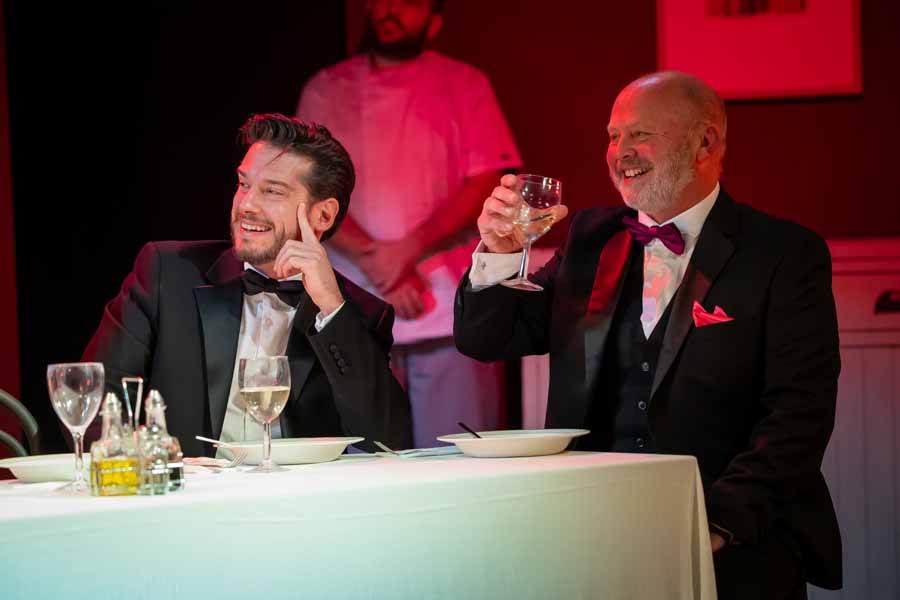
While some characters had fewer lines, there was no sense of anyone having a minor part in this play. Andrew Robinson as Helge’s father was excellent as a confused old man. Helge’s old friends Poul (Daniel Watson) and Helmut (James Collins) did a great job of keeping up the bonhomie and singing as the evening starts to unravel. Stephanie Irvine as Helge’s wife, Else, was suitably enigmatic throughout, finally - FINALLY - siding with her children at the very end. Did she know all along about Helge but was only admitting it to herself now? We will never know.
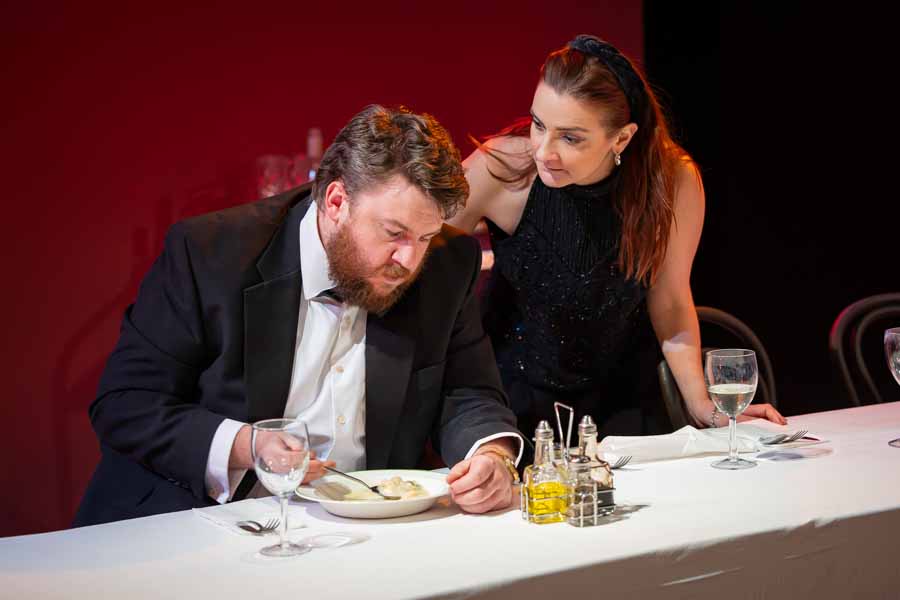
 The stage manager in me was eagerly awaiting the opportunity to empathise over the horror of having to provide proper food, properly served that actually gets eaten! I haven’t enjoyed anticipating this aspect of a drama so much since Rules for Living – though as I recall most of that dinner gets chucked around the stage.
My anticipation was well rewarded. Stage Manager Gary O’Keefe did an amazing job of producing an appetizing meal for the dysfunctional family of Festen and all credit to everyone involved in serving it up so seamlessly – without detracting from any of the tension and drama unfolding on stage.
 I have stolen some words from Paul Taylor’s 2004 review of the original Almeida production (at least I am admitting it) because it sums up so well the way this play works:
“T S Eliot once observed that for a drama to have wit, it must acknowledge that there are alternative ways of viewing any situation. This production does so with an understated insight that takes the breath away. You see it in the streaks of wild silliness that break and intensify the tension of the long, beautifully paced banquet scene.”
So here’s my less eloquent conclusion: Brilliant writing, brilliant directing, brilliant performances - and a meal that looked so tasty I fancied trying it. Marvellous evening all round!
Photography by Marc Gascoigne
|