|
 Having been involved with the creative side of things, as Tower’s members we go to watch a play to relish as much in the complexity of the stagecraft as in the story itself. Coram Boy was a huge treat.The production, directed by Simona Hughes for the London run and adapted for its transfer at the Minack Theatre, was both a compelling tale and one of the most ambitious theatrical endeavours by Tower Theatre. The story by Jamila Gavin, adapted by Helen Edmundson, revives a dark time in English history. It’s grim, with dead babies galore. It doesn’t spare scenes of violence, cruelty, and racism. Yet the twists and turns also provide good humour and heart-rending moments of hope, happiness and friendship. Having been involved with the creative side of things, as Tower’s members we go to watch a play to relish as much in the complexity of the stagecraft as in the story itself. Coram Boy was a huge treat.The production, directed by Simona Hughes for the London run and adapted for its transfer at the Minack Theatre, was both a compelling tale and one of the most ambitious theatrical endeavours by Tower Theatre. The story by Jamila Gavin, adapted by Helen Edmundson, revives a dark time in English history. It’s grim, with dead babies galore. It doesn’t spare scenes of violence, cruelty, and racism. Yet the twists and turns also provide good humour and heart-rending moments of hope, happiness and friendship.
 In 18th century Gloucester, the Coram man Otis Gardiner and his accomplice Mrs Lynch (Matt Tylianakis and Angharad Ormond, positively chilling as the cold-blooded villains) take babies and money from desperate mothers, promising to deliver them safely to a Foundling Hospital in London. Instead, they murder them and bury them by the roadside, to the helpless horror of Gardiner’s disabled son, Meshak - a powerfully affecting performance interpreted with physical agility by Paul Graves. Meanwhile, Alexander Ashbrook, the first-born son of a local Lord, defies his father and runs away to follow his passion for music. The brutal father-and-son conflict is convincingly portrayed by Gately Freeman as Lord Ashbrook and Tommy Saunders as the adult Alex. Unbeknown to the fugitive, his (biblically) beloved cousin Melissa – Ruby Mendoza, also doubling as the mesmerising Angel - bears him a baby. Like the others’, the fate of this illegitimate infant appears to be tragically written when Meshak secretly abducts him and saves his life. In 18th century Gloucester, the Coram man Otis Gardiner and his accomplice Mrs Lynch (Matt Tylianakis and Angharad Ormond, positively chilling as the cold-blooded villains) take babies and money from desperate mothers, promising to deliver them safely to a Foundling Hospital in London. Instead, they murder them and bury them by the roadside, to the helpless horror of Gardiner’s disabled son, Meshak - a powerfully affecting performance interpreted with physical agility by Paul Graves. Meanwhile, Alexander Ashbrook, the first-born son of a local Lord, defies his father and runs away to follow his passion for music. The brutal father-and-son conflict is convincingly portrayed by Gately Freeman as Lord Ashbrook and Tommy Saunders as the adult Alex. Unbeknown to the fugitive, his (biblically) beloved cousin Melissa – Ruby Mendoza, also doubling as the mesmerising Angel - bears him a baby. Like the others’, the fate of this illegitimate infant appears to be tragically written when Meshak secretly abducts him and saves his life.
 Fast forward eight years. In London we meet the now growing Aaron. Frankie Roberts, first seen as young Alex, also portrays the gentle orphan, penetrating the audience’s heart with her enchanting singing voice. Not a dry eye in the house. The boy pairs with his best friend Toby, saved from an African ship as a baby, played with excruciating tenderness by the outstanding Nia Woodward. They are part of a troupe of twelve girls and boys who lend vitality to this production with their angelic voices, high energy, and amusing frolicking. Fast forward eight years. In London we meet the now growing Aaron. Frankie Roberts, first seen as young Alex, also portrays the gentle orphan, penetrating the audience’s heart with her enchanting singing voice. Not a dry eye in the house. The boy pairs with his best friend Toby, saved from an African ship as a baby, played with excruciating tenderness by the outstanding Nia Woodward. They are part of a troupe of twelve girls and boys who lend vitality to this production with their angelic voices, high energy, and amusing frolicking.
 The two young best friends are separated to meet radically different destinies. Aaron’s musical genius is discovered by Handel himself – Paul Willcocks plays the big man’s vanity with endearing naivety – leading the boy in the arms of his real parents. Toby, who had plans to sail to find his mother, ends up in the hands of Mr Gaddarn, the evil self-reinvention of the Coram man, previously saved from hanging at the last minute by his accomplice. Once again Meshak, with his ultimate sacrifice, saves the day. Stabbed to death by his own father during a terrifyingly realistic fight on the deck of a boat he falls overboard, managing to save the two boys before drowning. The two young best friends are separated to meet radically different destinies. Aaron’s musical genius is discovered by Handel himself – Paul Willcocks plays the big man’s vanity with endearing naivety – leading the boy in the arms of his real parents. Toby, who had plans to sail to find his mother, ends up in the hands of Mr Gaddarn, the evil self-reinvention of the Coram man, previously saved from hanging at the last minute by his accomplice. Once again Meshak, with his ultimate sacrifice, saves the day. Stabbed to death by his own father during a terrifyingly realistic fight on the deck of a boat he falls overboard, managing to save the two boys before drowning.
 Running over two and half hours, there isn’t a single detail of the production’s set, props, costume, and technical design that hasn’t been carefully planned and meticulously executed.The clever design by Max Batty creatively maps out the rapid location change through space and time. This is mostly done through an orchestrated movement of key illustrative features, stage blocks and printed panels. Elements are manipulated by the ensemble with seamless grace, executed with technical precision and exceptional speed thanks to the intelligent direction by Nevena Stojkov. Nevena is also responsible for directing the outstanding characterizations, including the physical and vocal idiosyncrasies of the disabled Meshak as well as those of the children, all played by adult performers. Running over two and half hours, there isn’t a single detail of the production’s set, props, costume, and technical design that hasn’t been carefully planned and meticulously executed.The clever design by Max Batty creatively maps out the rapid location change through space and time. This is mostly done through an orchestrated movement of key illustrative features, stage blocks and printed panels. Elements are manipulated by the ensemble with seamless grace, executed with technical precision and exceptional speed thanks to the intelligent direction by Nevena Stojkov. Nevena is also responsible for directing the outstanding characterizations, including the physical and vocal idiosyncrasies of the disabled Meshak as well as those of the children, all played by adult performers.
 Equally, costumes conceived and crafted by Kathleen Morrison and costume assistants Jackie Robinson, Sheila Burbidge, Jude Chalk, Jean Carr, Katherine Lowe, Lucy Moss evoke with beauty, precision and clarity both historical context and characters’ social rank. It’s no small endeavour, considering the 12 performers playing chorus boys and foundling children have to change two sets of uniforms, and each of the 26-strong cast members perform multiple characters. And above all, Colin Guthrie’s original music score is king. You will catch yourself humming it days after watching the play. Seamlessly integrating with Handel’s style, the melodies lead the audience’s emotions with pathos and pace. The majority of these enchanting themes are executed live by dazzling violinist Kate Conway. On stage throughout the performance, her character functions as a Tragic Chorus, providing the dramatic commentary to the action. Equally, costumes conceived and crafted by Kathleen Morrison and costume assistants Jackie Robinson, Sheila Burbidge, Jude Chalk, Jean Carr, Katherine Lowe, Lucy Moss evoke with beauty, precision and clarity both historical context and characters’ social rank. It’s no small endeavour, considering the 12 performers playing chorus boys and foundling children have to change two sets of uniforms, and each of the 26-strong cast members perform multiple characters. And above all, Colin Guthrie’s original music score is king. You will catch yourself humming it days after watching the play. Seamlessly integrating with Handel’s style, the melodies lead the audience’s emotions with pathos and pace. The majority of these enchanting themes are executed live by dazzling violinist Kate Conway. On stage throughout the performance, her character functions as a Tragic Chorus, providing the dramatic commentary to the action.
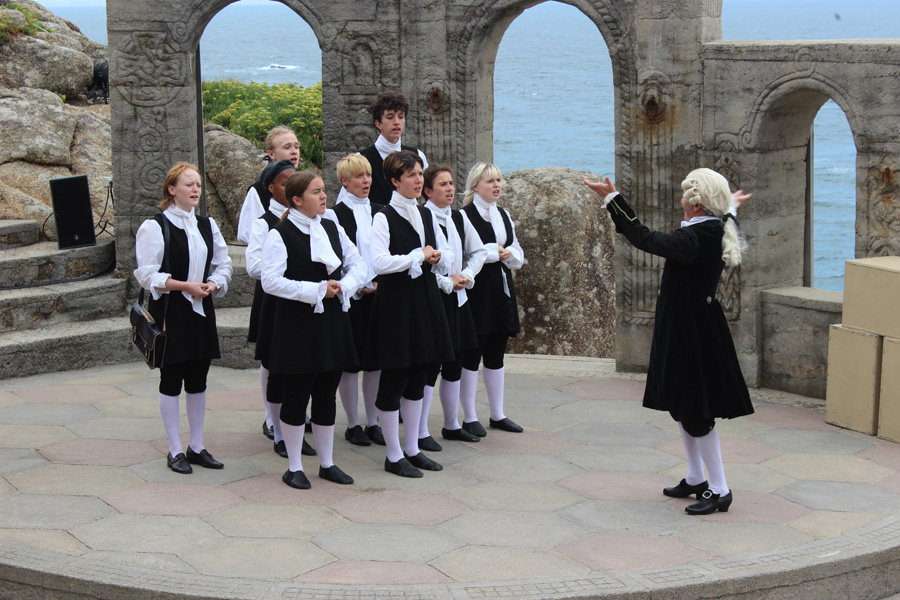 Audiences at Tower’s performance were sitting on edge. We unanimously resented having to break for the interval. But when I left the theatre, the question reeled in my head: how were they ever gonna adapt this clockwork production from our intimate London 100-seater to the 700-seater of the Minack Theatre? At the time of writing, Coram Boy has been the 28th Tower Theatre production to transfer to the Cornish amphitheatre. The adaptation worked superbly and the way Simona Hughes’ production team orchestrates the transition is a testament to the talent and dedication of all the creatives, stage management team and cast involved. Audiences at Tower’s performance were sitting on edge. We unanimously resented having to break for the interval. But when I left the theatre, the question reeled in my head: how were they ever gonna adapt this clockwork production from our intimate London 100-seater to the 700-seater of the Minack Theatre? At the time of writing, Coram Boy has been the 28th Tower Theatre production to transfer to the Cornish amphitheatre. The adaptation worked superbly and the way Simona Hughes’ production team orchestrates the transition is a testament to the talent and dedication of all the creatives, stage management team and cast involved.
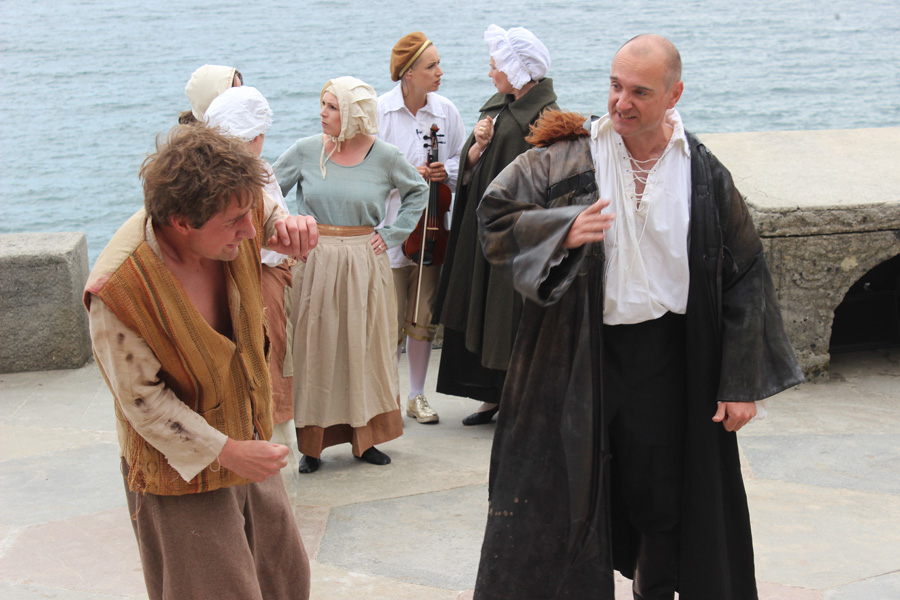 At the end of the London run, between a quick trip to the Edinburgh festival and a spot of holiday for some, the company re-blocked the whole performance working in the nearest and only affordable stage that could match the Minack: Stoke Newington Common. Notably and with great effect, the transfer was to adapt the original design’s concept. The idea was to remove some of the moveable panels and replace them by blocking the action using the existing features of the Minack’s stage. No small feat and involving a decent amount of uncertainty as most of the performers re-blocked 'on trust', without any existing knowledge of the actual space. One of the most successful moments resulting from this adaptation was the struggle between Meshak and his father. On the deck of the ship, a raised concrete platform with a sail blown by the real Atlantic wind, the actors fought at the danger of an actual 6-foot drop. Once the logistics of travel and accommodation for the fifty plus company members (and their following 😉) were resolved, there was only one day to get in the space and go through the technical rehearsal. Lighting pointing and cue-to-cue took place during the night (because sleeping is for losers!) with just the directors and the technical team. The dress rehearsal was planned for the following day and the first performance opened to a full house on the same evening. It was effectively the first time the actors got to work with the light, but the lighting team, led by Alan Wilkinson, raised to the challenge. At the end of the London run, between a quick trip to the Edinburgh festival and a spot of holiday for some, the company re-blocked the whole performance working in the nearest and only affordable stage that could match the Minack: Stoke Newington Common. Notably and with great effect, the transfer was to adapt the original design’s concept. The idea was to remove some of the moveable panels and replace them by blocking the action using the existing features of the Minack’s stage. No small feat and involving a decent amount of uncertainty as most of the performers re-blocked 'on trust', without any existing knowledge of the actual space. One of the most successful moments resulting from this adaptation was the struggle between Meshak and his father. On the deck of the ship, a raised concrete platform with a sail blown by the real Atlantic wind, the actors fought at the danger of an actual 6-foot drop. Once the logistics of travel and accommodation for the fifty plus company members (and their following 😉) were resolved, there was only one day to get in the space and go through the technical rehearsal. Lighting pointing and cue-to-cue took place during the night (because sleeping is for losers!) with just the directors and the technical team. The dress rehearsal was planned for the following day and the first performance opened to a full house on the same evening. It was effectively the first time the actors got to work with the light, but the lighting team, led by Alan Wilkinson, raised to the challenge.
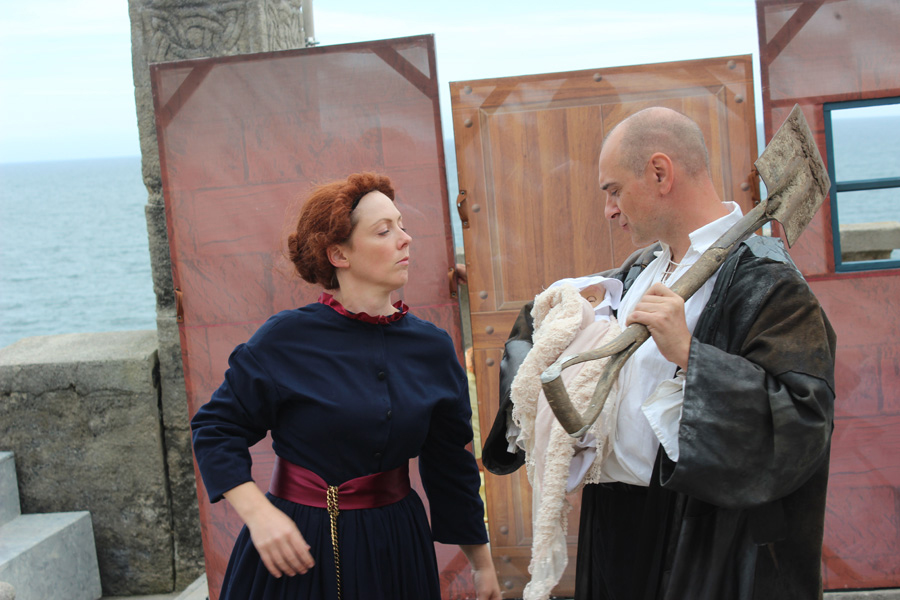 Given the size of the playing area, the enormous distance between wings and the number of steps from the changing rooms, the pace of the story (and the actors’ health!) risked suffering. Once again, the wonderful music score played a great part in securing a successful adaptation. Variation on tempo and repetition allowed the needed flexibility during scenes’ transitions. In the end, the Minack’s version of Coram Boy was an equally beautiful and yet quite different experience from the London production. The tense, fast-paced first run told a story of spiralling doom in which life is a series of gambles and destiny can change in a matter of seconds. The Cornish version, with its larger breadth, highlighted the loneliness of each character, the unavoidability of fate and of human nature, perhaps highlighting in a clearer way the ultimate immutability of the social pattern in the story. Not even historical fiction can fabricate an African princess mother to save poor Toby in 18th century England. Given the size of the playing area, the enormous distance between wings and the number of steps from the changing rooms, the pace of the story (and the actors’ health!) risked suffering. Once again, the wonderful music score played a great part in securing a successful adaptation. Variation on tempo and repetition allowed the needed flexibility during scenes’ transitions. In the end, the Minack’s version of Coram Boy was an equally beautiful and yet quite different experience from the London production. The tense, fast-paced first run told a story of spiralling doom in which life is a series of gambles and destiny can change in a matter of seconds. The Cornish version, with its larger breadth, highlighted the loneliness of each character, the unavoidability of fate and of human nature, perhaps highlighting in a clearer way the ultimate immutability of the social pattern in the story. Not even historical fiction can fabricate an African princess mother to save poor Toby in 18th century England.
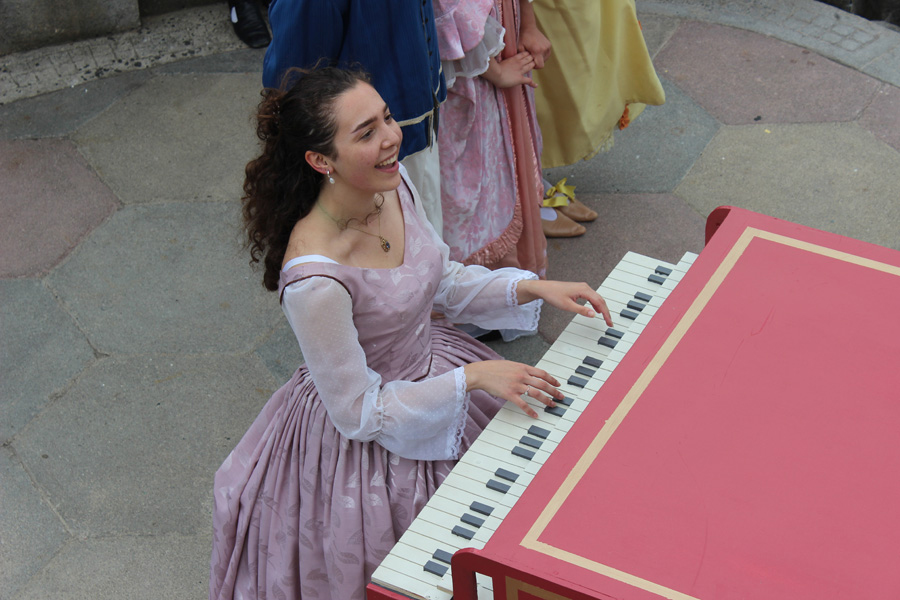 For all its exceptional individual performances, Coram Boy was very much an ensemble piece. Led by Simona’s fearless theatrical imagination, consistent leadership and commitment to the story, the entire team collaborated to create a production that rattled the cage of many emotions both for the London and the Cornish audiences, including its author, Jamila Gavin. For all its exceptional individual performances, Coram Boy was very much an ensemble piece. Led by Simona’s fearless theatrical imagination, consistent leadership and commitment to the story, the entire team collaborated to create a production that rattled the cage of many emotions both for the London and the Cornish audiences, including its author, Jamila Gavin.
Photography by Giulia Paratelli (London) and Laurence Tuerk (Cornwall)
|


