


A Little Night Music
Music/Lyrics by Stephen Sondheim
Book by Hugh Wheeler
Directed by Andrew Short
July 7th - 21st, 2001
The Tower Theatre Company performing at the Tower Theatre, Canonbury




Cast List
Désirée Armfeldt : Alison Hopwood
Fredrika Armfeldt, her daughter : Julia Main
Madame Armfeldt, her mother : Eileen Marner
Fredrik Egerman, a lawyer : David Sellar
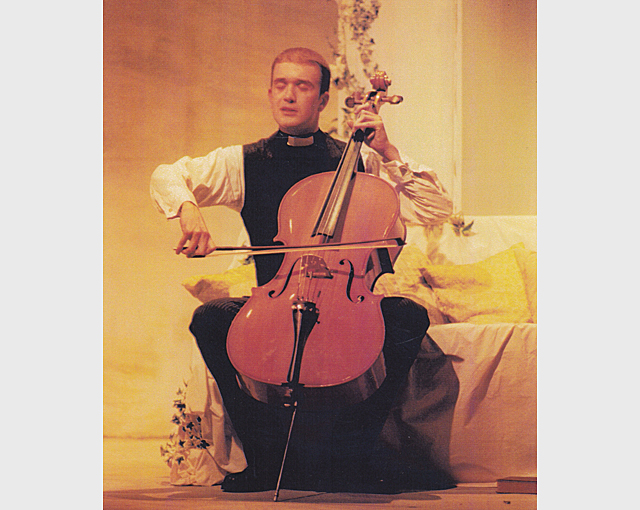
Henrik Egerman, his son : Mark Macey
Anne Egerman, his second wife : Philippa Pearson
Count Carl Magnus Malcolm : Chris de Pury
Countess Charlotte Malcolm, his wife : Janet South
Petra, the Egermans' maid : Sophie Urquhart
Frid, Madame Armfeldt's butler : Craig Carruthers
Malla, Desiree's dresser : Kate Fearnley
Mr Lindquist : Bob Bradick
Mrs Nordstrom : Fiona Shafran
Mrs Anderssen : Celia Wells
Mr Erlanson : Chris Holmes
Mrs Segstrom : Julie Dark
Freya, a maid : Barbara Mathews
Amelia, a maid : Meryl Griffiths
Production Team
Director : Andrew Short
Musical Director : Jonathan Norris
Choreography : Anna Twilley
Set Design : Stephen Green
Costume Design : Linda Girling
Lighting Design : Stephen Ley, Graham Widger
Sound Design : Stephen Ley
Production Manager : Sarah Ambrose
Stage Managers : Moira McSperrin, Lesley Scarth
ASMs : Cathy Thomas, Terry Baker-Self, Joe Radcliffe, Margaret Ley, Jacqui de Prez
Lighting operators : Laurence Tuerk, Dinah Irvine, Dorothy Wright
Sound operators : Phillip Ley, Robert Myer
Wigs supplied by : Wig Specialities
Wigs designed by : David Thompson
Cello tuition : Dominic Batty
Rigging : Graham Widger
Wardrobe : Jude Chalk, Kay Perversi, Andrew Short
Set construction : Roger Beaumont, Terry Mathews, Jo Staples, Jude Chalk, John Sole, Keith Syrett & members of the cast and crew
In-house review by David Patrickson
Before I get into
the review proper, let's begin with a little quiz. Hands up those
of you who like the work of Stephen Sondheim. OK. Now hands up those
of you who don't like it or think you won't. Right. Quite a split,
I think. Until very recently I was firmly in the second camp. I love
musicals. The only musical I have fled during the interval was written
by Sondheim, and he was written others that were close run things.
The prospect
of an evening watching a Tower production of A Little Night Music
was as appealing as an imminent maths exam. Actually that simile
is entirely appropriate as I had generally found Sondheim to be
more mathematician than musician. At seven thirty the examination
began. Within fifteen minutes my worst fears were being confirmed.
Then flash! I was converted. It was as simple as that.
The production
was a revelation. Writing this from my notes several days later
I feel, if anything, more certain of that. First of all, Andrew
Short, the director, was fortunate enough or clever enough to have
assembled a cast that fitted the piece perfectly. He is, in any
case, a person of some style and vision in theatrical matters, and
this was very stylish indeed.
The simple yet
flexible set, by Stephen Green, was ravishingly lit by Stephen Ley,
who also designed the sound. The music, recorded but brilliantly
precise under the direction of Jonathan Norris, underpinned the
style and the mood, and the costumes, by Linda Girling, were, well,
sumptuous is the only word. The evening would have worked even as
a succession of tableaux in sound and vision but, being choreographed
by Anna Twilley, was even better.
The story is
not original. Based on Ingmar Bergman's film, Smiles of a Summer
Night, it tells of three seriously mismatched couples in turn-of-the-20th-century
Sweden, and how their relationships are resolved. Fredrik Egerman,
a lawyer, is a middle-aged widower recently re-married to the young
and inexperienced Anne. His former lover, the actress Désirée Armfeldt,
is having an affair with a dragoon officer, Count Carl-Magnus Malcolm,
whose wife is the waspish Countess Charlotte. And, to complete the
triangle, Frederick's son, Henrik, a divinity student, is in love
with his step-mother, who is a year younger than himself.
First of all
the songs. Once the typically tortuous Sondheim quadratic equation,
the linked songs Now, Later and Soon have told us of the sad state
of the male Egerman sex-life, they are very good indeed. Of course
there were highlights. In The Glamorous Life, Désirée shatters the
myths of a life on the road as an actress. On meeting Désirée for
the first time in many years, Fredrik tells her You Must Meet My
Wife. Of course he means the exact opposite. Send In The Clowns
of course is the song that everyone knows. Possibly one of the best
songs about lost opportunities ever. But my favourite was A Weekend
In The Country, which closed the first half and made me desperate
for the second to begin. I do love it when that happens.
Space prevents
me from saying all that I think about the performances. I cannot
recall a weakness anywhere. Kate Fearnley, Bob Bradick, Fiona Shafran,
Celia Wells, Chris Holmes, Barbara Mathews, Meryl Griffiths and
Julie Dark were a cross between a Greek chorus and a roomful of
zephyrs. Their moves almost choreographed to waltz time, yet also
seeming as random as a breeze.
Alison Hopwood
as Désirée hit every chime perfectly. Weary of the acting profession,
yet an actor through and through. Needing to settle and, perhaps,
ultimately having the need satisfied. Her daughter, Fredrika, played
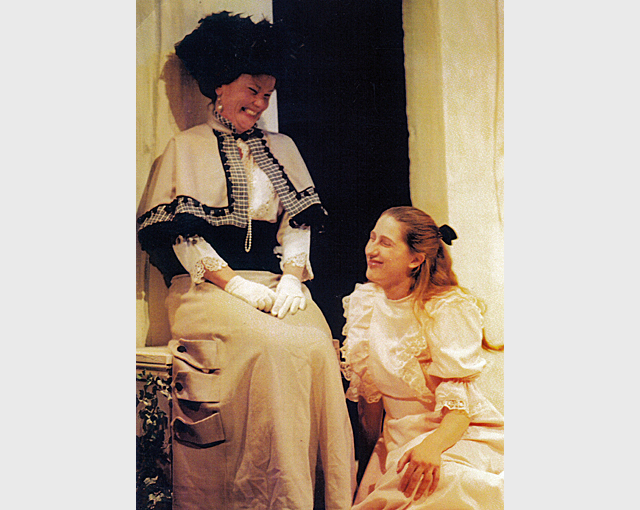
by Julia Main with a sweet knowing innocence, does much to bring
Anne and Henrik together, paving the way to her mother's happiness.
David Sellar's
Fredrik carried more humour than is normally associated with Swedish
lawyers. His middle-aged longing for receding youth was not desperate
and his acceptance of the status quo and a life with Désirée was
no mere second prize.
Mark Macey,
as his son, Fredrik, displayed a suitably tortured soul, while chasing
Petra, his father's maid, and running off with his step-mother.
Sophie Urquhart as Petra showed exactly why a man needs a maid.
She understands what her life is about, finding passion with Frid,
the Armfeldts' butler, played by Craig Carruthers.
Still a virgin
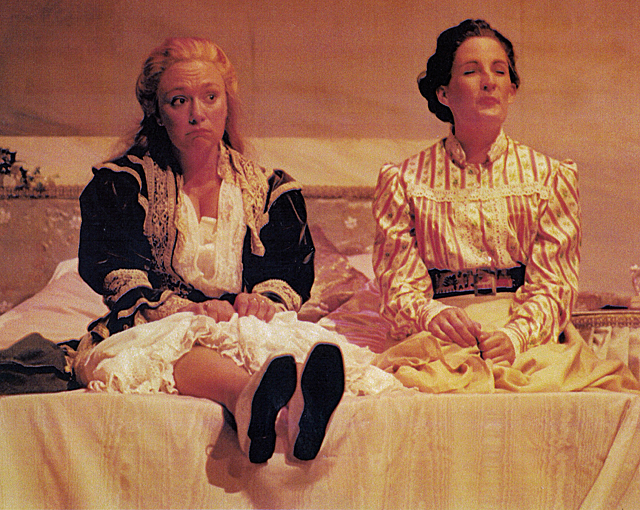
after eleven months of marriage, Anne is scared of being a grown-up
because she is not yet an adult. But most of all she is not a bad
person. She elopes with Henrik because it is more natural than staying
with his father. Philippa Pearson portrayed the mixture of emotions
in a most credible manner.
Désirée's mother,
Madame Armfeldt, has seen it all before. The crowned heads of Europe
have passed through her arms and nothing surprises her, but modern
life is not to her taste and she is looking forward to a long hereafter.
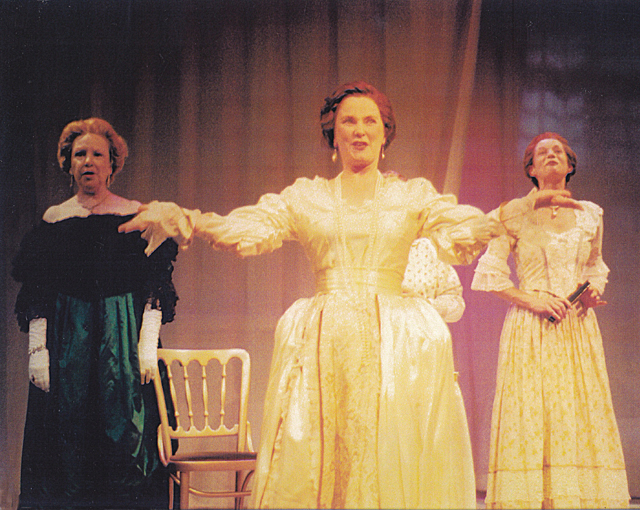
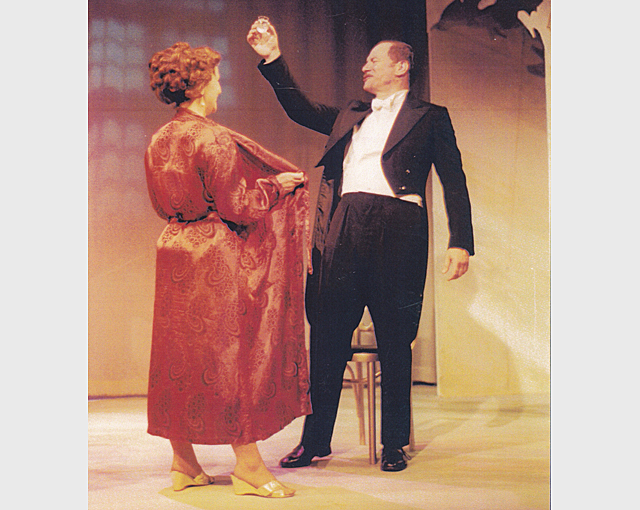
Eileen Marner was a brilliant counterpoint to contemporary morals
and a regal representative of a bygone age.
So too, although
in a different way, was Chris de Pury's Carl-Magnus. Stiff Prussian
pomposity supporting unspeakable self-belief. He too is a member
of a disappearing world that was finally obliterated in mud and
barbed wire. His chivalry is oddly twisted as he duels with Fredrik
to defend his position with his mistress in full view of his wife.
His wife, Countess Charlotte, is a major catalyst. Her husband's
infidelities have sharpened her wit to a stiletto point. She has
many of the best lines and Janet South delivered them like rapier
thrusts with a look in her eyes that said she knew exactly what
she was doing. She is happy to win back her husband, but that does
seem a booby prize.
The death of
Madame Armfeldt was the perfect ending. It was what she wanted.
I wanted to see it all again.
A Little Night Music
Music/Lyrics by Stephen Sondheim |
|
|
July 7th - 21st, 2001 |
The Tower Theatre Company performing at the Tower Theatre, Canonbury |
|
Cast List
|
Production Team
Director : Andrew Short |
In-house review by David Patrickson
Before I get into
the review proper, let's begin with a little quiz. Hands up those
of you who like the work of Stephen Sondheim. OK. Now hands up those
of you who don't like it or think you won't. Right. Quite a split,
I think. Until very recently I was firmly in the second camp. I love
musicals. The only musical I have fled during the interval was written
by Sondheim, and he was written others that were close run things.
The prospect
of an evening watching a Tower production of A Little Night Music
was as appealing as an imminent maths exam. Actually that simile
is entirely appropriate as I had generally found Sondheim to be
more mathematician than musician. At seven thirty the examination
began. Within fifteen minutes my worst fears were being confirmed.
Then flash! I was converted. It was as simple as that.
The production
was a revelation. Writing this from my notes several days later
I feel, if anything, more certain of that. First of all, Andrew
Short, the director, was fortunate enough or clever enough to have
assembled a cast that fitted the piece perfectly. He is, in any
case, a person of some style and vision in theatrical matters, and
this was very stylish indeed.
The simple yet
flexible set, by Stephen Green, was ravishingly lit by Stephen Ley,
who also designed the sound. The music, recorded but brilliantly
precise under the direction of Jonathan Norris, underpinned the
style and the mood, and the costumes, by Linda Girling, were, well,
sumptuous is the only word. The evening would have worked even as
a succession of tableaux in sound and vision but, being choreographed
by Anna Twilley, was even better.
The story is
not original. Based on Ingmar Bergman's film, Smiles of a Summer
Night, it tells of three seriously mismatched couples in turn-of-the-20th-century
Sweden, and how their relationships are resolved. Fredrik Egerman,
a lawyer, is a middle-aged widower recently re-married to the young
and inexperienced Anne. His former lover, the actress Désirée Armfeldt,
is having an affair with a dragoon officer, Count Carl-Magnus Malcolm,
whose wife is the waspish Countess Charlotte. And, to complete the
triangle, Frederick's son, Henrik, a divinity student, is in love
with his step-mother, who is a year younger than himself.
First of all
the songs. Once the typically tortuous Sondheim quadratic equation,
the linked songs Now, Later and Soon have told us of the sad state
of the male Egerman sex-life, they are very good indeed. Of course
there were highlights. In The Glamorous Life, Désirée shatters the
myths of a life on the road as an actress. On meeting Désirée for
the first time in many years, Fredrik tells her You Must Meet My
Wife. Of course he means the exact opposite. Send In The Clowns
of course is the song that everyone knows. Possibly one of the best
songs about lost opportunities ever. But my favourite was A Weekend
In The Country, which closed the first half and made me desperate
for the second to begin. I do love it when that happens.
Space prevents
me from saying all that I think about the performances. I cannot
recall a weakness anywhere. Kate Fearnley, Bob Bradick, Fiona Shafran,
Celia Wells, Chris Holmes, Barbara Mathews, Meryl Griffiths and
Julie Dark were a cross between a Greek chorus and a roomful of
zephyrs. Their moves almost choreographed to waltz time, yet also
seeming as random as a breeze.
Alison Hopwood
as Désirée hit every chime perfectly. Weary of the acting profession,
yet an actor through and through. Needing to settle and, perhaps,
ultimately having the need satisfied. Her daughter, Fredrika, played
by Julia Main with a sweet knowing innocence, does much to bring
Anne and Henrik together, paving the way to her mother's happiness.
David Sellar's
Fredrik carried more humour than is normally associated with Swedish
lawyers. His middle-aged longing for receding youth was not desperate
and his acceptance of the status quo and a life with Désirée was
no mere second prize.
Mark Macey,
as his son, Fredrik, displayed a suitably tortured soul, while chasing
Petra, his father's maid, and running off with his step-mother.
Sophie Urquhart as Petra showed exactly why a man needs a maid.
She understands what her life is about, finding passion with Frid,
the Armfeldts' butler, played by Craig Carruthers.
Still a virgin
after eleven months of marriage, Anne is scared of being a grown-up
because she is not yet an adult. But most of all she is not a bad
person. She elopes with Henrik because it is more natural than staying
with his father. Philippa Pearson portrayed the mixture of emotions
in a most credible manner.
Désirée's mother,
Madame Armfeldt, has seen it all before. The crowned heads of Europe
have passed through her arms and nothing surprises her, but modern
life is not to her taste and she is looking forward to a long hereafter.
Eileen Marner was a brilliant counterpoint to contemporary morals
and a regal representative of a bygone age.
So too, although
in a different way, was Chris de Pury's Carl-Magnus. Stiff Prussian
pomposity supporting unspeakable self-belief. He too is a member
of a disappearing world that was finally obliterated in mud and
barbed wire. His chivalry is oddly twisted as he duels with Fredrik
to defend his position with his mistress in full view of his wife.
His wife, Countess Charlotte, is a major catalyst. Her husband's
infidelities have sharpened her wit to a stiletto point. She has
many of the best lines and Janet South delivered them like rapier
thrusts with a look in her eyes that said she knew exactly what
she was doing. She is happy to win back her husband, but that does
seem a booby prize.
The death of
Madame Armfeldt was the perfect ending. It was what she wanted.
I wanted to see it all again.