
The Weir
by Conor McPherson
Directed by Allan Hart
1st - 5th June, 2004
The Tower Theatre performing at Theatro Technis, Camden




Cast List
Jack : Peta Barker
Brendan : Michael Allaway
Jim : Ian Chaplain
Finbar : Michael Maher
Valerie : Emma Williams
Production Team
Director : Allan Hart
Set Design : Jude Chalk
Lighting Design : Trevor Wallace
Sound Design : Phil Ley
Costume Design : Meryl Griffiths, Barrie Addenbrooke
Stage Manager : Lindsay Ruigrok
Co-ordinator/ASM : Ann Watchorn
ASM : Michelle Nelson
Lighting/sound operator : Nathalie Lake
Wardrobe assistant : Barrie Addenbrooke
Accent coaching : Lindsay Ruigrok, Marie Bristow
Set construction : Jude Chalk, Keith Syrett, Martin Mulgrew & the cast and crew
Review by Richard Dunn
On paper, Conor McPherson's The Weir is a real challenge for a non-professional company, centring as it does on a handful of monologues. I'd seen the original London cast, who were outstanding,
so I expected something rather less gripping at the Theatro Technis. I was in for a pleasant surprise.
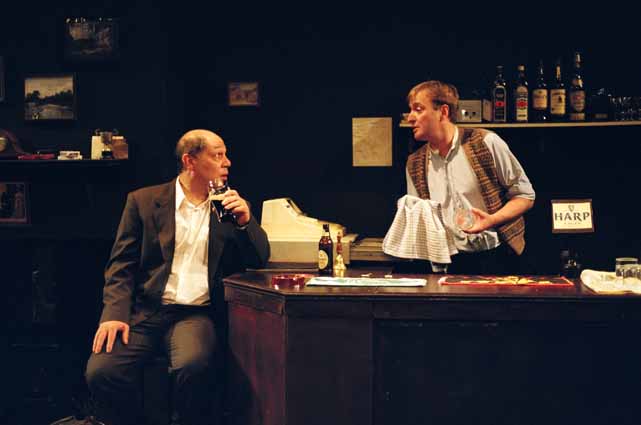
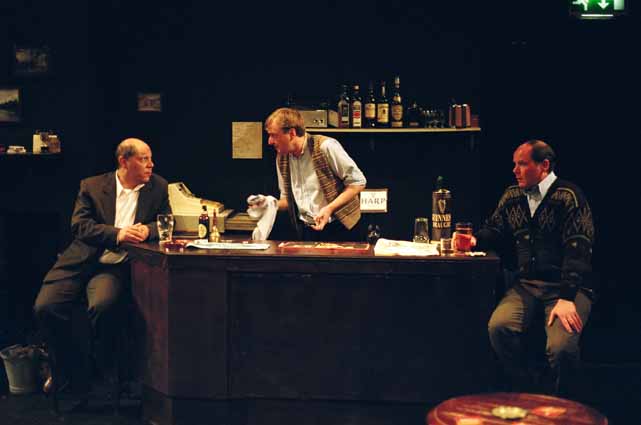
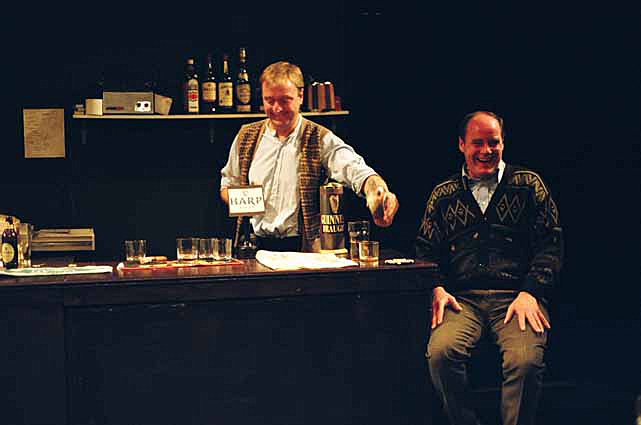
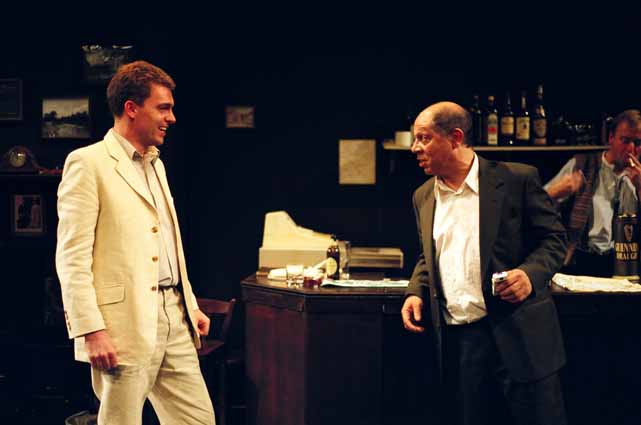
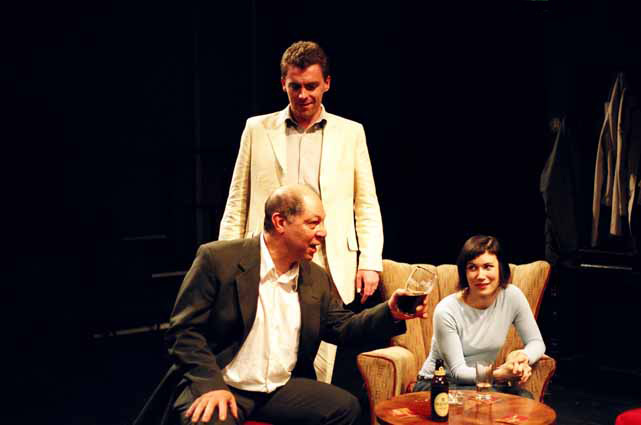
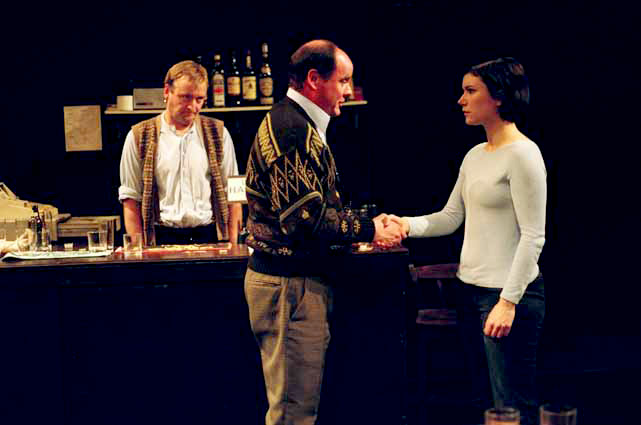
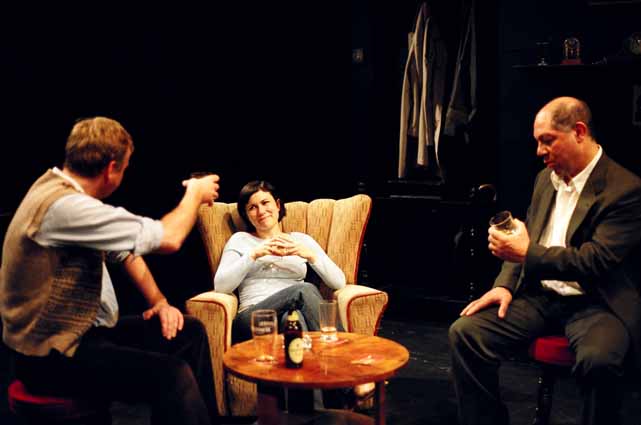
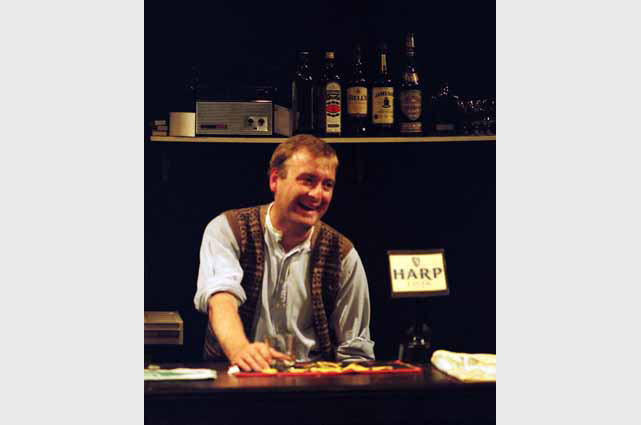
Jude Chalk's authentic looking set, with its low stools and bar tables, single comfy armchair and two barstools was beautifully evocative of the tiny isolated pub in County Sligo half-heartedly run by
Brendan (Michael Allaway). He survives financially on the summer tourist trade of mainly German campers, but in the off-season has to make do with the locals - all ageing bachelors like himself.
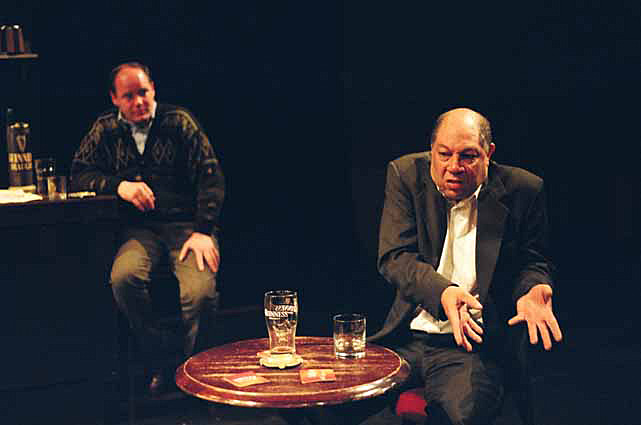
They include the slightly aggressive local garage man, Jack (Peta Barker), and the shy Jim (Ian Chaplain), who looks after his ailing mother and scrapes a living as the local handyman. Like all
country people, they know their own and everyone else's business extremely well, and local gossip is their stock in trade.
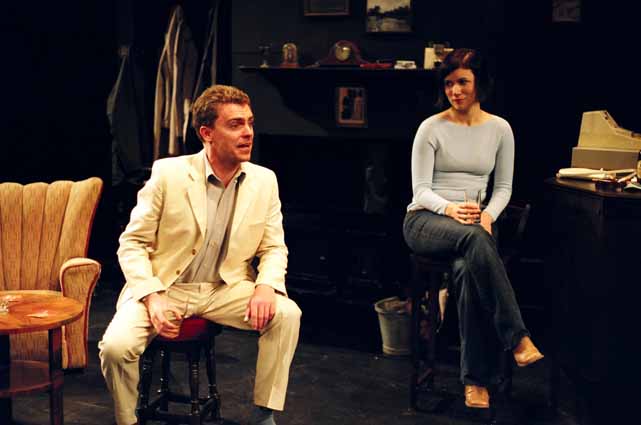
Into this closed circle arrives Finbar, born and bred locally, but who has moved a few miles away and now runs a successful hotel in the nearby town. He is showing the area to Valerie, a young
woman from Dublin who is about to rent a local house. After initial verbal sparring between Jack and Finbar, the central section of the play develops into a series of monologues, each a ghost
story about events that happened locally, each more disturbing that the last. Finally, and most surprisingly, Valerie herself joins in and tells the story behind her flight from Dublin, which
simultaneously chills the spine and breaks the heart.
In other words, nothing much happens beyond conversation. The real drama, of course, lies beneath the words, in the relationships and in the lives of five differently bruised individuals. To carry it
off requires not just technical skill, but real ensemble playing, and here the team excelled, as each individual actor brought something different to his or her role.
Peta Barker gave a wonderfully complex performance as the slightly aggressive, rather bitter Jack, who has let life's chances pass him by. His evident contempt for Finbar is explicable as a kind of envy
at a life he himself might have had, had he had the courage to join the exodus from the countryside he loves. Yet his affection and concern for Jim, Brendan and Valerie is genuine: here is a man who
would bite your head off one minute, and give you the shirt off his back the next.
As Finbar, Michael Maher also gave a brilliant performance: all teeth, smiles and confidence, but with a vulnerable hollow at his centre. The way his cockiness slowly crumbled as he told his tale
was a subtle and totally convincing piece of acting. Michael Allaway brought to life the affable, but self-effacing barman, Brendan, another whose mixture of inertia and love of his native sod
have doomed him to a life of rural loneliness. Ian Chaplain, too, elicited great sympathy for Jim, a middle-aged man who is shackled to his ailing mammy. He can turn his hand to anything, but
nothing pays enough. Some of the most touching moments came when the other characters, aware of his real poverty, found a way to either buy Jim a drink, or to refuse a drink when it came to
Jim's round without embarrassing him.
The role of Valerie is a difficult but highly rewarding one. For much of the play, she is merely the catalyst and the audience for the men's stories, but at the end, she must take command of the stage
as she tells her own personal supernatural tale. At first I thought Emma Williams might have been underplaying the role rather too much - it was almost a performance for a screen, not a stage.
But her quiet, unemotional yet truthful delivery paid full dividends as she began her tale. You could literally have heard a pin drop in the theatre, and the entire audience was leaning forward
to catch her every word. It was subtle underplaying at its best.
Credit too, to the backstage staff. Meryl Griffiths and Barrie Addenbrooke provided wonderfully apt costumes, from Jim's patterened brown cardigan to Finbar's white linen suit, each totally suited to the
character. Trevor Wallace's subtle changes of lighting during the ghost stories were atmospheric and unobtrusive, and Phil Ley's sound design, whilst a lot quieter than in the original production,
conveyed the windswept Sligo countryside outside the door very well.
All credit, too, to the director, Allan Hart, for some nice blocking, for keeping what is basically a very static play moving both physically and emotionally, for welding the actors into a true
ensemble, for helping them pace the monologues so well, and for highlighting the humour as well as the spookiness. (Of the wealthy, but apparently stingy Finbar, one of the characters remarks :
"That fella can peel a banana in his pocket.")
My final word of praise must go to the accent coaches, Lindsay Ruigrok and Marie Bristow : most amateur theatres will settle for the unconvincing tones of Begorrah-shire, but here the actors
tackled the authentic, and fiendishly difficult accent of Sligo head on, and to my inexpert ears, they triumphed. No wonder there wasn't an empty seat in the house!
The Weir
by Conor McPherson |
|
|
1st - 5th June, 2004 |
The Tower Theatre performing at Theatro Technis, Camden |
|
Cast List
|
Production Team
|
Review by Richard Dunn
On paper, Conor McPherson's The Weir is a real challenge for a non-professional company, centring as it does on a handful of monologues. I'd seen the original London cast, who were outstanding,
so I expected something rather less gripping at the Theatro Technis. I was in for a pleasant surprise.
Jude Chalk's authentic looking set, with its low stools and bar tables, single comfy armchair and two barstools was beautifully evocative of the tiny isolated pub in County Sligo half-heartedly run by
Brendan (Michael Allaway). He survives financially on the summer tourist trade of mainly German campers, but in the off-season has to make do with the locals - all ageing bachelors like himself.
They include the slightly aggressive local garage man, Jack (Peta Barker), and the shy Jim (Ian Chaplain), who looks after his ailing mother and scrapes a living as the local handyman. Like all
country people, they know their own and everyone else's business extremely well, and local gossip is their stock in trade.
Into this closed circle arrives Finbar, born and bred locally, but who has moved a few miles away and now runs a successful hotel in the nearby town. He is showing the area to Valerie, a young
woman from Dublin who is about to rent a local house. After initial verbal sparring between Jack and Finbar, the central section of the play develops into a series of monologues, each a ghost
story about events that happened locally, each more disturbing that the last. Finally, and most surprisingly, Valerie herself joins in and tells the story behind her flight from Dublin, which
simultaneously chills the spine and breaks the heart.
In other words, nothing much happens beyond conversation. The real drama, of course, lies beneath the words, in the relationships and in the lives of five differently bruised individuals. To carry it
off requires not just technical skill, but real ensemble playing, and here the team excelled, as each individual actor brought something different to his or her role.
Peta Barker gave a wonderfully complex performance as the slightly aggressive, rather bitter Jack, who has let life's chances pass him by. His evident contempt for Finbar is explicable as a kind of envy
at a life he himself might have had, had he had the courage to join the exodus from the countryside he loves. Yet his affection and concern for Jim, Brendan and Valerie is genuine: here is a man who
would bite your head off one minute, and give you the shirt off his back the next.
As Finbar, Michael Maher also gave a brilliant performance: all teeth, smiles and confidence, but with a vulnerable hollow at his centre. The way his cockiness slowly crumbled as he told his tale
was a subtle and totally convincing piece of acting. Michael Allaway brought to life the affable, but self-effacing barman, Brendan, another whose mixture of inertia and love of his native sod
have doomed him to a life of rural loneliness. Ian Chaplain, too, elicited great sympathy for Jim, a middle-aged man who is shackled to his ailing mammy. He can turn his hand to anything, but
nothing pays enough. Some of the most touching moments came when the other characters, aware of his real poverty, found a way to either buy Jim a drink, or to refuse a drink when it came to
Jim's round without embarrassing him.
The role of Valerie is a difficult but highly rewarding one. For much of the play, she is merely the catalyst and the audience for the men's stories, but at the end, she must take command of the stage
as she tells her own personal supernatural tale. At first I thought Emma Williams might have been underplaying the role rather too much - it was almost a performance for a screen, not a stage.
But her quiet, unemotional yet truthful delivery paid full dividends as she began her tale. You could literally have heard a pin drop in the theatre, and the entire audience was leaning forward
to catch her every word. It was subtle underplaying at its best.
Credit too, to the backstage staff. Meryl Griffiths and Barrie Addenbrooke provided wonderfully apt costumes, from Jim's patterened brown cardigan to Finbar's white linen suit, each totally suited to the
character. Trevor Wallace's subtle changes of lighting during the ghost stories were atmospheric and unobtrusive, and Phil Ley's sound design, whilst a lot quieter than in the original production,
conveyed the windswept Sligo countryside outside the door very well.
All credit, too, to the director, Allan Hart, for some nice blocking, for keeping what is basically a very static play moving both physically and emotionally, for welding the actors into a true
ensemble, for helping them pace the monologues so well, and for highlighting the humour as well as the spookiness. (Of the wealthy, but apparently stingy Finbar, one of the characters remarks :
"That fella can peel a banana in his pocket.")
My final word of praise must go to the accent coaches, Lindsay Ruigrok and Marie Bristow : most amateur theatres will settle for the unconvincing tones of Begorrah-shire, but here the actors
tackled the authentic, and fiendishly difficult accent of Sligo head on, and to my inexpert ears, they triumphed. No wonder there wasn't an empty seat in the house!