|
A new approach for the first presentation of the Autumn season. Two short plays brought to life by new directors and shown in the studio space.
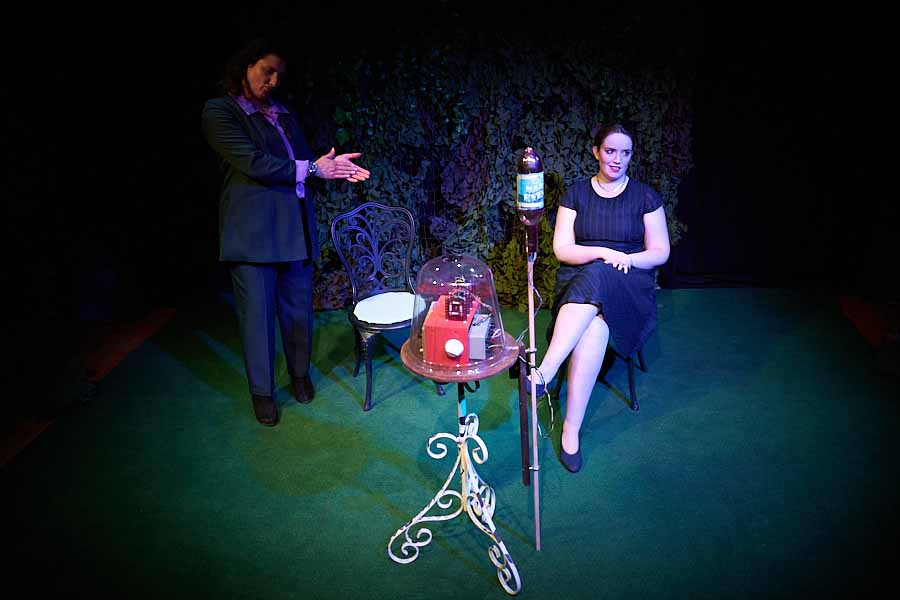
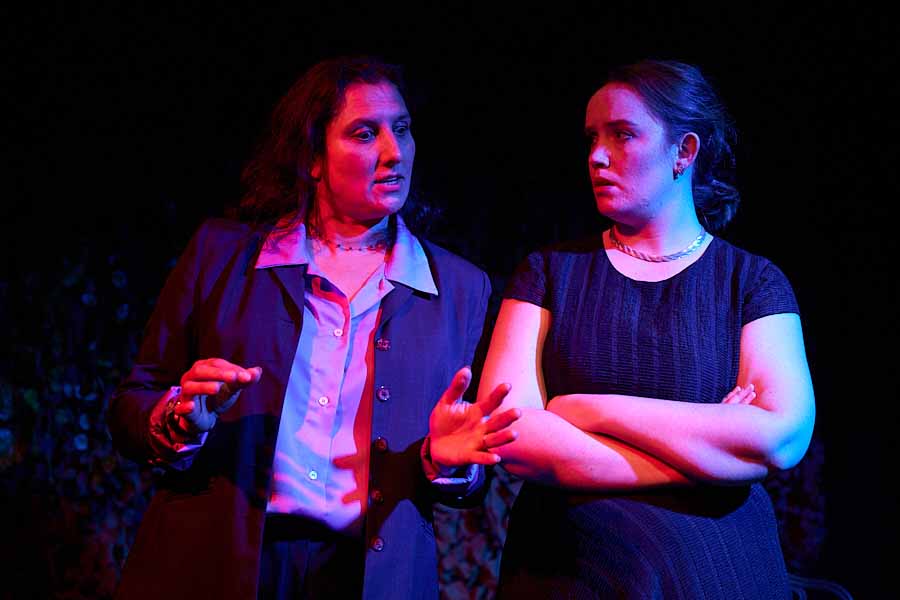
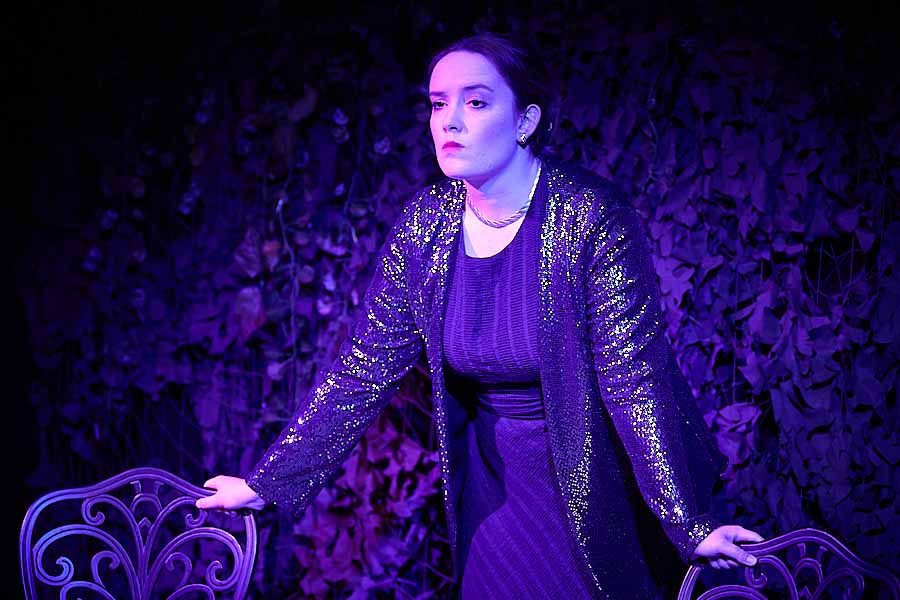 First up was Seagulls by Caryl Churchill. A seemingly simple story about a woman – Valery - who has telekinetic powers. We meet Valery and her manager Di, just before Valery is due to appear on stage and demonstrate her unusual abilities at a charity event. Valery decides to allow a young fan, Cliff, who is keen to meet her to come backstage, and she appears to get carried away in his presence – revealing more about her insecurities and her increasing difficulties than she means to. The climax of the story is that she is unable to perform her usual tricks. Further encounters with her young fan and her manager leave us uncertain as to whether this is a temporary failing or if she has genuinely lost her powers due to the pressures of having to demonstrate them to the paying public regularly. First up was Seagulls by Caryl Churchill. A seemingly simple story about a woman – Valery - who has telekinetic powers. We meet Valery and her manager Di, just before Valery is due to appear on stage and demonstrate her unusual abilities at a charity event. Valery decides to allow a young fan, Cliff, who is keen to meet her to come backstage, and she appears to get carried away in his presence – revealing more about her insecurities and her increasing difficulties than she means to. The climax of the story is that she is unable to perform her usual tricks. Further encounters with her young fan and her manager leave us uncertain as to whether this is a temporary failing or if she has genuinely lost her powers due to the pressures of having to demonstrate them to the paying public regularly.
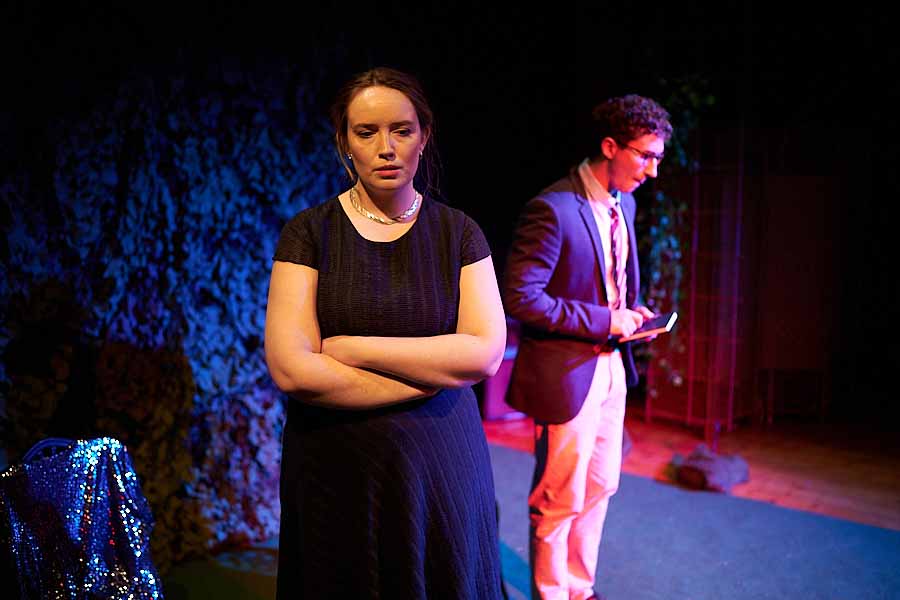 Kate Pemberton as Valery gave a fine performance – treading the difficult path between being something of a diva and being insecure and wobbly about her abilities, and the difficulties that she’s beginning to experience. Kate Pemberton as Valery gave a fine performance – treading the difficult path between being something of a diva and being insecure and wobbly about her abilities, and the difficulties that she’s beginning to experience.
I very much liked As Richards’ performance as Di – Valery’s manager, friend and former colleague from M&S. She was solidly down to earth, and very much the driving force of Valery’s success. The interplay between her and Valery gave a real sense of neither of them quite being able to believe how they had ended up in this life – but also that whatever happened to Valery’s abilities, Di wouldn’t be going back to M&S any time soon.
Nathaniel Barker as Cliff was sweet and wide-eyed in his admiration of Valery – and suitably disillusioned after she failed to demonstrate her abilities. It was a sound performance of quite an underwritten part – Churchill saved all her best writing for the women in this piece, and the simplicity of Cliff’s role highlighted beautifully the complexity of the relationship between the two women.
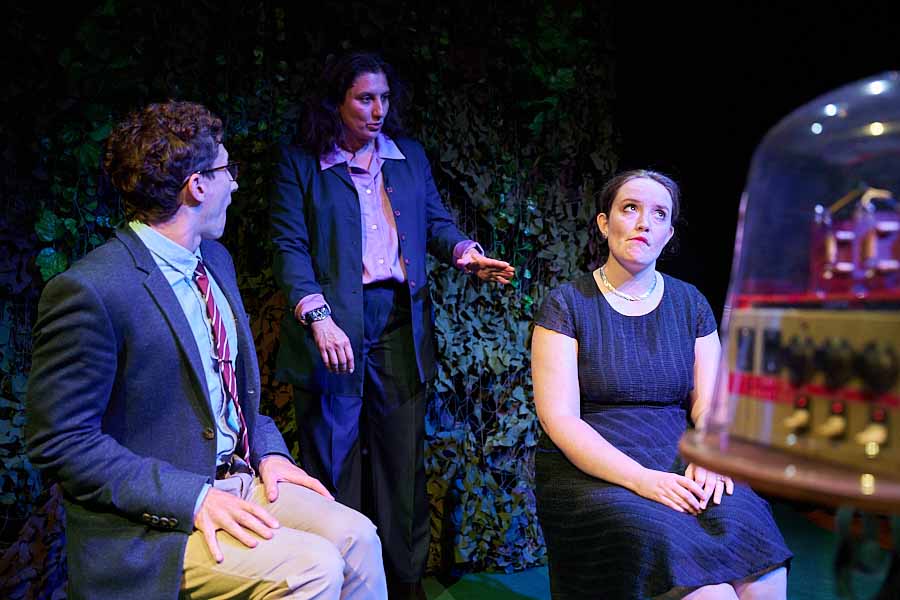 There’s always a lot going on in Caryl Churchill’s pieces. In this forty minutes the audience were asked to consider the themes of friendship, family, celebrity, success and failure and the conflict of wanting to be famous and then finding that it’s not all it’s cracked up to be – but being unable to return to a previous – “ordinary” - way of life. Valery slightly longs for her earlier domestic life, but she’s also flattered by all the public attention and Cliff’s adulation – it’s not surprising that with this internal struggle she’s unable to summon the right emotions to demonstrate her ability. And I liked the ambiguity of the ending – will she ever be able to do it again? I rather thought not. Jonathan Reed did an excellent job of pulling all these interesting ideas from a short text – and he managed the narrative arc of the piece very well. I had a real sense of the characters having a life beyond this story. There’s always a lot going on in Caryl Churchill’s pieces. In this forty minutes the audience were asked to consider the themes of friendship, family, celebrity, success and failure and the conflict of wanting to be famous and then finding that it’s not all it’s cracked up to be – but being unable to return to a previous – “ordinary” - way of life. Valery slightly longs for her earlier domestic life, but she’s also flattered by all the public attention and Cliff’s adulation – it’s not surprising that with this internal struggle she’s unable to summon the right emotions to demonstrate her ability. And I liked the ambiguity of the ending – will she ever be able to do it again? I rather thought not. Jonathan Reed did an excellent job of pulling all these interesting ideas from a short text – and he managed the narrative arc of the piece very well. I had a real sense of the characters having a life beyond this story.
 A Report for an Academy was an equally thought-provoking piece. It’s based on a short story by Franz Kafka written and published in 1917. In the story, an ape named Red Peter, who has learned to behave like a human, presents to an academy audience the story of how he managed his transformation. We learn that he didn’t particularly want to become human but preferred that life to remaining in captivity in a zoo. We also learn his transformation is so complete that he can no longer properly describe his emotions and experiences as an ape. A Report for an Academy was an equally thought-provoking piece. It’s based on a short story by Franz Kafka written and published in 1917. In the story, an ape named Red Peter, who has learned to behave like a human, presents to an academy audience the story of how he managed his transformation. We learn that he didn’t particularly want to become human but preferred that life to remaining in captivity in a zoo. We also learn his transformation is so complete that he can no longer properly describe his emotions and experiences as an ape.
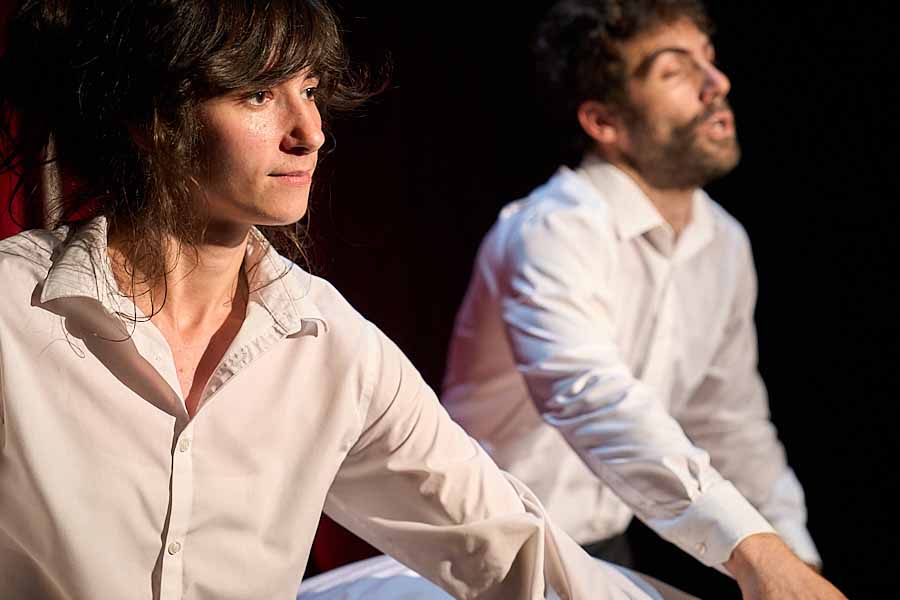
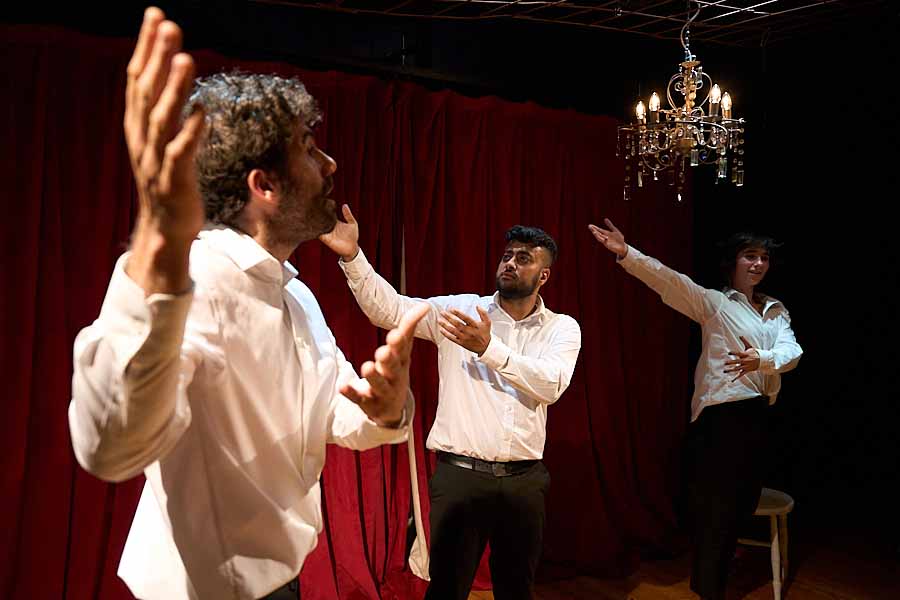
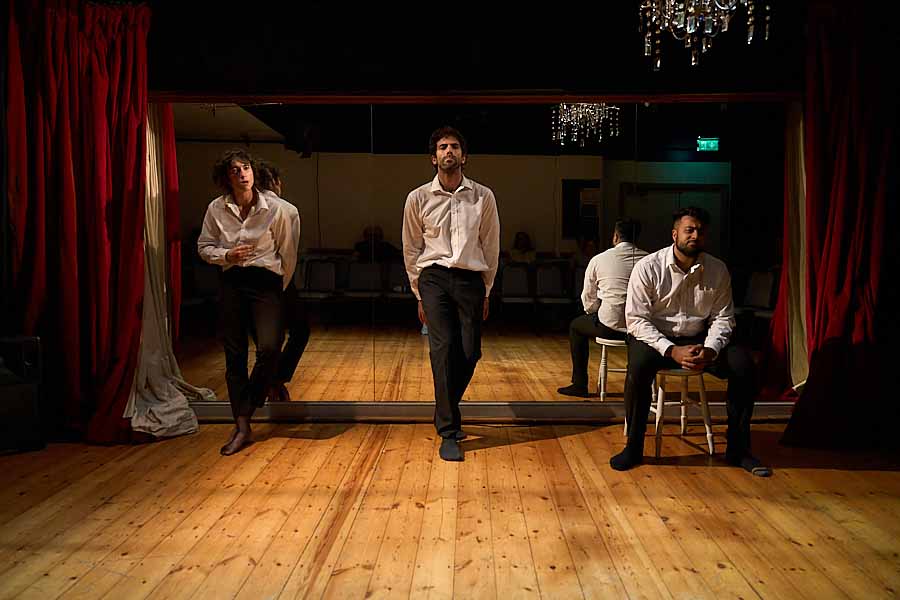 Director Alexander Kampmann had chosen to have three actors present what is effectively Red Peter’s monologue, and – once I’d clocked what was happening – I thought this was a very effective way to present the story. The interplay between the three cast members (Lara Cosmetatos, Carlos Fain-Binda and Ricky Pancholi) playing Red Peter was mesmerizing – and their movements and general physicality were impressive and brought a whole new dimension to performing a monologue. It was all entirely in keeping with Kafka’s "what-if" storytelling ("What if I turned into an insect? What if three people are the same person in a performance?") Director Alexander Kampmann had chosen to have three actors present what is effectively Red Peter’s monologue, and – once I’d clocked what was happening – I thought this was a very effective way to present the story. The interplay between the three cast members (Lara Cosmetatos, Carlos Fain-Binda and Ricky Pancholi) playing Red Peter was mesmerizing – and their movements and general physicality were impressive and brought a whole new dimension to performing a monologue. It was all entirely in keeping with Kafka’s "what-if" storytelling ("What if I turned into an insect? What if three people are the same person in a performance?")
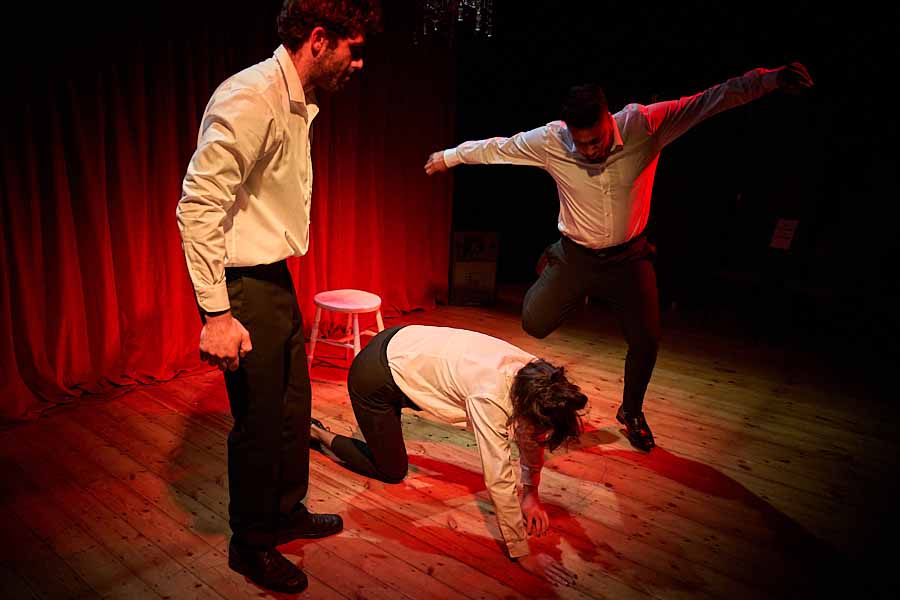 I learned later when hob-nobbing with the director (I’m such a name dropper) that having three people play the same character is something that is done more in German theatre – as well as setting plays in spaces that aren’t what’s written in the stage directions. Being boringly British and used to seeing plays in which each person plays another person (or a few other people) usually in the drawing room of a country house, I found this multiple people playing one person idea at first unsettling (What’s going on? Surely it would have been easier to cast one person in one role?) and then utterly refreshing and engaging. I am looking forward to seeing this approach again. I learned later when hob-nobbing with the director (I’m such a name dropper) that having three people play the same character is something that is done more in German theatre – as well as setting plays in spaces that aren’t what’s written in the stage directions. Being boringly British and used to seeing plays in which each person plays another person (or a few other people) usually in the drawing room of a country house, I found this multiple people playing one person idea at first unsettling (What’s going on? Surely it would have been easier to cast one person in one role?) and then utterly refreshing and engaging. I am looking forward to seeing this approach again.
 It was also interesting seeing our studio transformed into such a successful theatre space. Angelika Michitsh did her usual competent job of producing a simple but entirely appropriate set for both pieces. Alexander Kampmann’s lighting design (both plays) was effective – if not altogether subtle in the cueing, which was likely due to the constraints of the facilities in the studio compared to the auditorium. Looking at the photos later, I could see how good the lights looked. Ruth Sullivan’s sound design worked very well. I liked Peter Westbury’s costumes – particularly the white shirt/black trousers combo of the three actors playing Red Peter – a helpful signpost to the unusual convention of three actors playing one character simultaneously. I’m usually one for being a bit more noticing of the technical side of things, but I found myself really focusing in on the stories and performances for these shows – there was a lot to think about in these texts. It was also interesting seeing our studio transformed into such a successful theatre space. Angelika Michitsh did her usual competent job of producing a simple but entirely appropriate set for both pieces. Alexander Kampmann’s lighting design (both plays) was effective – if not altogether subtle in the cueing, which was likely due to the constraints of the facilities in the studio compared to the auditorium. Looking at the photos later, I could see how good the lights looked. Ruth Sullivan’s sound design worked very well. I liked Peter Westbury’s costumes – particularly the white shirt/black trousers combo of the three actors playing Red Peter – a helpful signpost to the unusual convention of three actors playing one character simultaneously. I’m usually one for being a bit more noticing of the technical side of things, but I found myself really focusing in on the stories and performances for these shows – there was a lot to think about in these texts.
This was a cracking start to the Autumn Season. Short plays, but full of rich ideas and interest. A suitable curtain raiser for the upcoming programme.
Photography by Jason Harris
|